
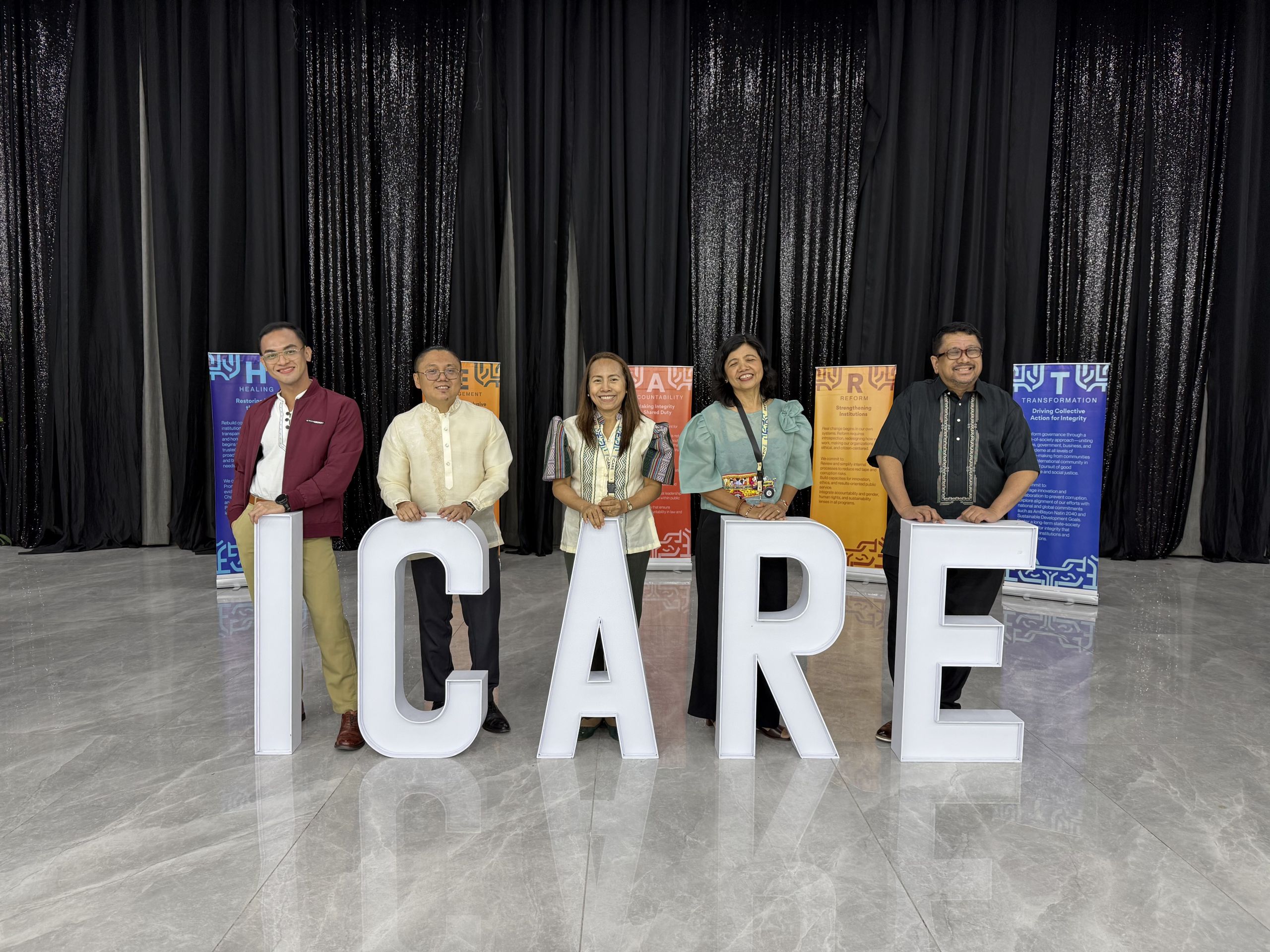
The University of the Philippines Open University Faculty of Management and Development Studies (UPOU FMDS), through the Master of Public Management (MPM) Program, teamed up with the Governance Reform, Innovation, and Transformation Research Laboratories (GRIT Labs) of the UP Diliman National College of Public Administration and Governance (UPD NCPAG) in the ongoing Interdisciplinary Conference on Accountability, Reform, and Engagement (ICARE) 2025 and the launch of the ICARE Consortium on 9-11 December 2025. The Consortium aims to serve as a watchdog, a think-and-do network, and a community of practice committed to advancing integrity, accountability, and reform in Philippine governance.
The opening activities of the NCPAG-led three-day Conference were jump started by welcome messages of UPD Chancellor Edgardo C. L. Vistan, UP President Angelo A. Jimenez and Quezon City Mayor and venue host, Hon. Maria Josefina “Joy” Belmonte. UPD NCPAG Dean Dr. Kristoffer B. Berse provided the expanded conference overview. Plenary sessions followed which include “High-Level Dialogue on Transparency,” “High-Level Dialogue on Accountability,” “Community Listening Session on Participation”, and “High-Level Dialogue on Bureaucratic Reform” held in Day 1, among others.
Department of Budget and Management (DBM) Officer-In-Charge Hon. Roland Toledo; Undersecretary of Department of Public Works and Highways (DPWH) Hon. Nicasio Conti; Undersecretary for Strategic Management of the Department of Education (DepEd) Hon. Ronald Mendoza; UP NCPAG and UP Law Professorial Lecturer Dr. Antonio La Vina; Hon. Faustino Dy III, Speaker of the House of Representatives; Hon. Brian Poe Llamanzares, FPJ Bayanihan Partylist Representative; Deputy Special Prosecutor Atty Leilani Bernadette-Cabras of the Office of the Ombudsman; UP NCPAG Professorial Lecturer Dr. Edna Co; and former Commission on Audit (COA) Commissioner Hon. Heidi Mendoza were among the Day 1 plenary speakers.
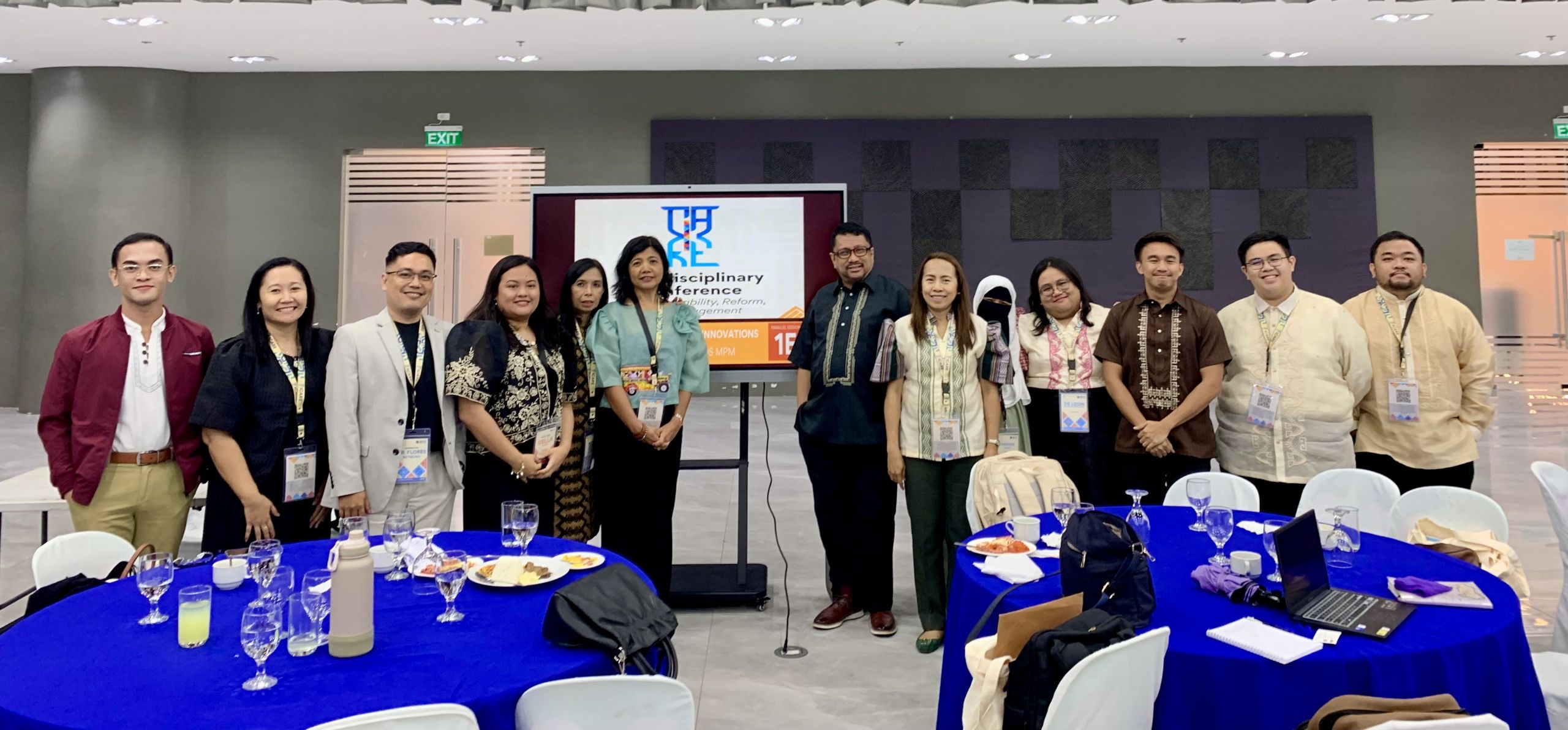
The UPOU FMDS MPM program served as convenor, chair, and moderator of the first day panel on “Digital and Technological Innovations.” The MPM program collaborated with NCPAG GRIT Labs in solidarity with the iCARE’s goal of convening “scholars, policymakers, reform advocates, journalists, and civil society leaders to examine the historical, institutional, and cultural dimensions of corruption and accountability” and in support of the United Nations International Anti-Corruption Day on December 9, 2025.
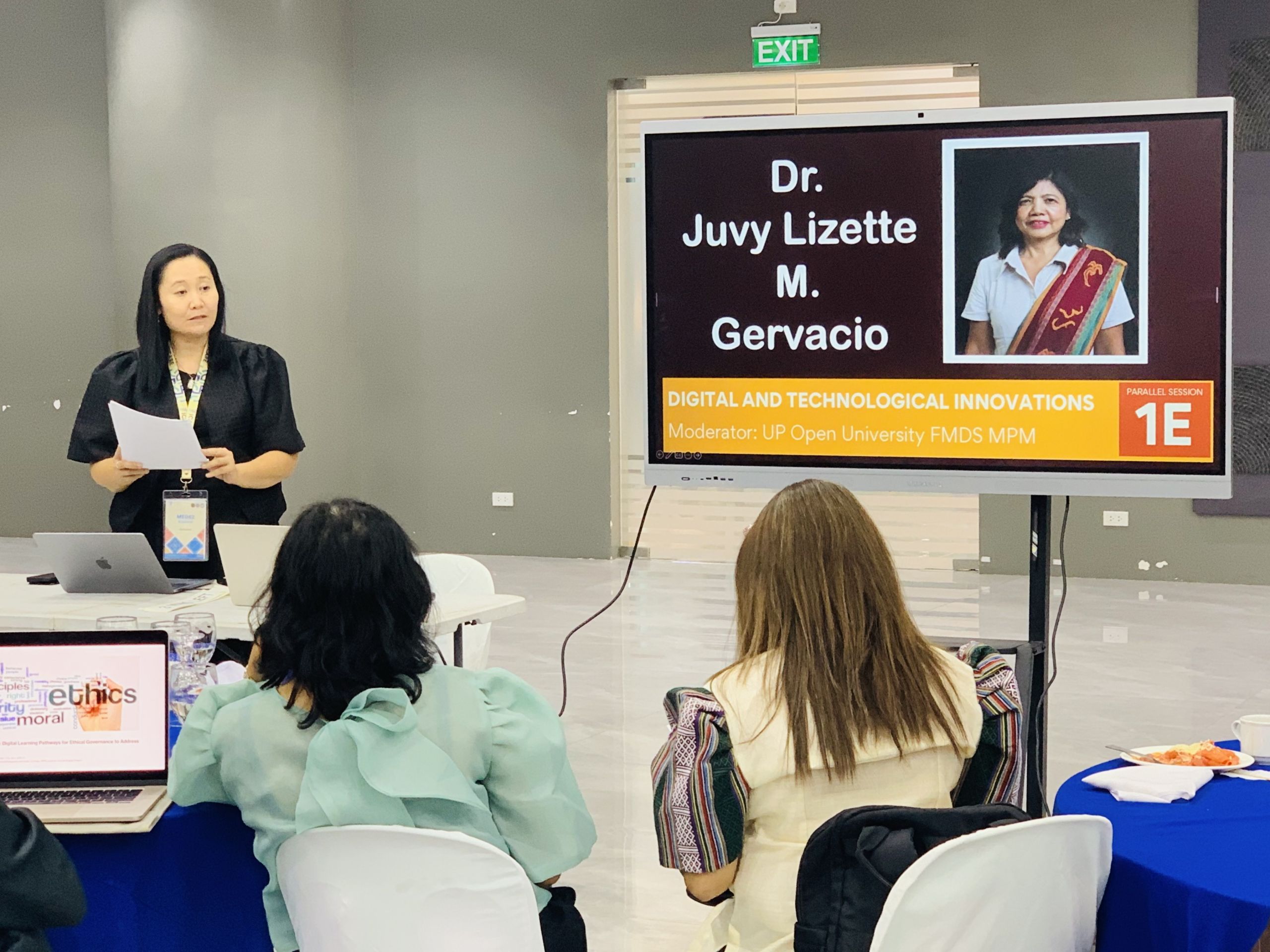
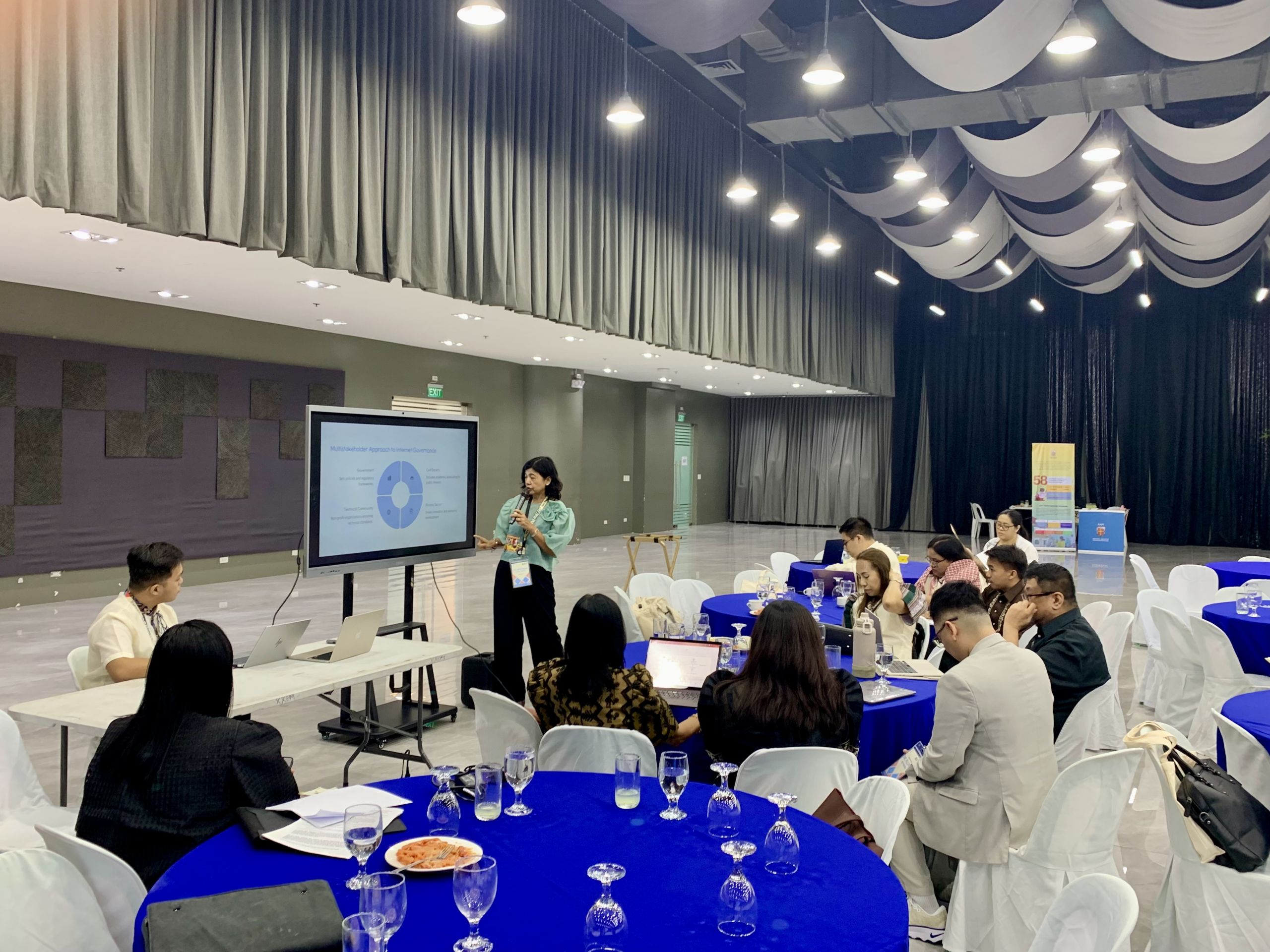
Atty. Rosanne Medez, MPM Program Senior Lecturer, and overall moderator of the MPM panel, facilitated highly insightful exchanges during the panel discussion. Dr. Juvy Lizette M. Gervacio, , Associate Professor of the UPOU MPM Program and UPOU Center for Open and Digital Teaching and Learning (CODTL Director, presented her paper on “AI in Governance.” Dr. Gervacio underscored Artificial Intelligence’s (AI’s) potential to advance socio-economic development and support sustainable development goals and the need for policy pathways that aim to strengthen multi-stakeholder cooperation, capacity-building and international collaboration towards building a trusted and human-centered AI ecosystem.
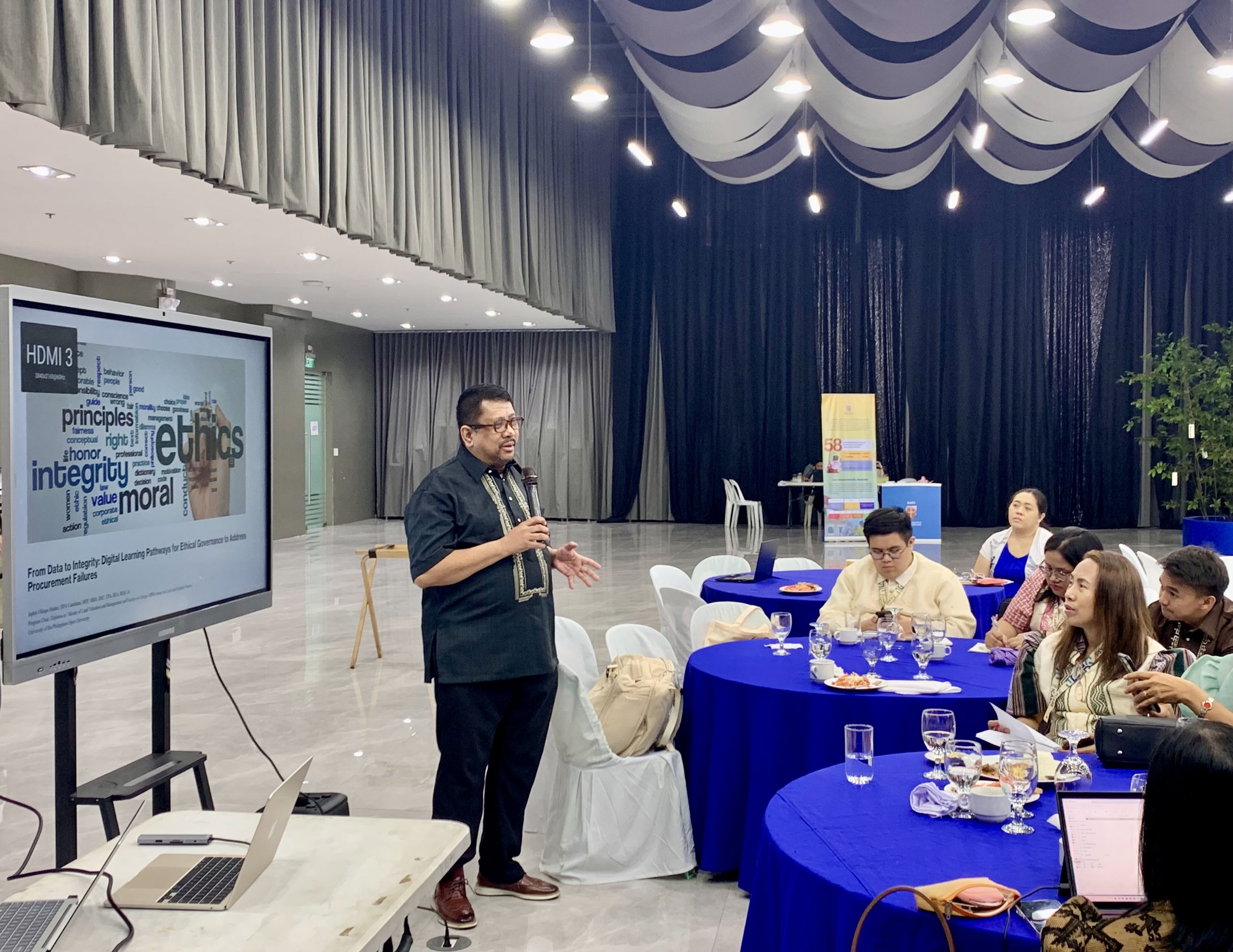
Asst. Prof. Jephte O.Muñez, UPOU regular faculty and Diploma in and Master of Land Valuation and Management (D/MLVM) Program Chair, presented his paper titled “From Data to Integrity: Digital Learning Pathways for Ethical Governance to Address Procurement Failures. Asst. Prof. Muñez identified procurement failures from COA audit reports that reveal serious governance deficits requiring innovative professional and ethical capacity-building interventions. He emphasized the need for ODeL-enabled training pathways, including stackable micro-credentials and certification programs that integrate ethics, analytics, and participatory audit tools. His policy recommendations call for institutionalizing digital competency standards, strengthening procurement ethics training, and mainstreaming data-driven civic oversight in public sector professional development. On Day 2, Asst. Prof. Muñez presented another paper “entitled “Mapping Procurement Failures: Gender-Inclusive, Tech-Enabled Audits for Transparent and Accountable Governance”. The paper examines persistent infrastructure procurement issues in disaster-vulberable Cebu, using secondary data to reveal significant gaps in flood control projects that disproportionately impact women and low-income households. It introduces a proof-of-concept CPIA-XAI dashboard that leverages digital tools, spatial diagnostics, and open contracting data to strengthen transparency and citizen oversight, aligning with reforms under the New Government Procurement Act and offering a scalable model for participatory procurement governance.

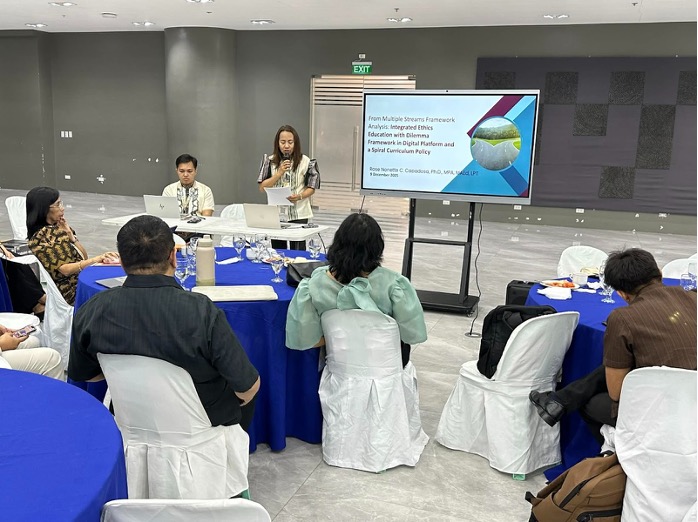
Asst. Prof. Rose Nonette C. Capadosa, Ph.D., MPM Program Chair, shared her paper titled “From the Multiple Streams Framework (MSF) Analysis: Integrated Ethics Education with Dilemma Approach Paradigm in Digital Platform Under a Spiral Curriculum Policy” as potent in dealing with long-standing faulty ethics and values education pedagogy and curriculum that centers on the “Bag of Virtues” approach and the human capital paradigm. After ushering participants back in time to recall the miseducation of the Filipinos cited by history scholars of the Spanish era education up to the present Republic Act No. 11476 (Good Manners and Right Conduct and Values Education Act) period reflected in the EDCOM 1 and 2 findings, Dr. Capadosa espoused for an upgrade and an integrated ethics/values education policy from the Basic Education level to the Professional academic level; convening different stakeholders into a regular dialogical inquiry community; adequate training and capacity building of ethics educators; and the regular monitoring and evaluation (M&E) of implemented ethics education programs, among others.
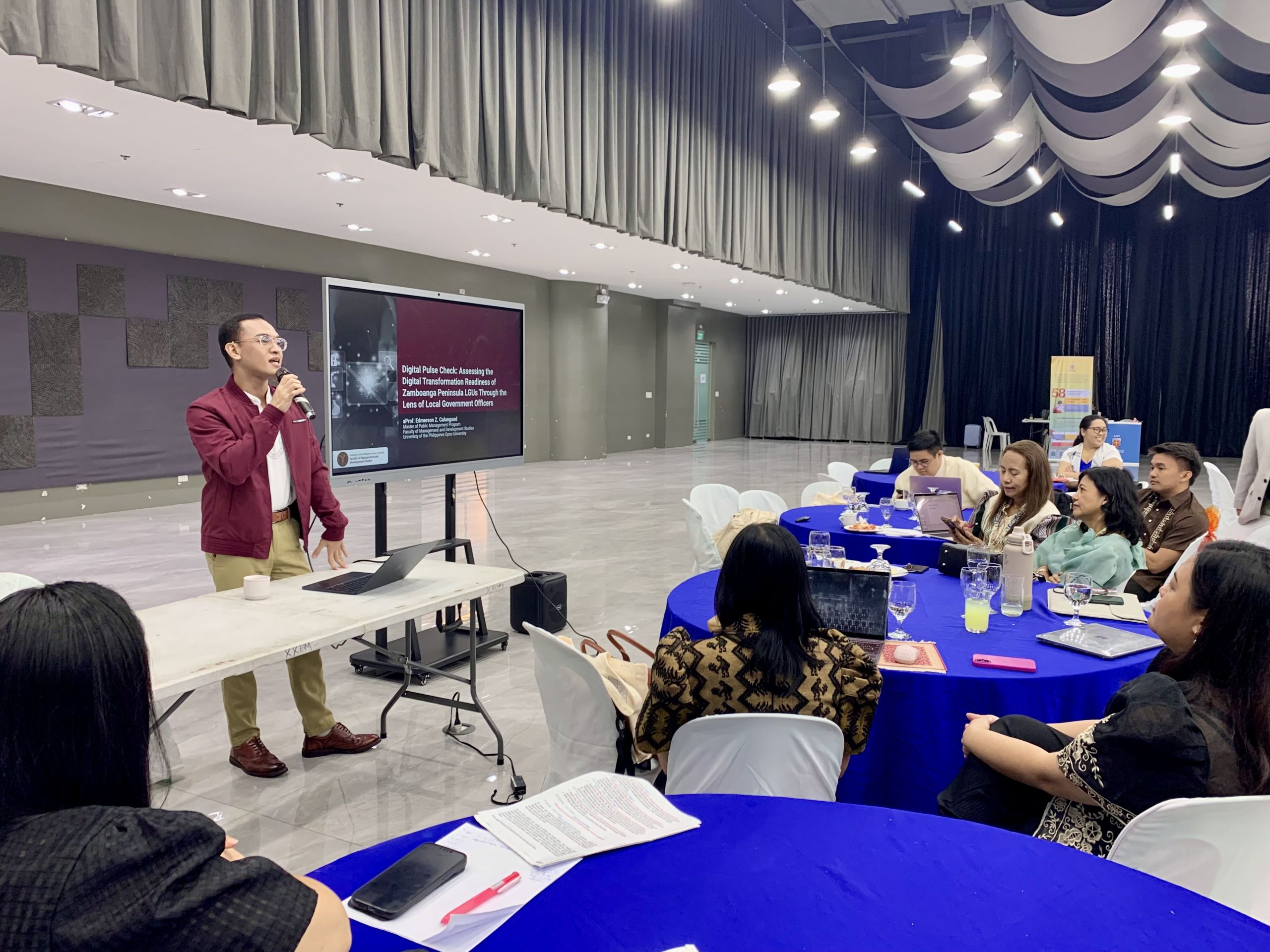
The paper of Asst. Prof. Edmerson Z. Calungsod on “Digital Pulse Check: Assessing the Digital Transformation Readiness of Zamboanga Peninsula LGUs through the Lens of Local Government Officers” assessed the digital transformation readiness of Local Government Units (LGUs) in the Zamboanga Peninsula by examining the perspectives of LGU officers involved in digital governance under the LGU Local Government Academy’s (LGA) Capacity Development Pillars. From secondary data and focus group discussion (FGD) with the LGU officials, findings revealed varying levels of digital readiness. Asst. Prof. Calungsod recommended the prioritization of policy development that strengthens regional digital transformation efforts and ensure sustainable progress across LGUs.
Additional presenters who joined the MPM-led panel session shared their studies that both pivot on open data and governance. The officials of the WeSolve Foundation that collaborate with the Department of Education (DepEd) on open data initiatives discussed their current project that aims to empower communities with education data to address the learning crisis. The final presenter, Prof. Maria Faina L. Diola, DPA, Associate Professor of the UPD NCPAG, presented in a related paper the initial results of her study that assessed the readiness of the academic institutions in pursuing open government partnerships with citizens and society.
The collaboration is supportive of a wide range of Sustainable Development Goals (SDGs) specifically SDG 17 (Partnership for the Goals); SDG 4 (Quality Education); SDG 8 (Decent Work and Economic Growth); SDG 9 (Industry Innovation and Infrastructure); SDG 10 (Reduced Inequalities); SDG 11 (Sustainable Cities); SDG 12 (Responsible Consumption and Production); SDG 13 (Climate Action); and SDG 16 (Peace, Justice and Strong Institutions).
Written by: Rose Nonette C. Capadosa, UPOU FMDS MPM Program Chair, with contributions from Jephte Olimpo Muñez, UPOU D/MLVM Program Chair • Edited by: Larry N. Cruz
Sustainable Development Goals



FMDS Socials