
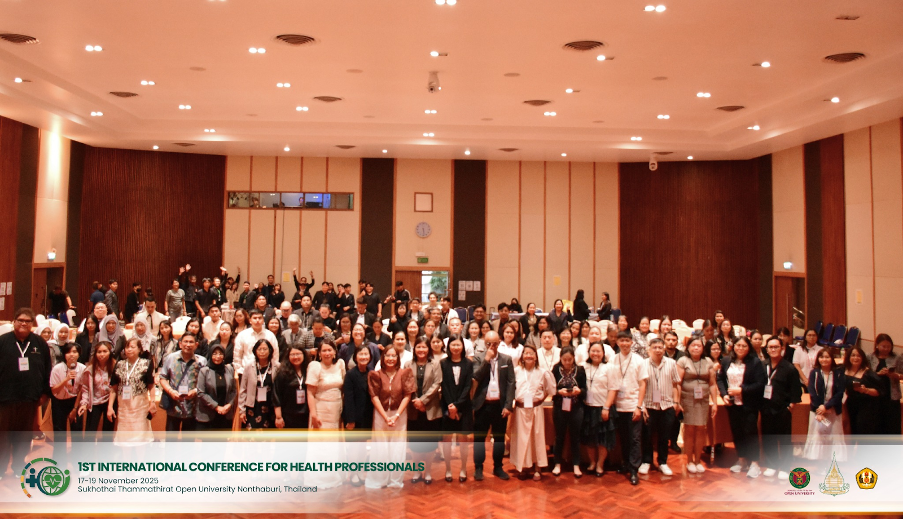
The Faculty of Management and Development Studies (FMDS) of the University of the Philippines Open University (UPOU), in collaboration with the Sukhothai Thammathirat Open University (STOU) and the Universitas Padjadjaran (UnPad) of Indonesia, co-organized the 1st International Conference for Health Professionals (ICHP) 2025 on 17-18 November 2025, through a hybrid format. This year’s theme “Innovative and Sustainable Health Practices Across Diverse Global Settings,” highlighted both shared and unique challenges across global settings, emphasizing collaborative strategies that foster sustainability, equity, and resilience. This inaugural gathering aimed to empower individuals and institutions to co-create knowledge and action for transformative change, envisioning a future where health systems not only adapt to change but also lead it with innovation, fairness, and unity.
Day 1: Preconference
Participants were welcomed by Prof. Rizky Abdulah, Vice Rector for Research, Collaboration, and Marketing of the Universitas Padjadjaran, followed by a panel of speakers moderated by Dr. Iqbal Pramukti, Manager of Research, Community Service, and Innovation of the Faculty of Nursing of UnPad.
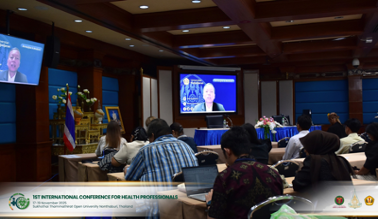
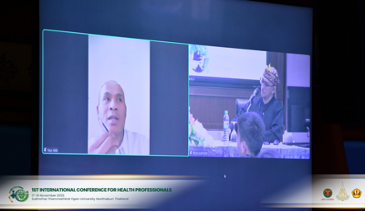
The preconference talk was initiated by Prof. Nur Atik, Director of Research and Community Services of UnPad, discussing the role of higher health institutions in shaping sustainable health practices. He introduced the UnPad’s academic health system framework highlighting the transformative learning, translational research, and community engagement for health equity. Prof. Atik acknowledged a common challenge during an open forum, especially prevalent in Southeast Asian countries, of limited resources and staffing, noting that faculty members have dual responsibilities for both teaching and research. To navigate this, the university’s [UnPad] strategy centers on the strategic integration of research and education. Furthermore, the university actively seeks collaboration with other institutions to share responsibilities and pool resources, a strategy the presenter believes many in the audience also employ.
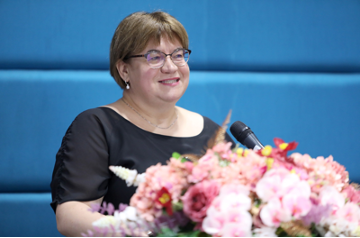
The talk was succeeded by Prof. Olga Riklikienė, Faculty of Nursing Professor at the Lithuanian University of Health Sciences, where she explored the use of immersive open pedagogies in nursing education. Her presentation detailed the limitations of traditional learning such as safety constraints, clinical placement challenges, insufficient competence of mentors, and high costs of simulation laboratories. These are but a few highlighted barriers of traditional nursing education. Current literature presented by the speaker suggests that virtual reality (VR) enhances nursing students’ knowledge, confidence, and even fosters empathy. Prof. Riklikienė directly explained the scope and limitations of the study and underscored potential directions for future research on situational adaptability. Despite the novelty of the VR study, it was successfully piloted in Lithuania. She emphasized the importance of continuing education, which requires a certain degree of technological adeptness. She noted that resistance to change is not unusual, recalling how the initial introduction of computers to the workplace was met with the same concerns. As she concluded, she urged educators to be visionaries and bold to explore unconventional methods to adapt to the changing landscape of education.
Days 2 to 3: Opening Ceremony, Plenary/Panel/Parallel Sessions, and Closing Ceremony
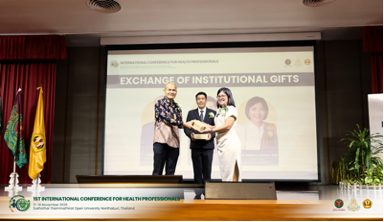
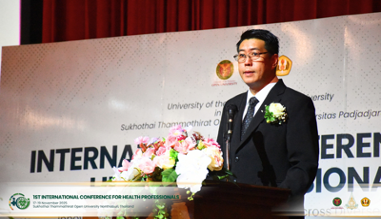
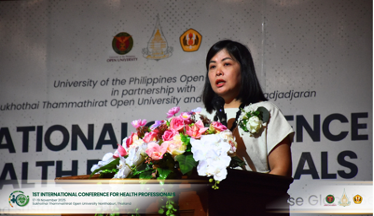
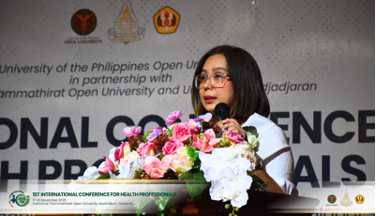
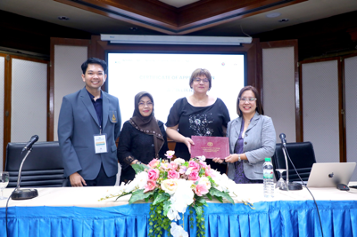
Assoc. Prof. Taweewat Watthanakuljaroen, Acting President of STOU, officially opened the conference with a warm welcome message, followed by Assoc. Prof. Finaflor F. Taylan, Dean of FMDS, which she highlighted the joint leadership of the three partner universities reflecting a strong commitment to collaborative action in advancing sustainable healthcare systems. She encouraged participants to reflect on the guiding truth that health is a right, not a privilege. A formal declaration of the opening of ICHP 2025 was then led by Prof. Joane V. Serrano, Chancellor of UPOU. She reiterated that the conference, grounded in its theme, provides a space to reflect on and reimagine ways to build innovative and sustainable health systems. The opening ceremony also featured an exchange of institutional gifts among the three partner universities.
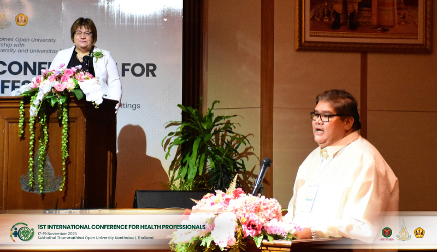
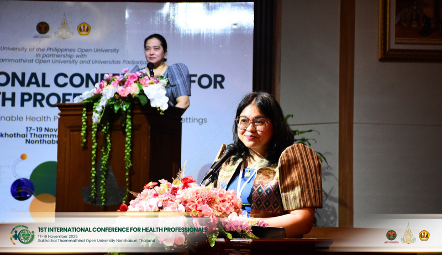
The first session started with Prof. Riklikienė through a keynote address where she presented the topic titled “Sustainable Nursing Education Using Innovation and E-Conscious Strategies to Prepare Global Health Professionals.” She emphasized that healthcare, while vital, is also a major contributor to environmental pollution, with hospitals producing significant greenhouse gas emissions, high energy consumption, and substantial medical waste. Prof. Riklikienė argued that nurses, as the largest group of healthcare professionals, play a crucial role in shaping sustainable practices through their daily clinical decisions. She concluded her session by urging educators to prepare future nurses who are not only clinically competent but also sustainability-driven leaders capable of shaping environmentally responsible healthcare systems. Continuing the session, Prof. Sheila R. Bonito, Dean of the University of the Philippines Manila College of Nursing, delivered the first plenary session with her paper entitled “Building Strong Leaders for Transformative Healthcare”, emphasizing the critical role of investing in nursing education and the context of leadership.
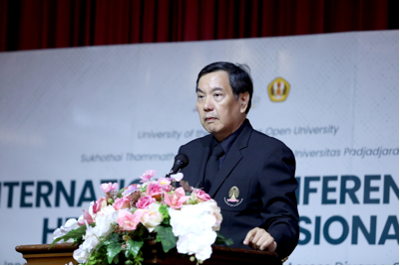
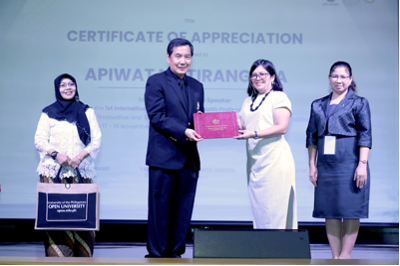
The forum continued with a second plenary session by Prof. Apiwat Mutirangura, Department of Anatomy Head, Faculty of Medicine of the Chulalongkorn University. He showcased his groundbreaking healthcare innovation on rejuvenating Deoxyribonucleic Acid (DNA) by genomic stability molecules, a novel gene-therapy–based approach to slowing and potentially reversing cellular aging, with the stated goal of addressing many age-associated diseases. The core of the talk was the discovery of a new structural feature of DNA, referred to as the “youth-DNA-gap”, which the speaker described as protecting DNA from damage and helping maintain genomic stability in young cells. Loss of this protective cap, according to the presentation, contributes to cellular senescence, DNA damage, and the cascade of aging-related pathology. Prof. Mutirangura concluded with comments on preparation for future human clinical trials, current regulatory hurdles, and the potential of this approach as a future personalized anti-aging and disease-modifying therapy.
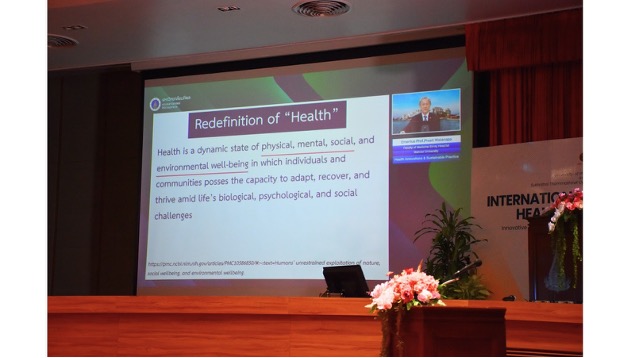
The last keynote address was presented by Professor Emeritus Prasit Watanapa, Doctor of Medicine of the Faculty of Medicine Siriraj Hospital, Mahidol University in Thailand with his topic entitled “Overview of Health Innovations and Sustainable Practices.” He emphasized that for health innovations to be truly sustainable, they must support not only individual patients but also public health, global health, One Health, and planetary health.
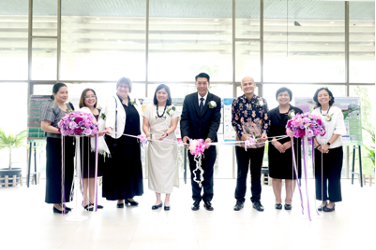
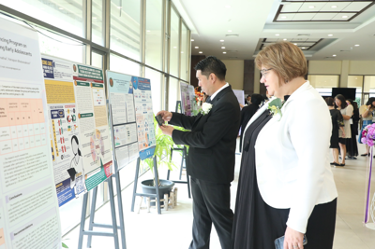
On the same day, the ICHP Poster Gallery was officially unveiled at the Phitayaphat Building, STOU. This dedicated space showcased key research outputs, innovations, and insights contributed by participating scholars and institutions.
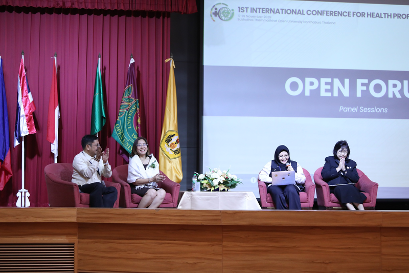
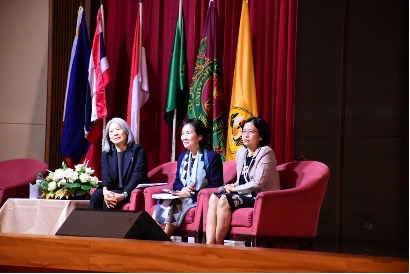
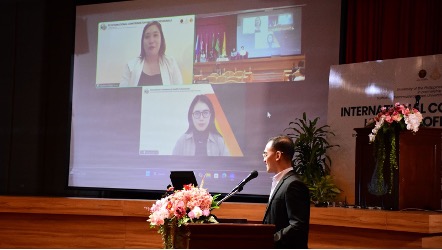
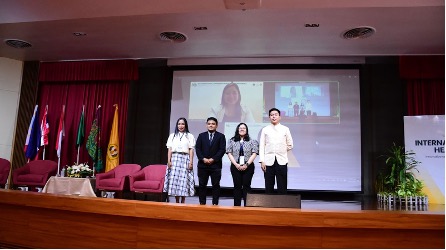


Productive and enriching parallel, panel, and pechakucha sessions were anticipated during the half day of Day 2 and Day 3 which were participated by UPOU faculty members and staff.
Parallel Session
- Asst. Prof. Ari Luis Halos, FMDS Associate of Arts in Digital Entrepreneurship (AADE): “Healing Makiling: Proposed Wellness Tour Homage to Los Baños’ Origins as a Hospital Town”.
- Asst. Prof. Edmerson Calungsod, FMDS Master of Public Management (MPM): “Towards an Inclusive Public Administration: Understanding Youth COVID-19 Pandemic Policy Compliance in a Low-Income Philippine Municipality”.
- Asst. Prof. Jephte Muñez, FMDS Diploma in/Master of Land Valuation Management (D/MLVM) Program Chair: “Smart, Fair, and Clean Beyond Survival: Rethinking Health Financing for the Philippines”.
Panel Sessions
- Assoc. Prof. Finaflor Taylan, DProfSt: “Remote psychosocial support and volunteer management during a pandemic: Lessons and Opportunities from a Social Worker and Educator Lens”.
- Prof. Jean A. Saludadez, PhD, FICS Doctor of Communication (DComm) Program Chair: “Carer’s Communicative Practices and Perspective on Depression: Implications For Inclusive Technology-Mediated Health Support”.
Pechakucha Sessions
- Asst. Prof. Regine Karla Bagalanon: “Compassion Fatigue, Vicarious Trauma and Burnout Among Nurses in the Emergency Department of Selected Tertiary Hospitals in Laguna”.
- Prof. Myra Oruga, Ph.D., FMDS Diploma in/Master of International Health (D/MIH) Program Chair: Building Academic Resilience through Digital Health Innovations
- Assoc. Prof. Rita Ramos, Ph.D., FMDS Master of Arts in Nursing (MAN) Program Chair: “The internet is slow!”: building a context-oriented learning management system”.
- Assoc. Prof. Queenie Ridulme, Ph.D.: “Beyond the Bedside: Innovating Nursing Education Through Web-Based 360° Simulation and Interactive RLE Design”.
- Ms. Dona Lyn Piamonte: “Integrating the One Health Approach in Youth Sustainability Education: Advancing Innovative and Sustainable Health Practices through the UPOU Earth Ambassador Program”.
- Asst. Prof. Tricia Ascan, FMDS AADE Program Chair: “Resilient Learning in Caregiving: Sustaining Health Education for Caregivers of Children with Special Needs in a Post-Pandemic World”
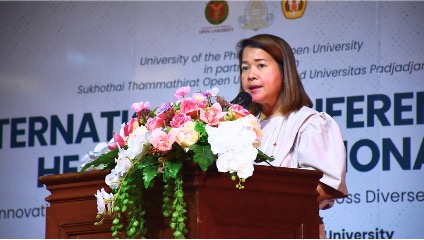
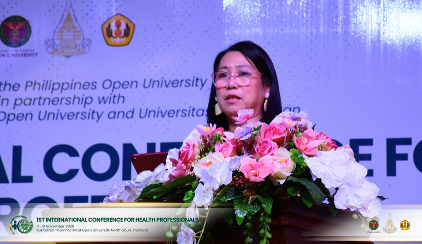
Prof. Myra D. Oruga, ICHP Program Committee Chair, wrapped up the event with a thoughtfully articulated synthesis that highlighted the key insights and emerging themes from the conference sessions. She emphasized how ICHP 2025 underscored that community empowerment is essential to long-term resilience and how it showcased the value of international and institutional partnerships in strengthening global health. The conference provided a clear roadmap for advancing health education, research, and workforce development.
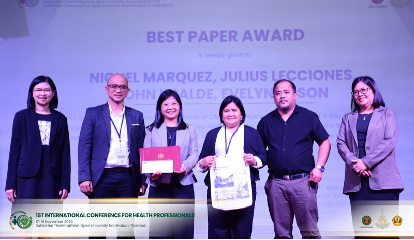
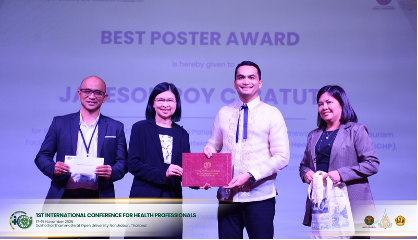
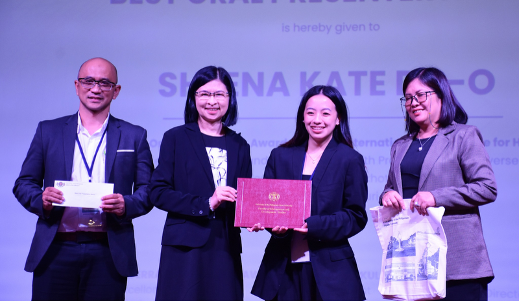
An awarding ceremony recognized exemplary contributions presented during the conference, including the Best Poster, Best Paper, and Best Oral Presentation. The Best Poster Award was awarded to Dr. Javeson Roy Batuto for his poster entitled “Developing a Patient-Centered Core Framework in a Medical Tourism Facility Using the SERVQUAL Model.” The Best Paper Award was presented to the team of Dr. Nichel Marquez, Dr. Julius Lecciones, Mr. John Ubalde, and Ms. Evelyn Joson for the study “Performance of CAD-AI and Human Reading in Chest X-Ray Screening for Tuberculosis: Evidence from Urban Active Case FInsing in Metro Manila, Philippines.” The Best Oral Presentation Award was given to Ms. Sheena Kate Da-o for her paper entitled “Unraveling the Unheard Stories of Nurses on Extended Shifts” in which she artistically discussed core findings of paradoxical nature of extended shifts, offering professional growth (“Embracing the Call”) but imposing a significant personal burden through prolonged fatigue (“Facing the Toll”). She emphasized that policymakers must be urged to create supportive work environments and ensure access to mental health resources.
Assoc. Prof. Rita Ramos, Overall Chair of ICHP 2025, delivered the closing remarks, highlighting the historic nature of the gathering, marking the birth of ICHP, and extended heartfelt gratitude to all who made the conference possible. She underscored that healthcare is both local and global, reminding participants of their shared mission across borders. Assoc. Prof. Ramos acknowledged the contributions of the participants and leaders, and expressed deep appreciation for the entire ICHP team and the organizing universities whose collective efforts brought the conference to life. The conference ended through unveiling the teaser for the next ICHP, set for July 2027 which will be proudly hosted by Universitas Padjadjaran in Indonesia.
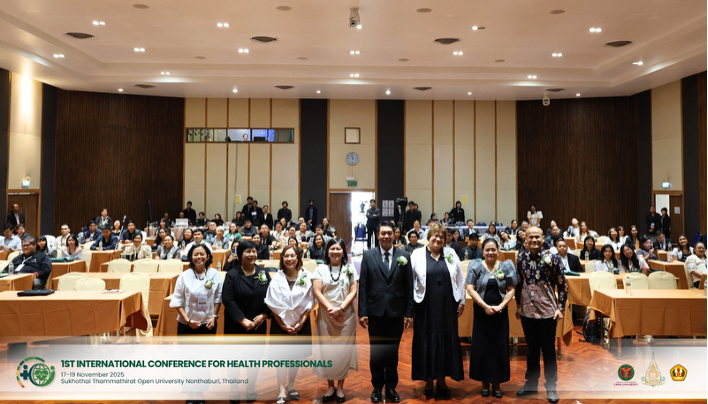
ICHP 2025 consistently emphasized that successful health innovations must be adapted to the cultural, economic, and demographic realities of each setting. Solutions that are flexible and locally relevant are more likely to be accepted and sustained. We must recognize that sustainable practices rely heavily on knowledgeable and empowered healthcare workers. The Philippines and similar settings can learn from international experiences to tailor their health systems towards sustainability, inclusiveness, and resilience.
Written by: Raizza Anna Alforja• Edited by: Larry N. Cruz
Sustainable Development Goals


FMDS Socials