
Students from the University of the Philippines Open University (UPOU) partnered with the Baybay City Government in Leyte from March to May 2026 to help update the city’s Ecological Profile (EP), a key reference for local planning and development. Working as Team United Nations, the group brought together students from Ilocos to Cotabato City, demonstrating UPOU’s nationwide reach through open and distance e-learning.
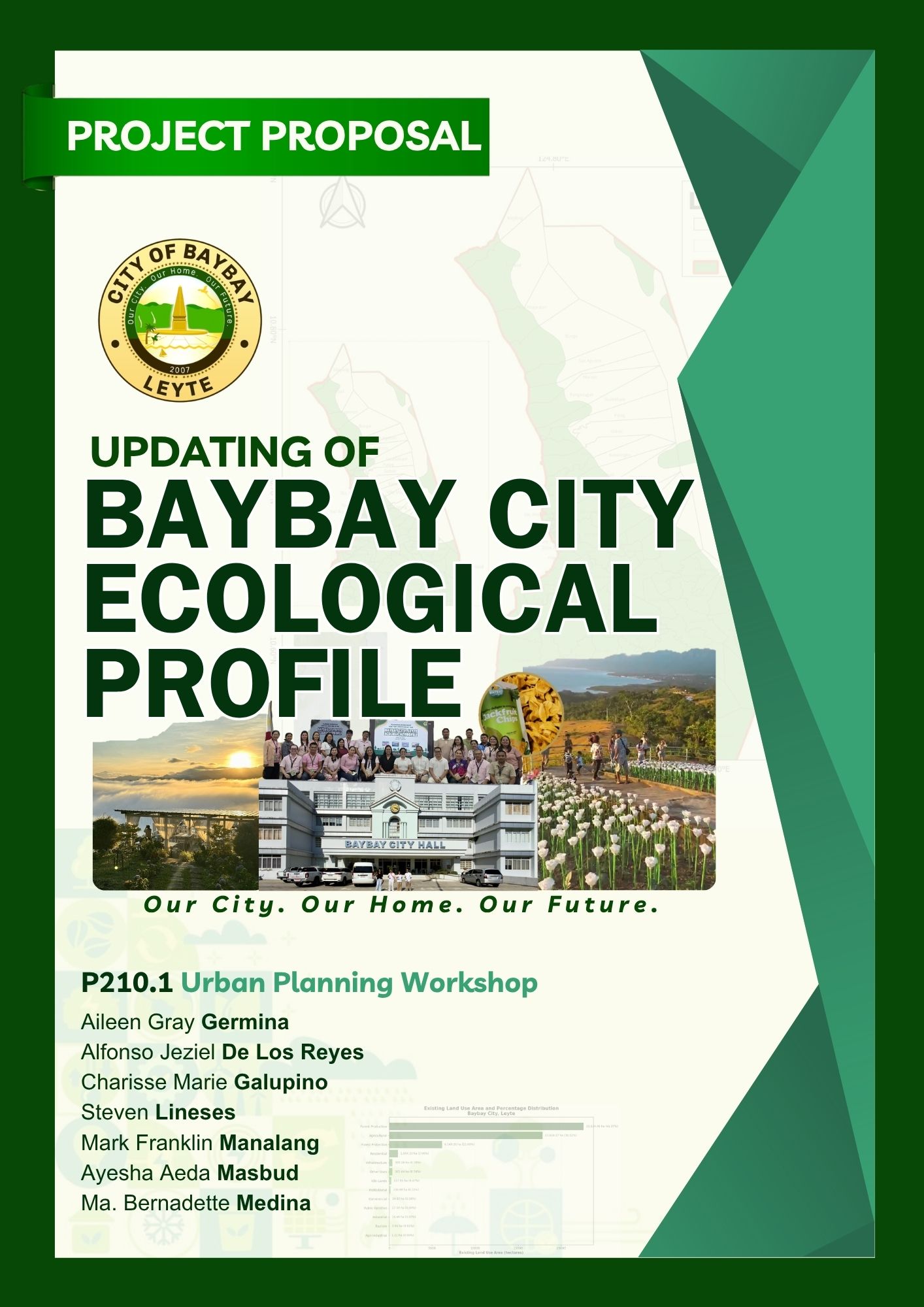 The initiative was undertaken through the Pamayanan Urban Planning Studio as part of P210.1 (Urban Planning Workshop) under the Diploma in Land Use Planning program. The studio enables students to apply planning concepts and methods while working with local government units (LGUs), academic institutions, and civil society organizations on actual planning outputs.
An EP presents a comprehensive account of a city’s sectoral conditions and serves as a primary basis for local planning and development. Under the guidance of Asst. Prof. Gene Lambert Giron, the team contributed to the update through data collection, spatial mapping, stakeholder consultations through face-to-face and hybrid modes, and technical analysis.
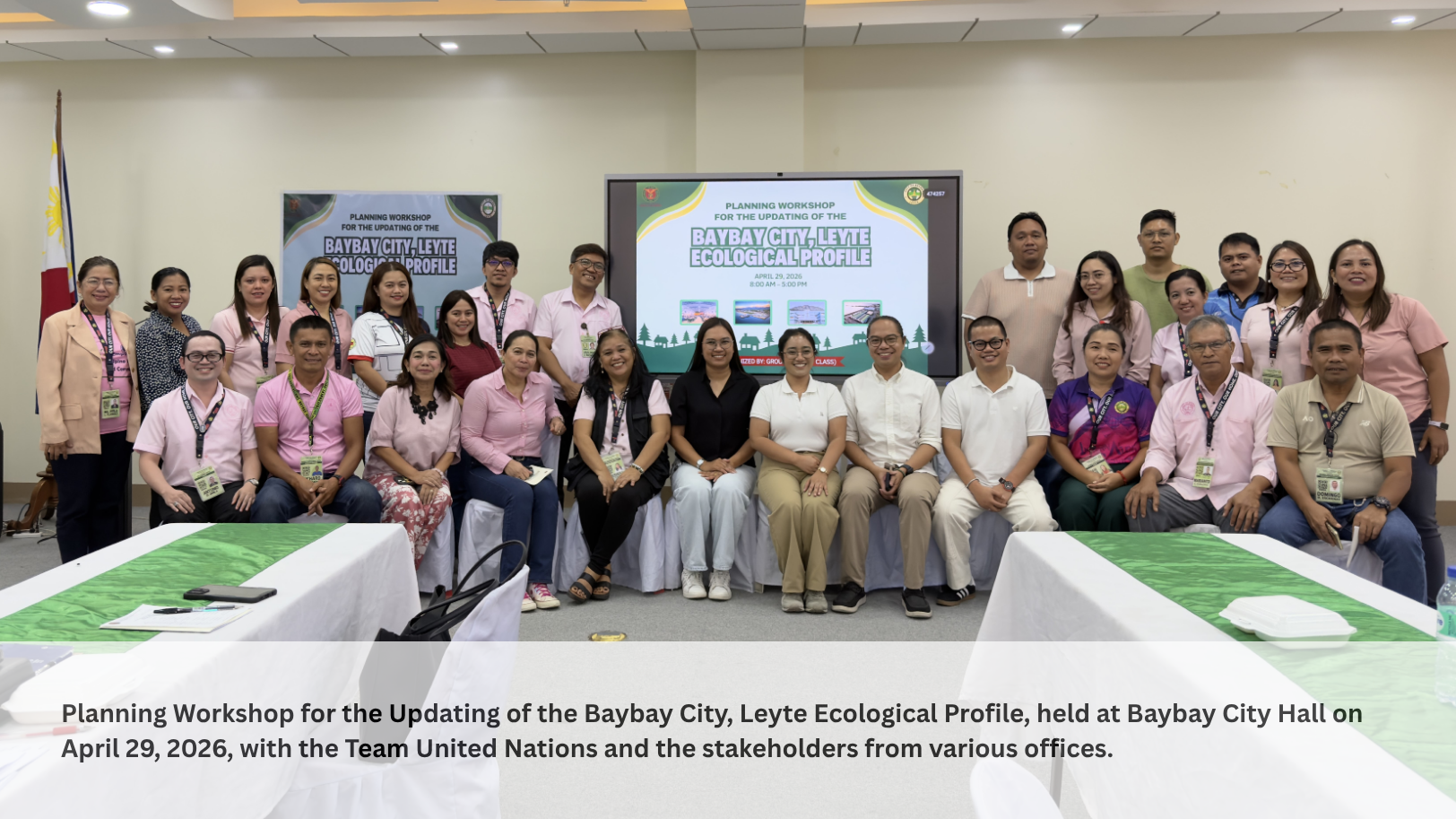
Stakeholder consultation was central to the process. The team worked with city offices and other stakeholders to validate data, identify priorities, and ensure that the updated EP reflected local conditions. The process documented key ecological assets, development opportunities, and hazard vulnerabilities. The team used the Harmonized Ecological Profile and Climate and Disaster Risk Assessment (CDRA) framework of the Department of Human Settlements and Urban Development (DHSUD) and integrated concepts from PlanSmart for Sustainable Human Settlements into the planning workflow.
The work produced thematic maps and strategic planning matrices. The updated profile also documented Baybay City’s recent development under the leadership of Mayor Jose Carlos L. Cari, including the completion of the Baybay City Hall, Binaybayon Complex, and Baybay City Boardwalk; road construction and rehabilitation projects; and agricultural programs supporting food security.
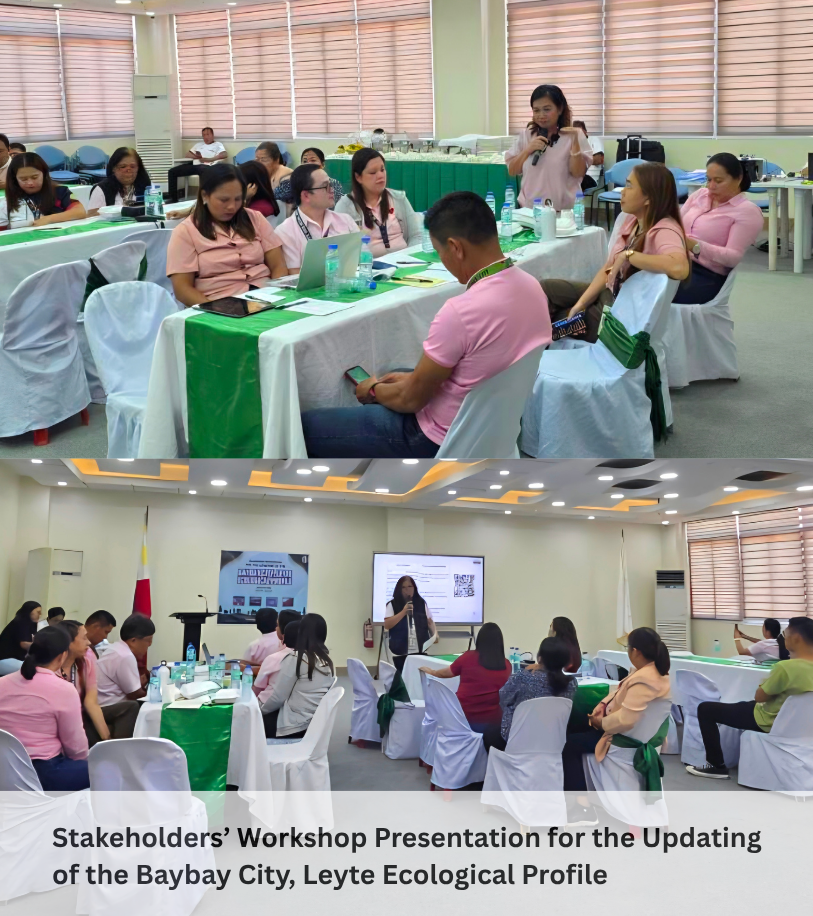 During the workshop, the team found that several infrastructure projects and other accomplishments recorded in 2025 had already surpassed the 2024 figures initially provided by the LGU. This finding prompted further discussion and data validation, with city departments providing more recent information for a more accurate and comprehensive EP.
By integrating disaster risk reduction, ecological conservation, and sustainable land use planning, the EP can help Baybay City pursue inclusive, adaptive, and environmentally responsible development. The initiative supports the United Nations Sustainable Development Goals (SDGs), particularly SDG 11 (Sustainable Cities and Communities), SDG 13 (Climate Action), and SDG 17 (Partnerships for the Goals).
T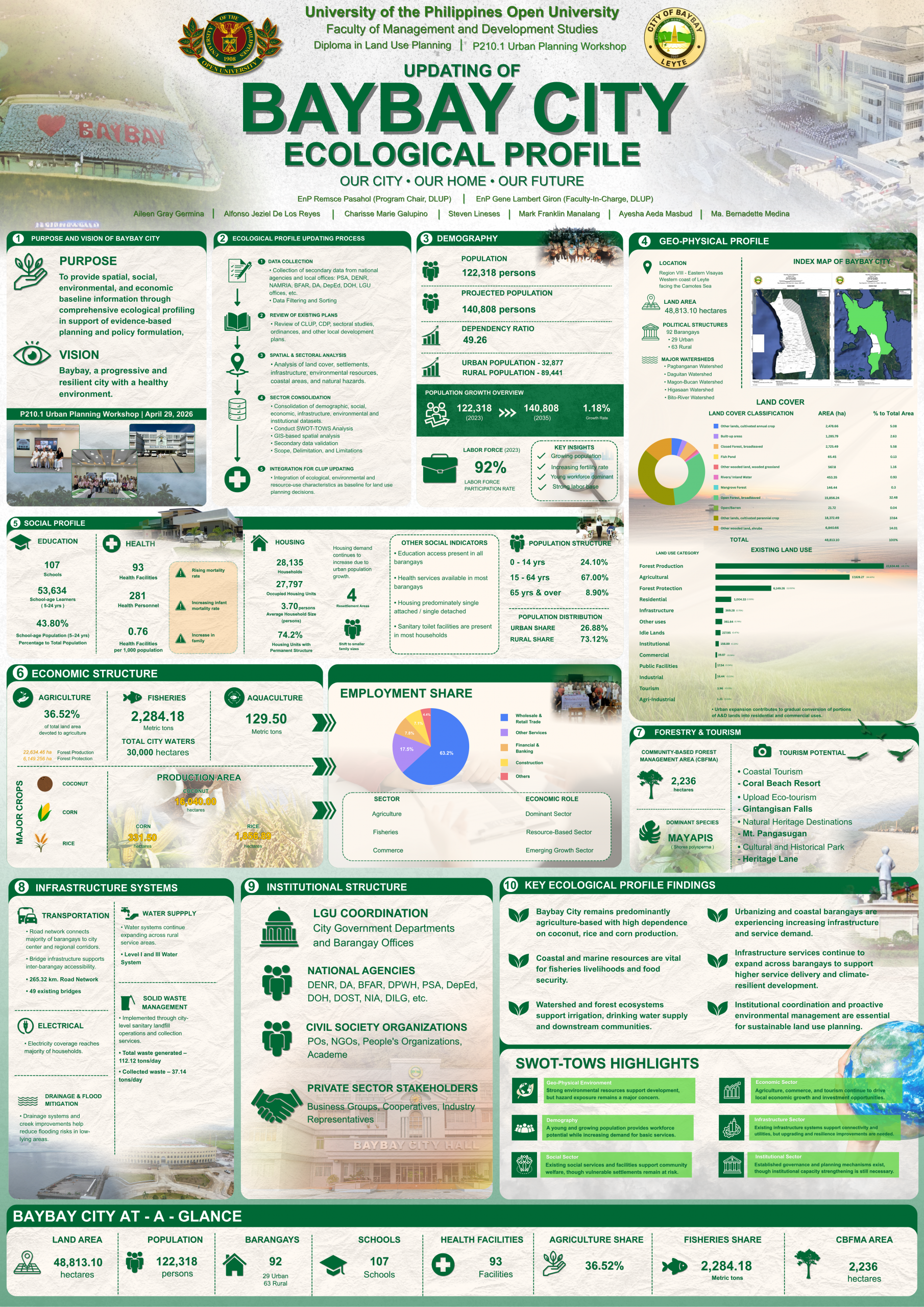 eam United Nations also developed a presentation poster summarizing the key components of the updated Baybay City’s Ecological Profile. It presents the methodology, SWOT-TOWS analysis (Strengths, Weaknesses, Opportunities, and Threats), sectoral assessments, and key ecological findings. The poster summarizes demographic, geophysical, socioeconomic, infrastructure, environmental, and institutional information gathered during the workshop, following the Comprehensive Land Use Plan (CLUP) Guidebook and Ecological Profile guidelines.The partnership demonstrated how geographically dispersed UPOU students can use flexible learning systems to contribute to local capacity-building and development planning. Through the project, the team updated hazard susceptibility assessments, prepared sectoral analysis matrices, formulated planning recommendations, and identified environmentally critical areas to support climate-responsive urban development.
The collaboration also highlighted the role of academic institutions in helping communities build a more sustainable and strategic future through evidence-based local development planning.
Written by: Aileen Gray Germina | Alfonso Jeziel De Los Reyes | Charisse Marie Galupino | Steven Lineses | Mark Franklin Manalang | Ayesha Aeda Masbud | Ma. Bernadette Medina • Edited by: Larry N. Cruz
Sustainable Development Goals



FMDS Socials