
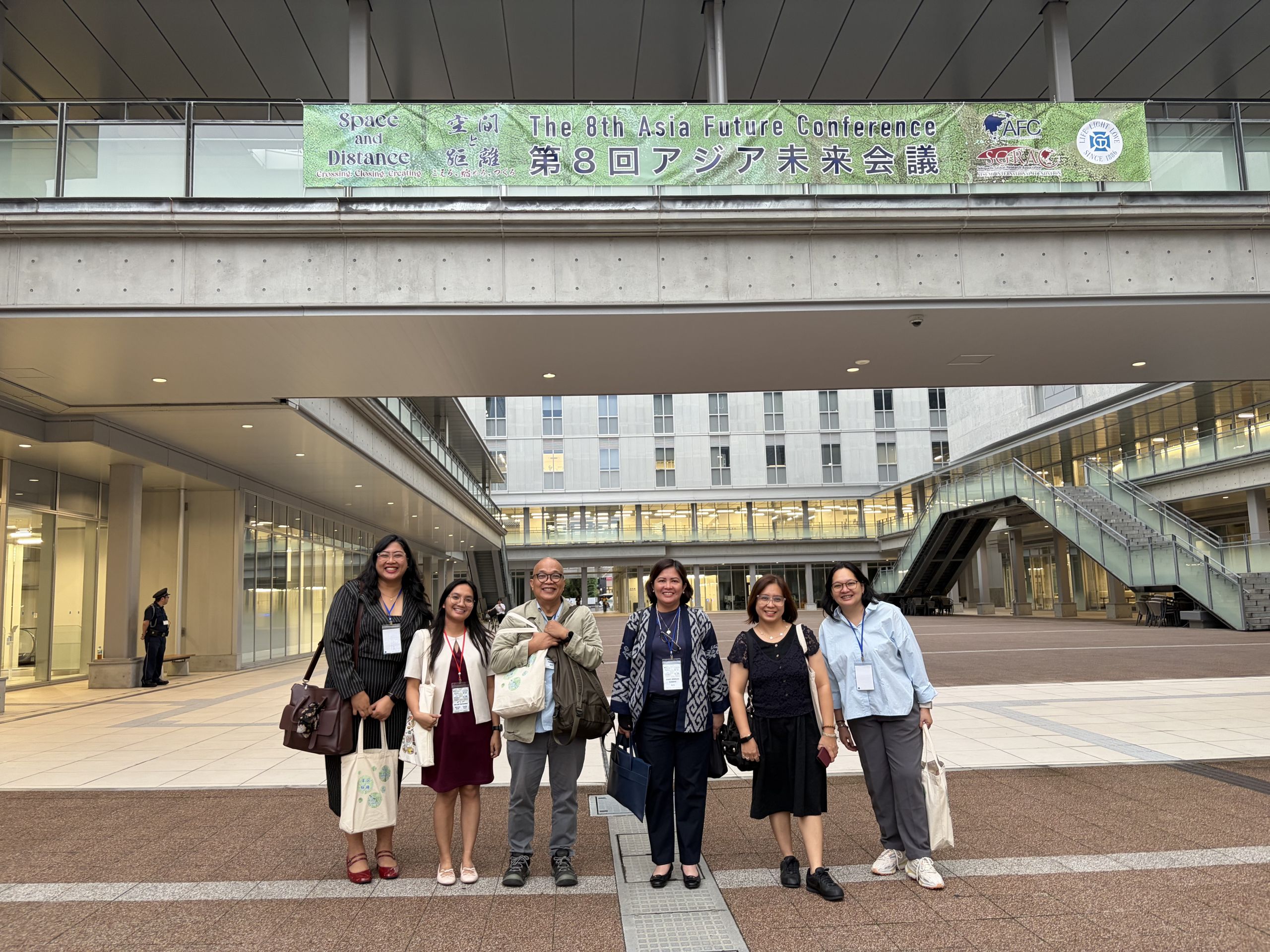
From L-R: Ms. Noreen Dianne Alazada, Ms. Vanessa Autor, Dr. Ferdinand Maquito (Senior Lecturer), Chancellor Joane Serrano, FMDS Dean Finaflor Taylan and FICS Secretary to the Faculty, Asst. Prof. Margaret Jarmin-Suarez
UP Open University (UPOU) officials and staff, led by Chancellor Joane V. Serrano, attended the recently concluded 8th Asia Future Conference last 25-28 August in Sendai, Japan. The conference was organized by the Sekiguchi Global Research Association (SGRA) of the Atsumi International Foundation (AIF), a staunch partner of UPOU since 2022. The conference, with the theme Space and Distance: Crossing, Closing, Creating, was also co-hosted by the Faculty of International Studies, Tohoku Gakuin University, Itsutsubashi Campus where the conference was held.
The UPOU AFC8 team led and participated in one roundtable session and one group session on 27 August, while members of the team (FMDS Dean Finaflor F. Taylan, Asst. Prof. Margaret Jarmin-Suarez, Dr. Ferdinand C. Maquito, Ms. Noreen Dianne S. Alazada, Ms. Janelle G. Ebron, and Ms. Vanessa T. Autor) served various roles such as session moderators, chairs, presenters, and discussants all throughout the conference.
On 26 August, Chancellor Serrano (together with Dr. Jakfar Mohammad Idrus, Community of Nations, Nation of Communities Lecturer), served as session chair for Space-Centered Activism where four (4) early career researchers from Indonesia and the Philippines discussed researches covering topics like digital resistance among Indonesian mothers, the bridge between online hashtags and offline participation in the Philippines, transnational anti-colonial networks in Japan, and community placemaking in Thailand. Across these studies, the presenters highlighted how individuals and collectives reclaim physical, digital, and transnational spaces to challenge power structures and foster civic engagement.
On the same day, Asst. Prof. Suarez, served as co-chair of the session on Narratives of Space & Distance where researchers examined the multifaceted ways space, geography, and memory are navigated across different cultural contexts. The presentations explored the physical and social distances faced by seafarers, labor mobility frameworks between Indonesia and Japan, distance as a narrative device in Japanese children’s literature, and the traditional practice of Yakihata as a living practice of spatial resilience. UPOU Faculty of Management and Development Studies (FMDS) Doctor in Sustainability (DSus) student, Herbert D. Nalupa, a Best Paper awardee who presented his study on seafarers during the session, also garnered the Best Presentation Award for the said session.
Exploring Japan–Philippines Local-to-Local Across Border Schemes (LLABS) through the Fujino–Maahas Initiative
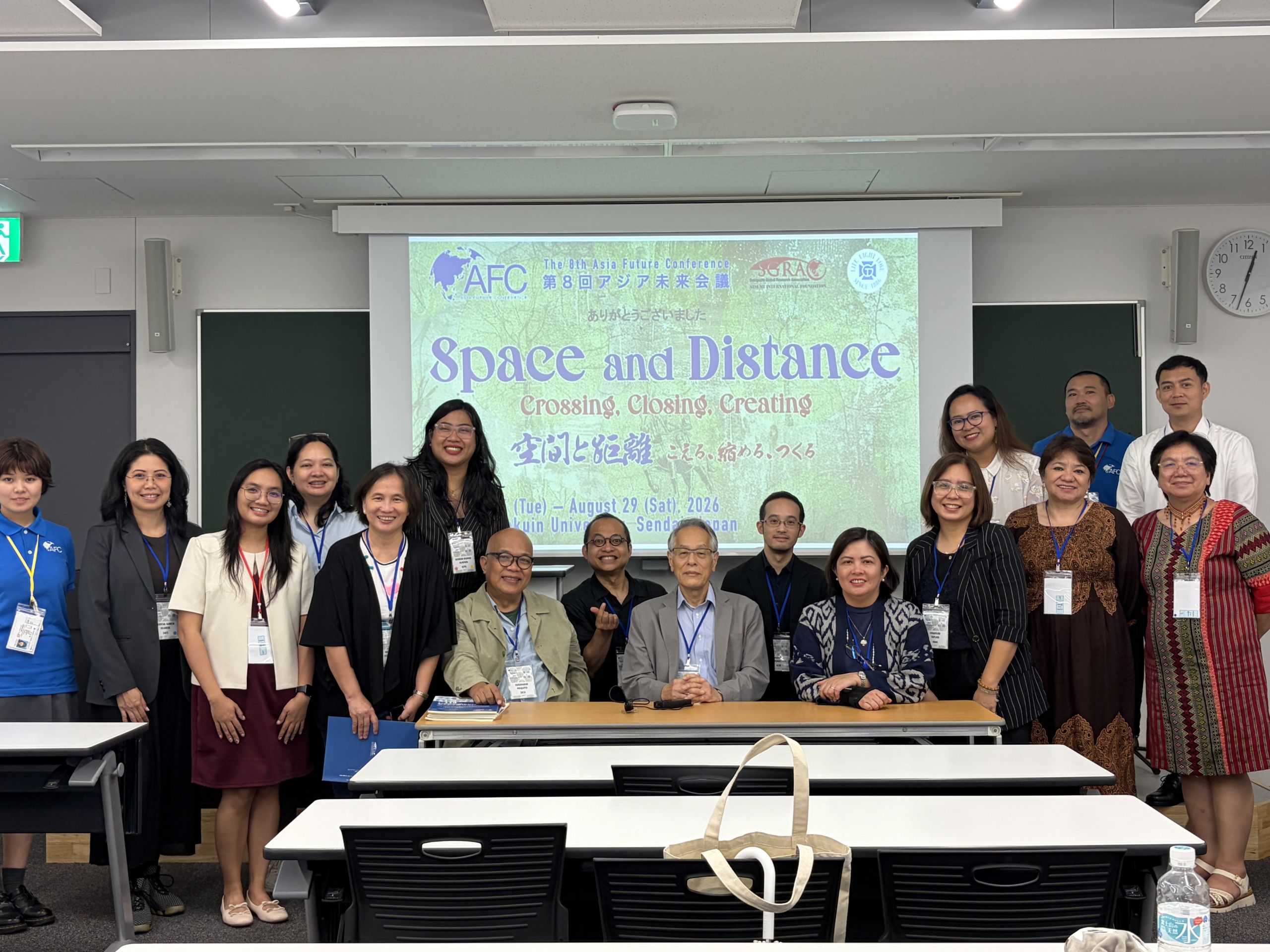
The speakers and attendees for the roundtable discussion on Contemplating the World from a Southeast Asian Lens: Exploring Local-to-Local Across Border Schemes (LLABS): The Case of Fujino–Maahas at AFC8
On 27 August, the roundtable discussion on “Contemplating the World from a Southeast Asian Lens: Exploring Local-to-Local Across Border Schemes (LLABS): The Case of Fujino–Maahas” where UPOU’s continuing efforts to explore LLABS, an approach that seeks to connect local communities or local government units in different countries as a complement to broader regional integration initiatives, was highlighted.
FMDS-UPOU has been exploring the LLABS concept through its Community of Nations, Nation of Communities (CNNC), a short course program which has been conducted for the past three years with support from Eurasia Foundation (from Asia). Under the LLABS framework, local communities in different countries are encouraged to establish direct linkages, share experiences, and pursue collaborative initiatives based on common interests and local strengths.
A key focus of the roundtable was the emerging LLABS between Fujino in Japan, and Maahas in Los Baños, Laguna, Philippines. The initiative was explored and further developed as a potential model for strengthening people-to-people connections and local level cooperation across national borders. The session featured three presenters who examined the Fujino–Maahas initiative from complementary perspectives, collectively illustrating how LLABS can foster sustainability, learning, and community engagement across geographically distant communities.
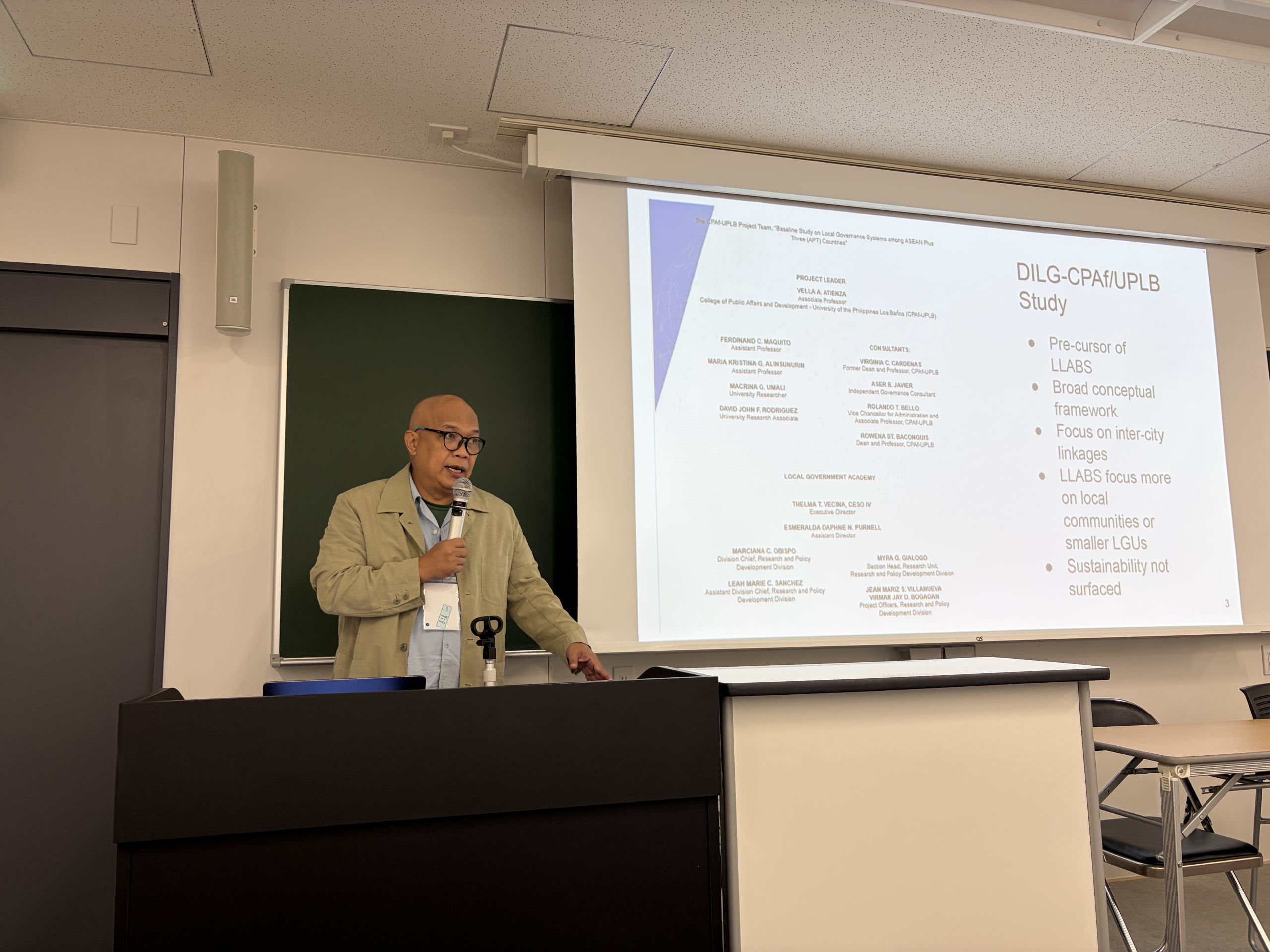
Dr. Ferdinand C. Maquito presents “The Road to Local-to-Local Across Border Scheme (LLABS)”.
Dr. Ferdinand C. Maquito, FMDS Senior Lecturer, presented about LLABS and the Sustainable Shared Growth, tracing the development of LLABS from its conceptual roots in regional integration and decentralization studies to its application in fostering cross-border collaboration among local communities. He highlighted the Maahas–Fujino partnership as a model for community-driven sustainability, showcasing initiatives in permaculture, community currency systems, local energy development, and greenway corridors. Dr. Maquito also emphasized the role of LLABS in strengthening local resilience, promoting people-to-people connections, and advancing sustainable development through collaborative and inclusive approaches.
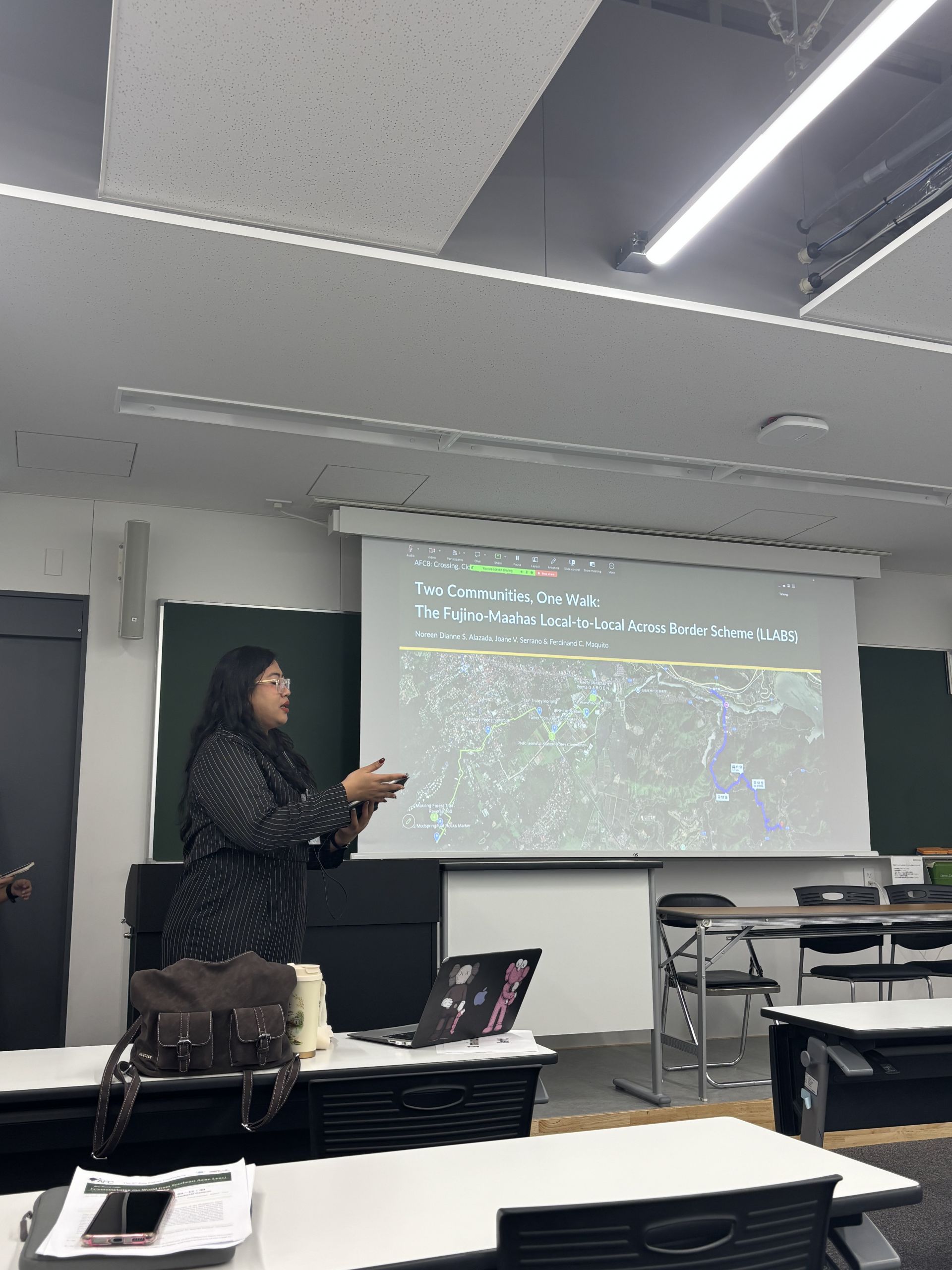
Ms. Noreen Dianne Alazada presents their research on “The Local-to-Local Across Border Scheme (LLABS) Model Between Fujino and Maahas: An Immersive Learning Experience”.
Ms. Noreen Alazada, FMDS Junior Project Assistant, explored its experiential learning dimension through her presentation, “The Local-to-Local Across Border Scheme (LLABS) Model Between Fujino and Maahas: An Immersive Learning Experience.” Her presentation explored how LLABS transforms geographical, relational, and experiential distances into opportunities for collaborative learning, cultural exchange, and shared sustainability action between the communities of Fujino, Japan, and Maahas, Philippines. She discussed the use of immersive walking, digital mapping, and vision-matching as tools for fostering deeper understanding of local sustainability practices, while emphasizing how shared experiences, place-based knowledge, and community engagement can strengthen cross-border connections and contribute to a broader network of sustainable communities.
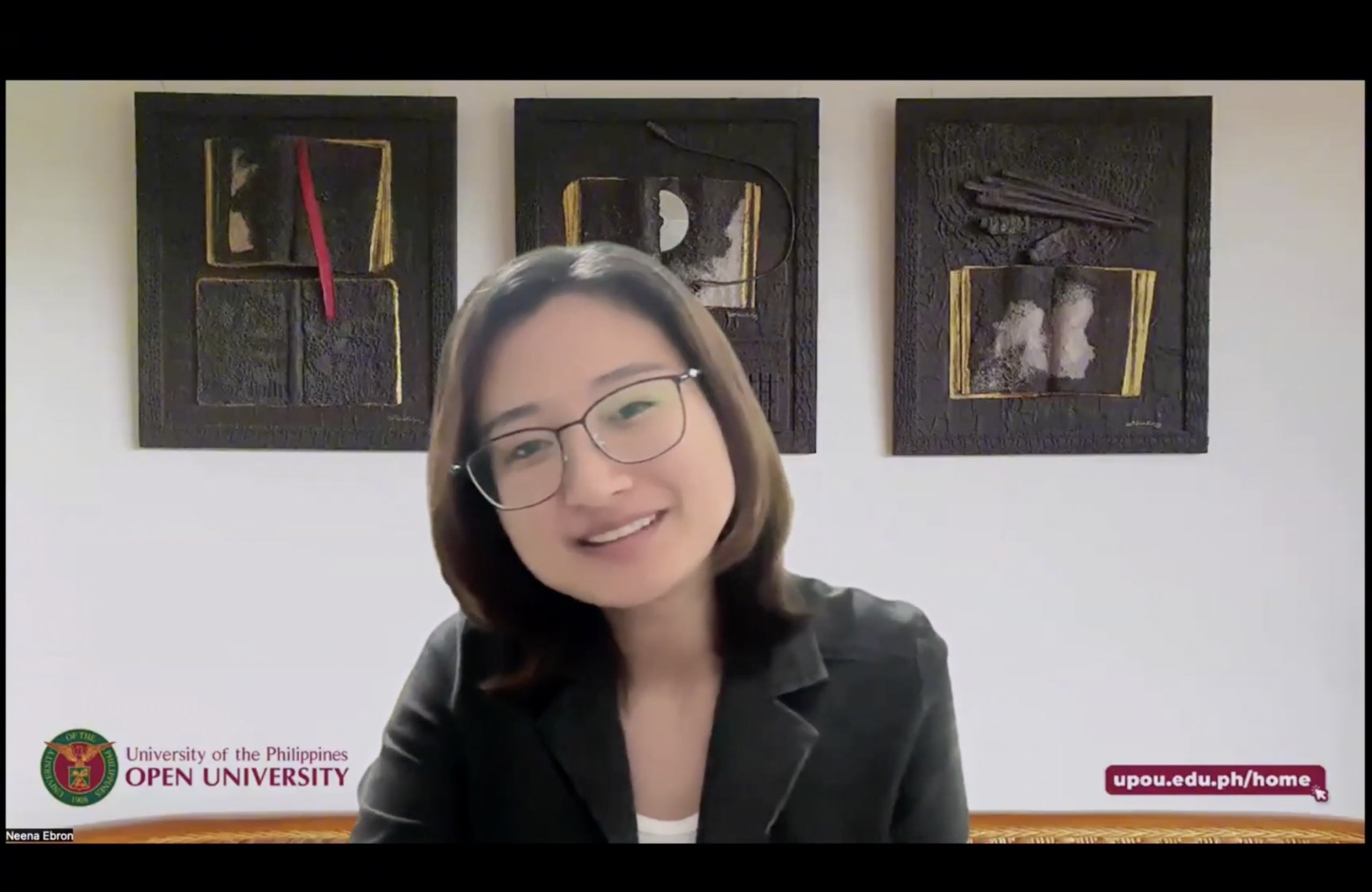
Ms. Janelle Ebron presents their research on “Transformative Walking Methodology in Responsible Tourism: The Maahas–Fujino Greenway Experience”.
Completing the panel, Ms. Janelle Ebron of the UP Ventures for International and Transformative Academia (VINTA) presented “Transformative Walking Methodology in Responsible Tourism: The Maahas–Fujino Greenway Experience,” exploring the potential of the partnership through responsible tourism and community-based engagement.
In her presentation, Ms. Ebron examined the similarities and differences between the Maahas and Fujino segments, focusing on infrastructure quality and safety hazards, environmental conditions and waste management, the pace and quality of the tourism experience, and local awareness and sustainability consciousness. Her discussion highlighted how these factors shape the experiences of communities and visitors in each setting. She also emphasized the relevance of these observations to various Sustainable Development Goals (SDGs), including SDG 3 (Good Health and Well-being), SDG 11 (Sustainable Cities and Communities), SDG 12 (Responsible Consumption and Production), and SDG 15 (Life on Land).
The presentations were followed by reflections from the discussants who brought broader Southeast Asian perspectives, including the Philippines, Indonesia, and Thailand, to the Fujino–Maahas LLABS initiative.
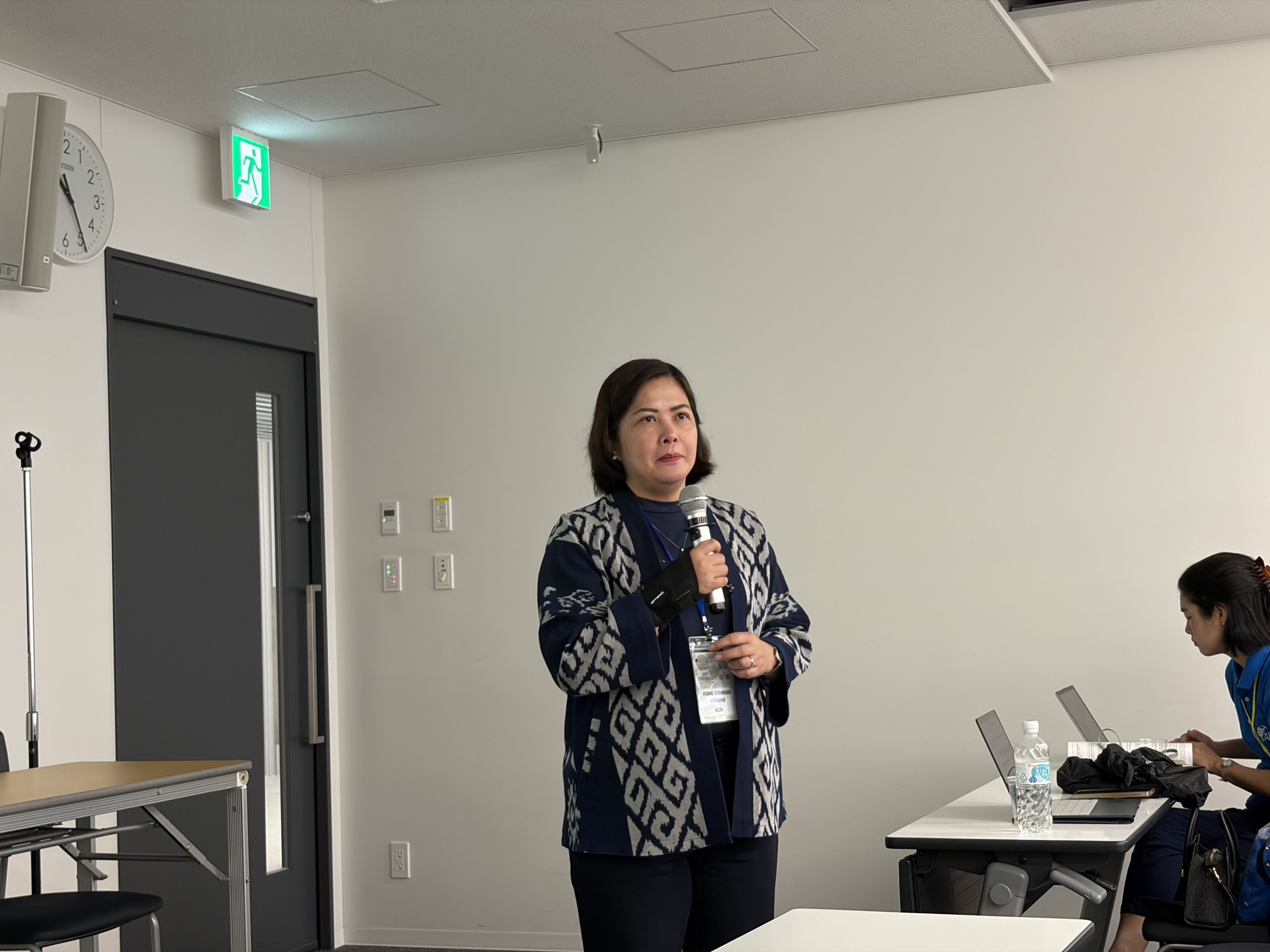
Chancellor Joane V. Serrano provides discussion on “Operationalizing the Local-to-Local Across Border Scheme (LLABS): Reflections on Project LAKBAY and the Maahas–Fujino Experience”.
UPOU Chancellor, Dr. Joane V. Serrano, provided discussion on advancing local-to-local cooperation across borders through her presentation, “Operationalizing the Local-to-Local Across Border Scheme (LLABS): Reflections on Project LAKBAY and the Maahas–Fujino Experience.” Building on the UPOU’s experiences in fostering international and local partnerships, Chancellor Serrano discussed how cross-border collaboration can strengthen communities, encourage shared learning, and contribute to more inclusive and sustainable local development.
Among the initiatives she highlighted was Project LAKBAY, which stands for Learning Actively through Knowledge-Based Appreciation for Youth, a collaboration between UPOU and EduConnect Taiwan, and the Maahas–Fujino LLABS initiative, which connects Maahas in Los Baños, Laguna, with Fujino, a transition town in Japan.
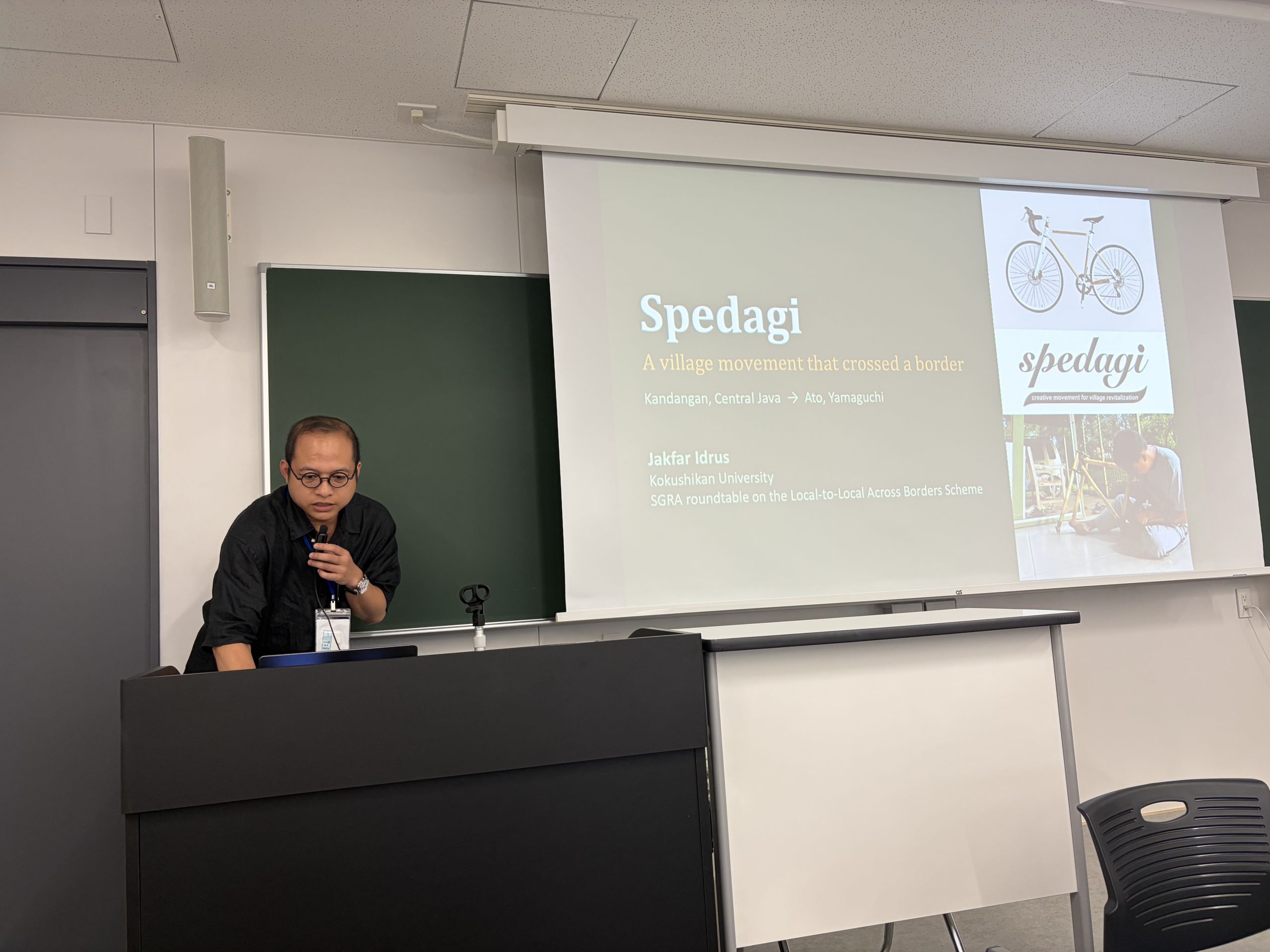
Dr. Jakfar Idrus shares insights on “Spedagi: A village movement that crossed a border”.
Providing another perspective on local-to-local cooperation, Dr. Jakfar Idrus of Kokushikan University and SGRA-AISF shared insights from the Spedagi initiative, a village revitalization movement that helped shape key ideas underlying LLABS: tackling and solving a problem together. He highlighted how the movement connected communities in Indonesia and Japan by addressing shared challenges and adapting locally developed solutions to different contexts. Drawing on the experience of Spedagi’s expansion from Kandangan, Central Java to Ato, Yamaguchi, Dr. Idrus emphasized that meaningful cross-border partnerships are built not only through formal agreements but also through the exchange of ideas, practices, and community-driven innovations that can take root and evolve in new local settings.
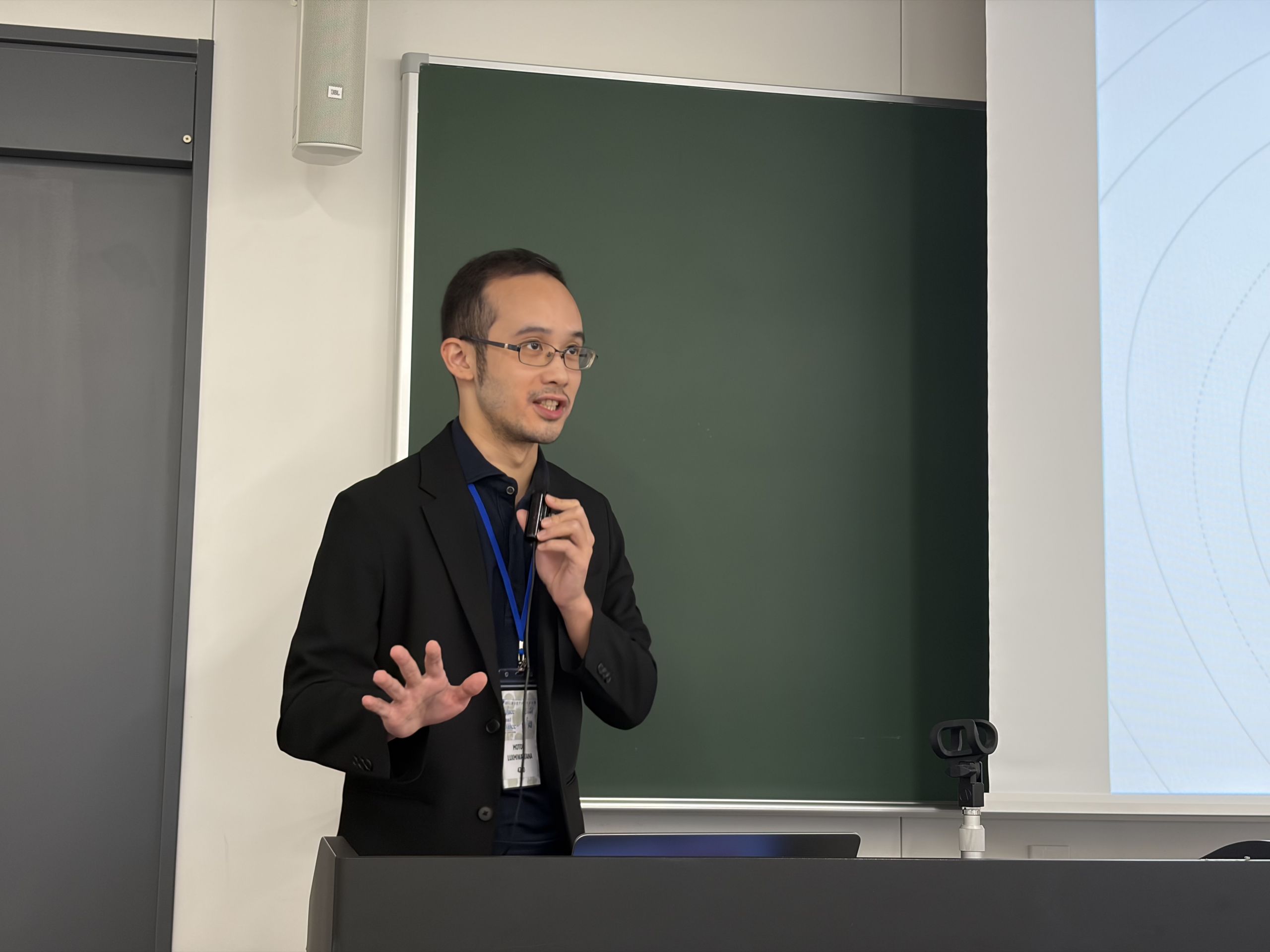
Mr. Motoki Luxmiwattana discusses the “Local-to-Local Across Border Schemes: Viewpoint from a Thai Citizen”.
Mr. Motoki Luxmiwattana, a Ph.D. Candidate at the Graduate School of Asia-Pacific Studies of Waseda University, served as a discussant and shared a Thai perspective on LLABS through his presentation, “Local-to-Local Across Border Schemes: Viewpoint from a Thai Citizen.” Grounding his discussion in Thailand’s experience with sister-city partnerships, he examined how local-to-local cooperation relates to concepts such as natural economic zones, decentralization, and shared growth. He highlighted patterns in Thailand’s international local government partnerships and encouraged participants to reflect on whether formal cross-border agreements genuinely promote decentralization and inclusive development. Mr. Luxmiwattana also challenged conventional notions of proximity, suggesting that in an increasingly interconnected world, meaningful local collaborations can emerge beyond geographical boundaries through shared values, knowledge exchange, and people-to-people connections.
The discussions also sought to build bridges between Fujino and Maahas and explore possibilities for developing similar local-to-local linkages involving Japan, the Philippines, and other Southeast Asian countries. The discussions provided an opportunity for participants to exchange views on the potential of LLABS as a mechanism for local-level international cooperation and to identify concrete next steps for advancing the Fujino–Maahas initiative.
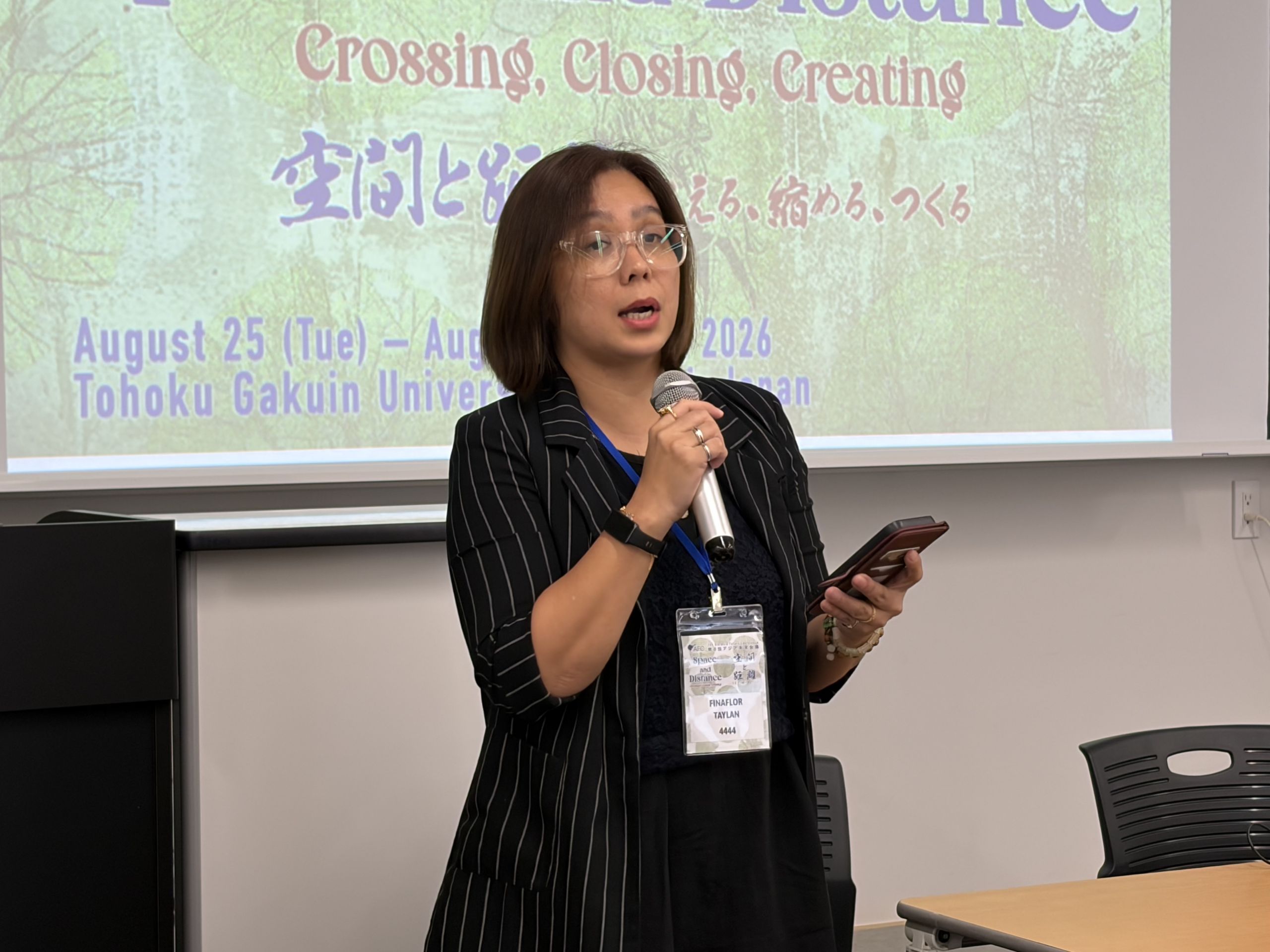
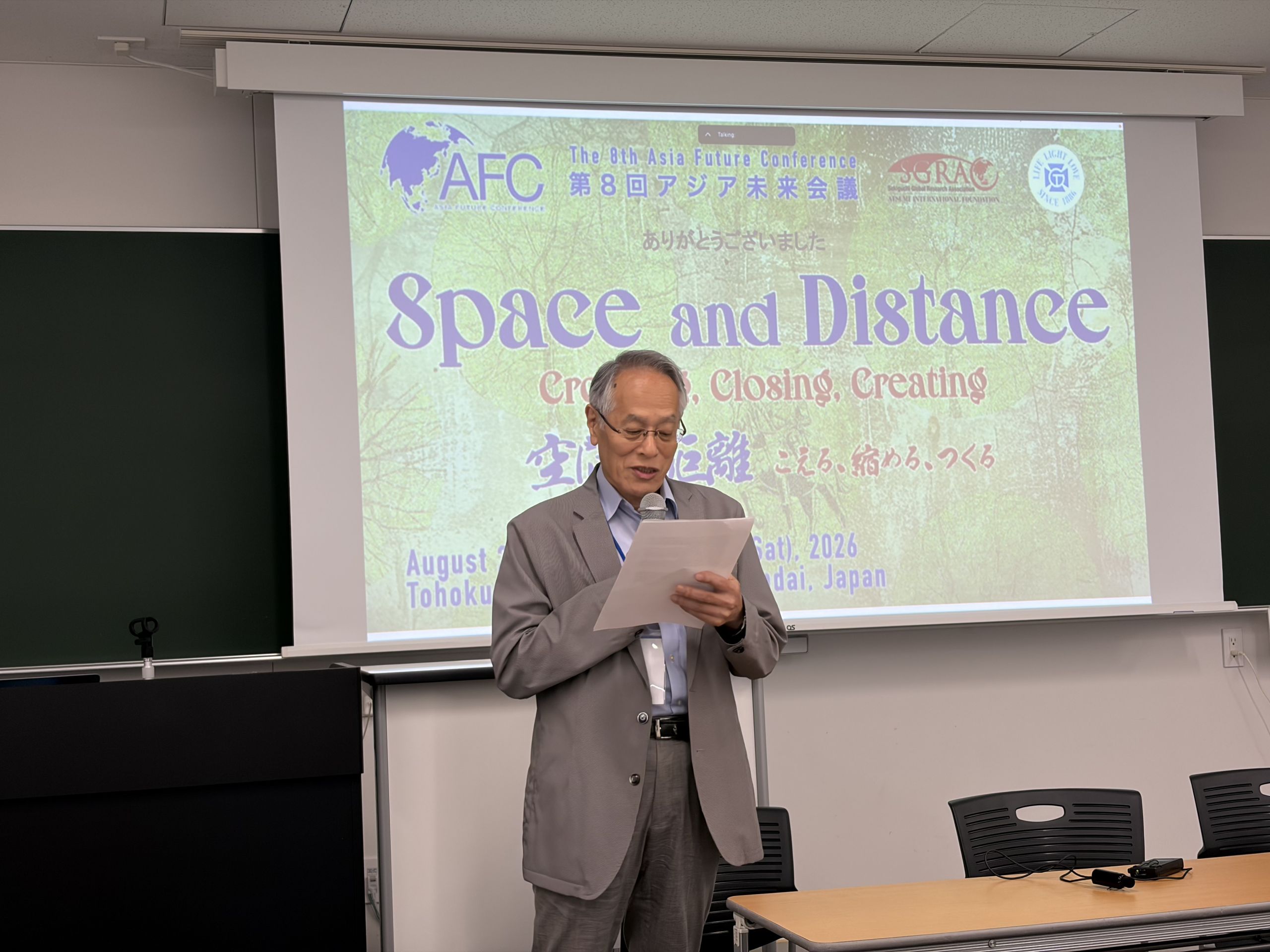
Dean Finaflor F. Taylan (left) and Dr. Hitoshi Hirakawa (right) deliver the closing remarks.
Closing remarks were delivered by Dr. Finaflor Taylan, Dean of the UPOU Faculty of Management and Development Studies (FMDS) and Dr. Hitoshi Hirakawa, Professor Emeritus of Nagoya University.
In her closing remarks, Dean Taylan underscored the significance of LLABS in fostering community-based regional integration. Reflecting on the discussions surrounding the emerging partnership between Fujino in Japan and Maahas in the Philippines, she emphasized that LLABS goes beyond establishing partnerships between communities. She also highlighted three principles to guide the continuing development of LLABS: sustainability, justice, and inclusion. She stressed the importance of looking beyond individual projects and activities to consider how knowledge, relationships, and local capacities can be sustained over time.
Dean Taylan further emphasized the role of UPOU and FMDS in creating spaces where academic, local, experiential, Indigenous, and community knowledge can converge. She described immersive learning as a two-way process in which not only students and researchers learn from communities, but institutions and countries also learn from one another.
Building on these reflections, Dr. Hitoshi Hirakawa, Professor Emeritus of Nagoya University, turned to the broader significance of the roundtable and the lessons that could be drawn from the experiences shared by the participating communities and institutions.
Drawing from his more than two decades of work on development dynamics in Asia with Dr. Ferdinand Maquito, he highlighted the importance of looking beyond conventional economic indicators to recognize the social processes that contribute to community development. He also underscored the distinctive role of UPOU in LLABS, noting that its involvement allows cross-border community exchanges to serve not only as practical initiatives but also as opportunities for research, documentation, and mutual learning. Through this approach, experiences from different communities can generate knowledge that may be shared with and applied by others.
Dr. Hirakawa concluded by expressing his support for the continued development of LLABS and its potential to make cross-border regional exchanges more meaningful, grounded, and achievable.
Through the Fujino–Maahas initiative, UPOU continues to examine how local communities can become active participants in international cooperation. By placing local experiences and relationships at the center of cross-border engagement, the LLABS initiative offers a grassroots approach to building stronger connections between communities in Southeast Asia, Japan, and beyond.
Exploring the Many Faces of Alitaptap Community Currency (Ali CC)
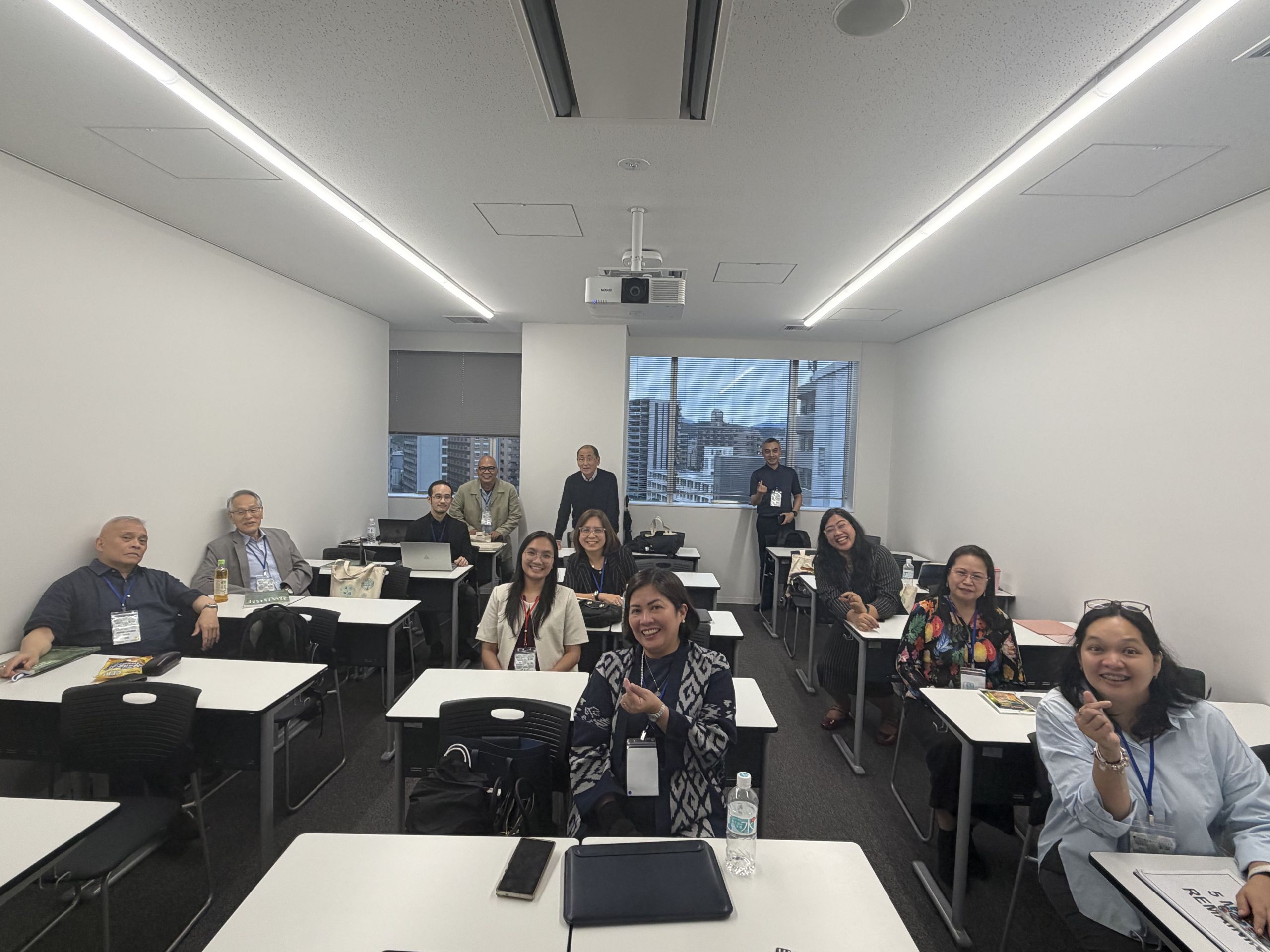
The presenters and attendees for the group session on Exploring the Many Faces of Alitaptap Community Currency at AFC8.
In the afternoon, the team gathered for a group session on the “Exploring the Many Faces of Alitaptap Community Currency.” The session featured three presenters, each offering a distinct perspective on Alitaptap Community Currency, also known as “Ali CC”, and its potential within the UPOU Community and its partner communities.
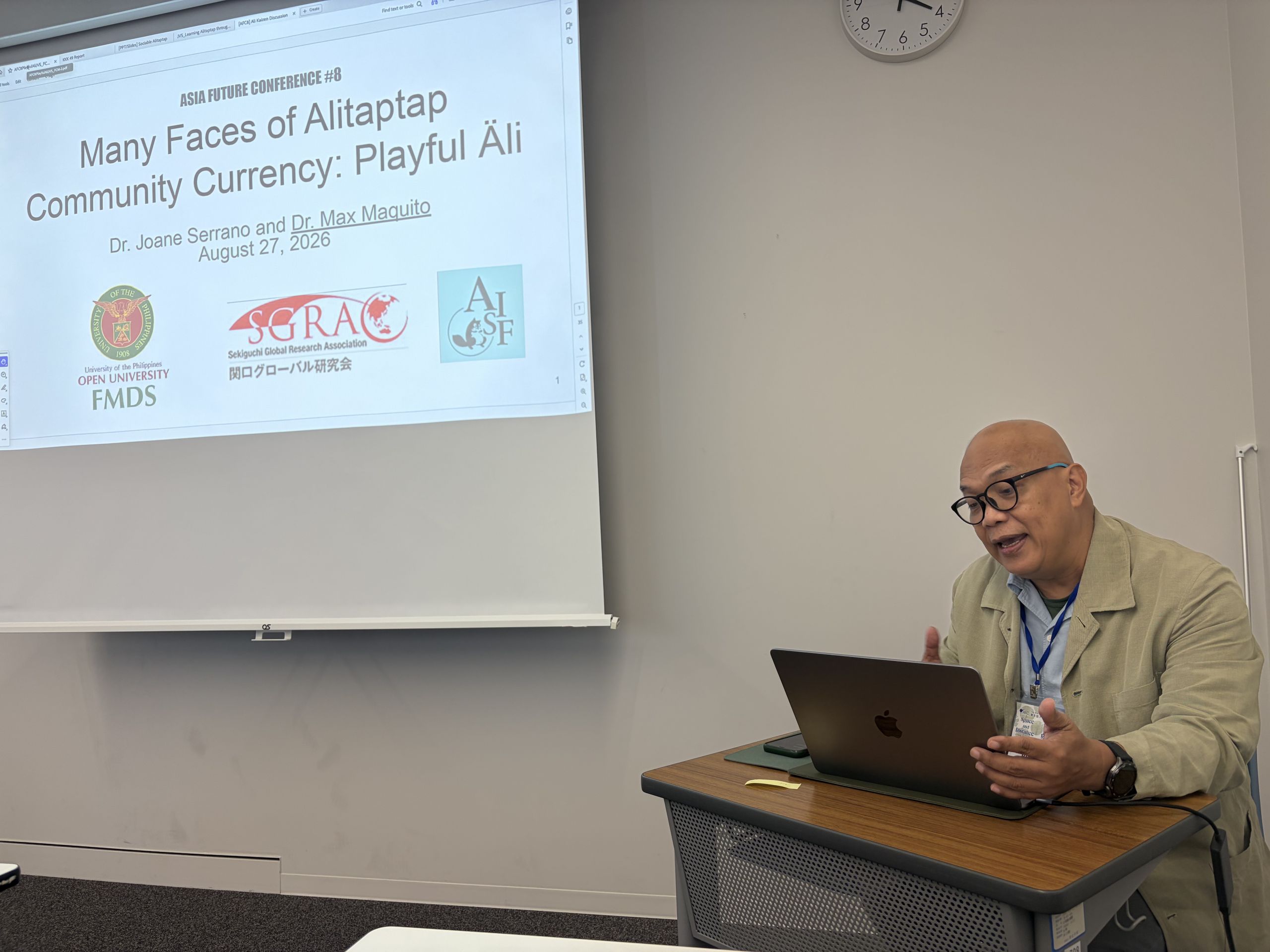
Dr. Ferdinand C. Maquito presents their research paper titled “A Playful Alitaptap”.
Dr. Ferdinand Maquito presented their research on “A Playful Alitaptap”. The study, co-authored with UPOU Chancellor Serrano, explores the playful dimension of Alitaptap and how games, creativity, and participation can make community currency more engaging and accessible. His presentation emphasized the value of play as a way to bring people together and encourage active participation among members of the community.
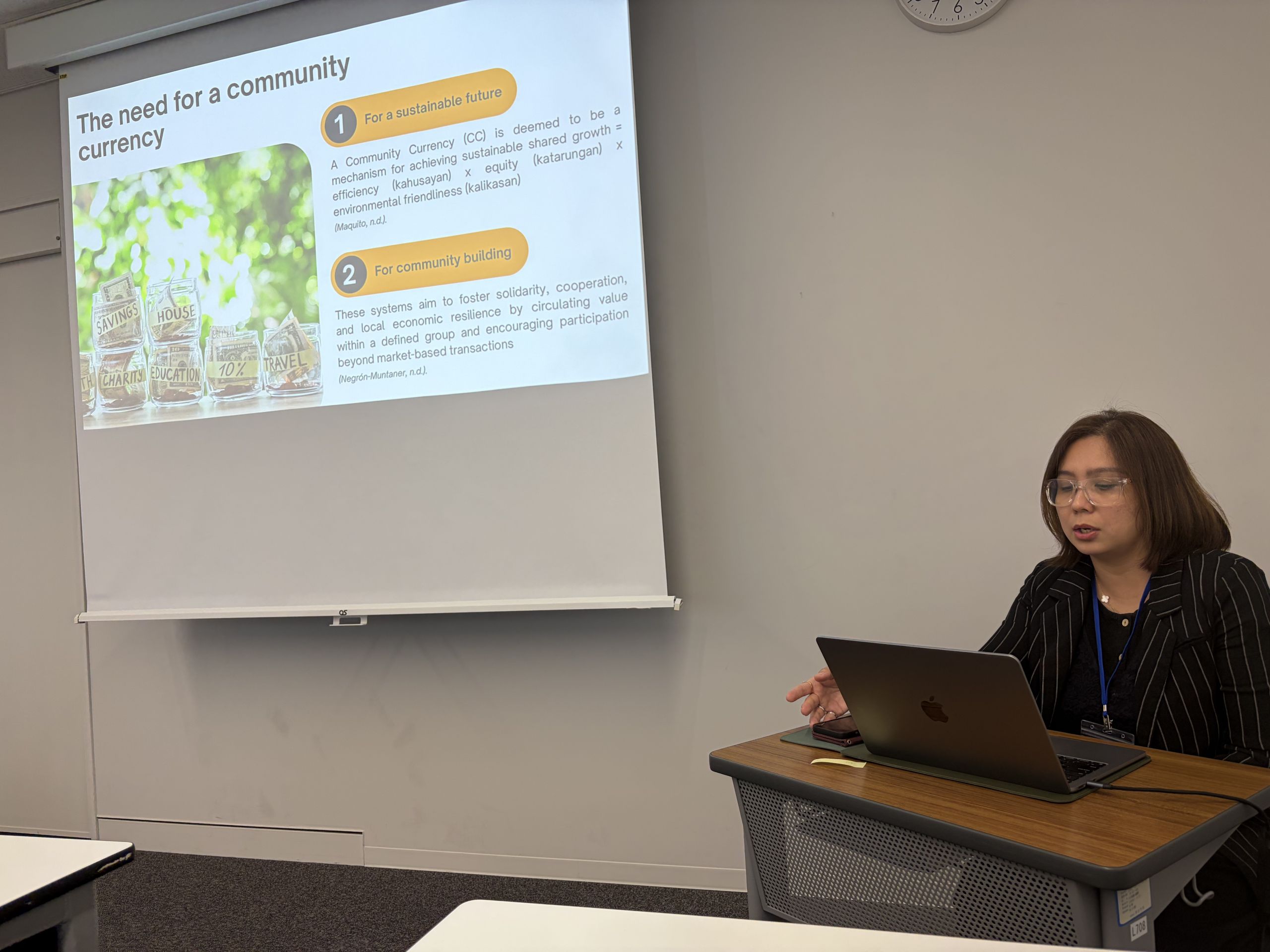
FMDS Dean Finaflor F. Taylan presents their research paper titled “A Sociable Alitaptap for Community Building: A Social Work Perspective on Ali CC”.
Taking a closer look at the social dimension of Alitaptap, FMDS Dean Finaflor F. Taylan followed with a presentation on “A Sociable Alitaptap for Community Building: A Social Work Perspective on Ali CC,” a study co-authored with Dr. Ferdinand Maquito, Ms. Vanessa Autor, and Ms. Tiffany Leanne Catbagan. From a social work perspective, Dean Taylan explored how Alitaptap can strengthen relationships, encourage meaningful interaction, and foster greater participation among community members. Her presentation emphasized that community currency can be more than a medium of exchange—it can serve as a tool for cultivating trust, cooperation, solidarity, and stronger social connections within communities.
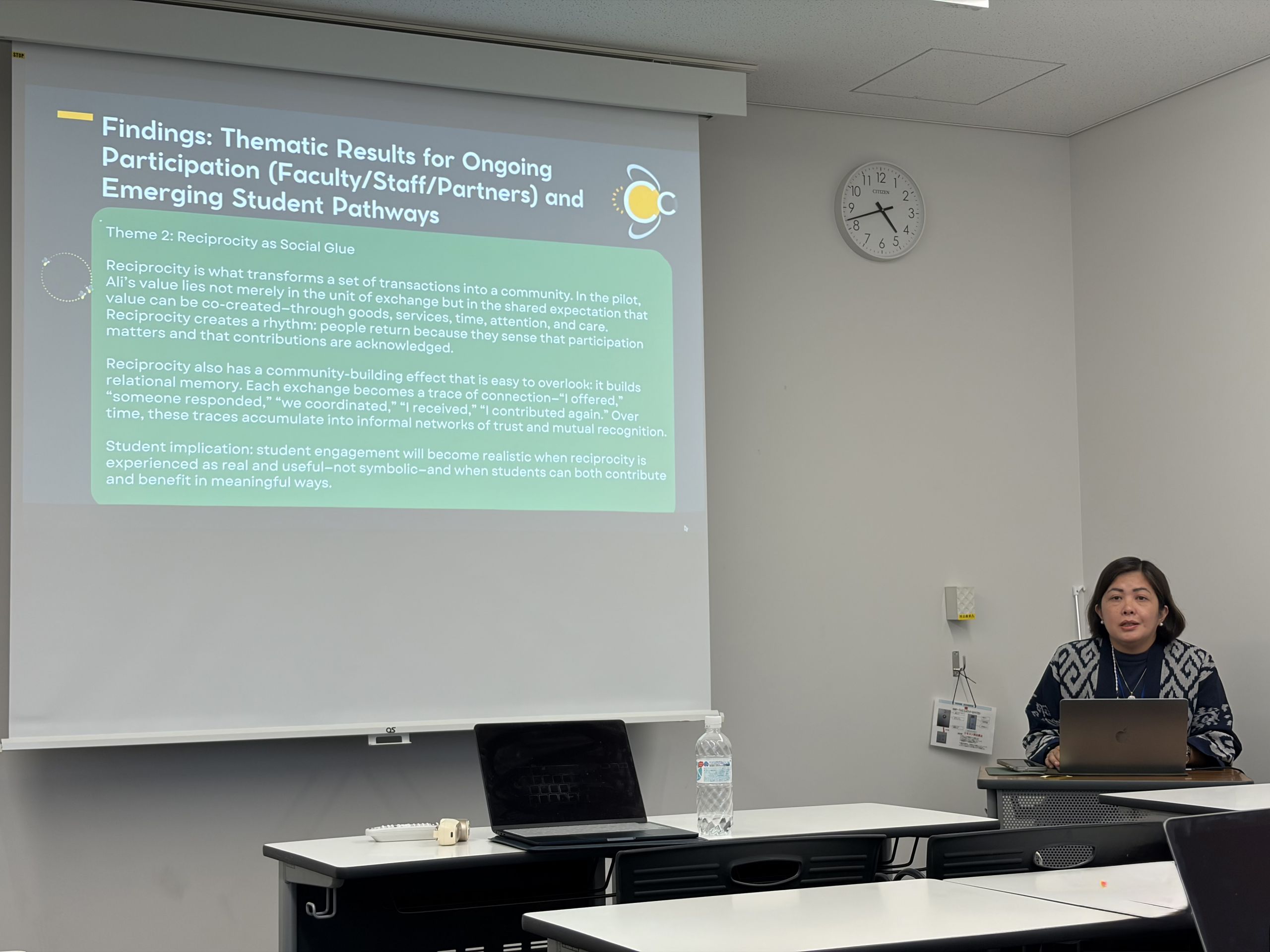
Chancellor Joane V. Serrano presents her research paper titled “A Learning Alitaptap”.
From social connection, the discussion then moved toward learning. Chancellor Joane V. Serrano presented “A Learning Alitaptap,” sharing perspectives on the role of Alitaptap as a learning experience. The session underscored how engaging with community currency can help participants discover new ways of understanding value, collaboration, and community participation.
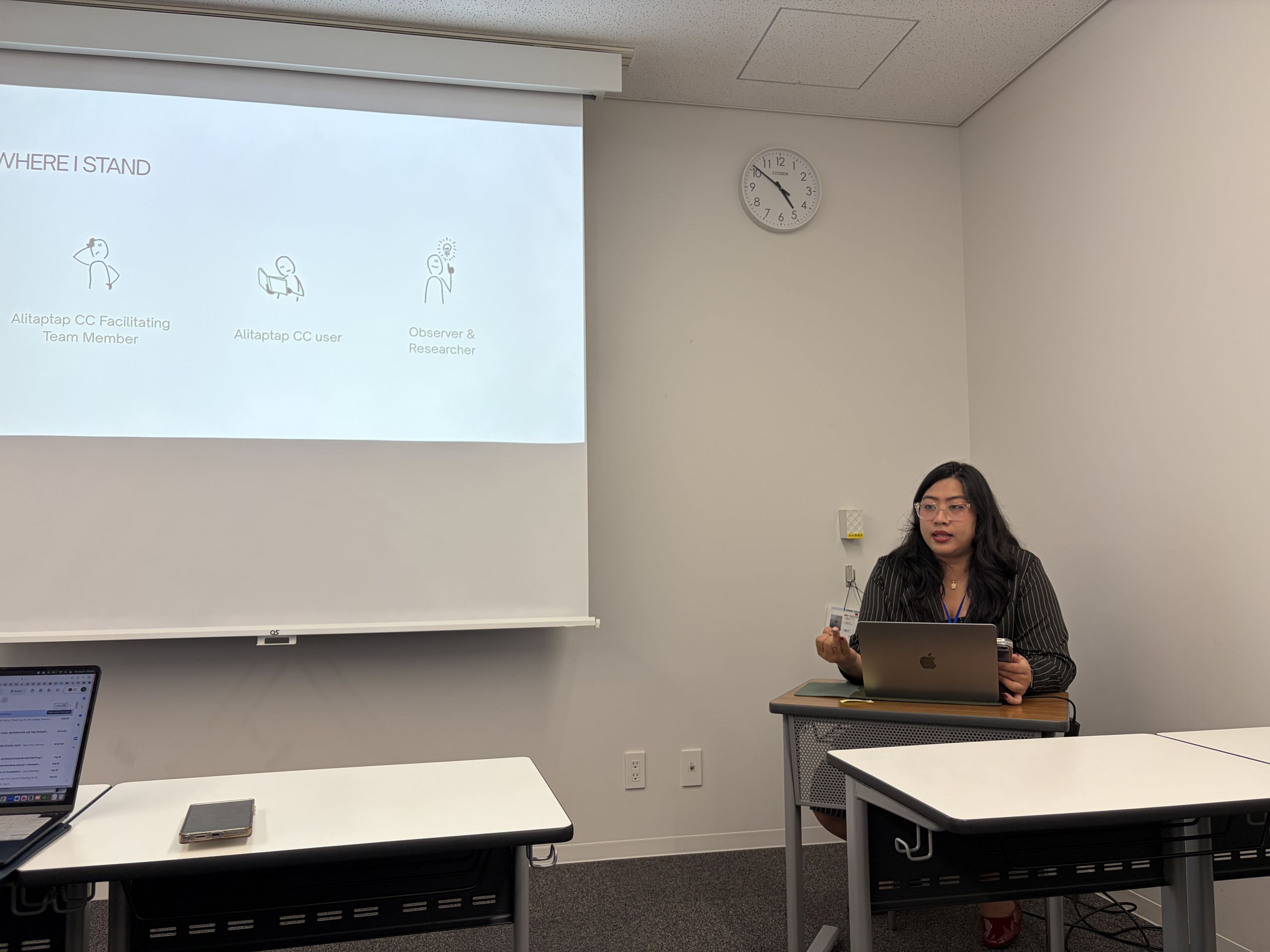
Ms. Noreen Dianne Alazada shares her insights as a discussant during the panel session.
The presentations were complemented by insights from Ms. Noreen Dianne Alazada, who served as discussant. Her reflections helped connect the different perspectives presented during the session and encouraged participants to look at Alitaptap from multiple angles.
Together, the presentations demonstrated that Alitaptap CC can take on many forms depending on how communities use and experience it. Whether through a game, social interaction, or learning, the community currency offers opportunities to create meaningful connections and explore alternative ways of exchanging value.
The 9th Asia Future Conference will be held in Yogyakarta, Indonesia and will be hosted by Universitas Gadjah Mada in 2028.
Written by: Noreen Dianne S. Alazada and Vanessa T. Autor • Edited by: Larry N. Cruz
Sustainable Development Goals


FMDS Socials