
The ASEAN Studies Graduate Program (ASGP) of the University of the Philippines Open University – Faculty of Management and Development Studies (UPOU-FMDS) expanded its engagement in ASEAN-focused education, scholarship, and public awareness through its participation in and organization of five key academic and professional activities in the lead-up to and throughout ASEAN Month 2026. Collectively reaching approximately 580 participants, these engagements connected the Program with diverse audiences, including educators and higher education institutions across the region, ASEAN scholars and learners, and members of the Philippine civil service.
Through invited talks, regional forums, professional learning activities, and its own ASEAN Studies Lecture Series, ASGP contributed to discussions on ASEAN awareness, higher education and regional cooperation, the relevance of ASEAN Studies across different professional contexts, and the continuing development of the field.
The series began with a regional engagement in July and continued throughout August, culminating in a special session that revisited the beginnings of the ASEAN Studies Graduate Program and the ideas and aspirations that shaped its development.
Bringing the ASGP Experience to the 36th Cyber Education Forum
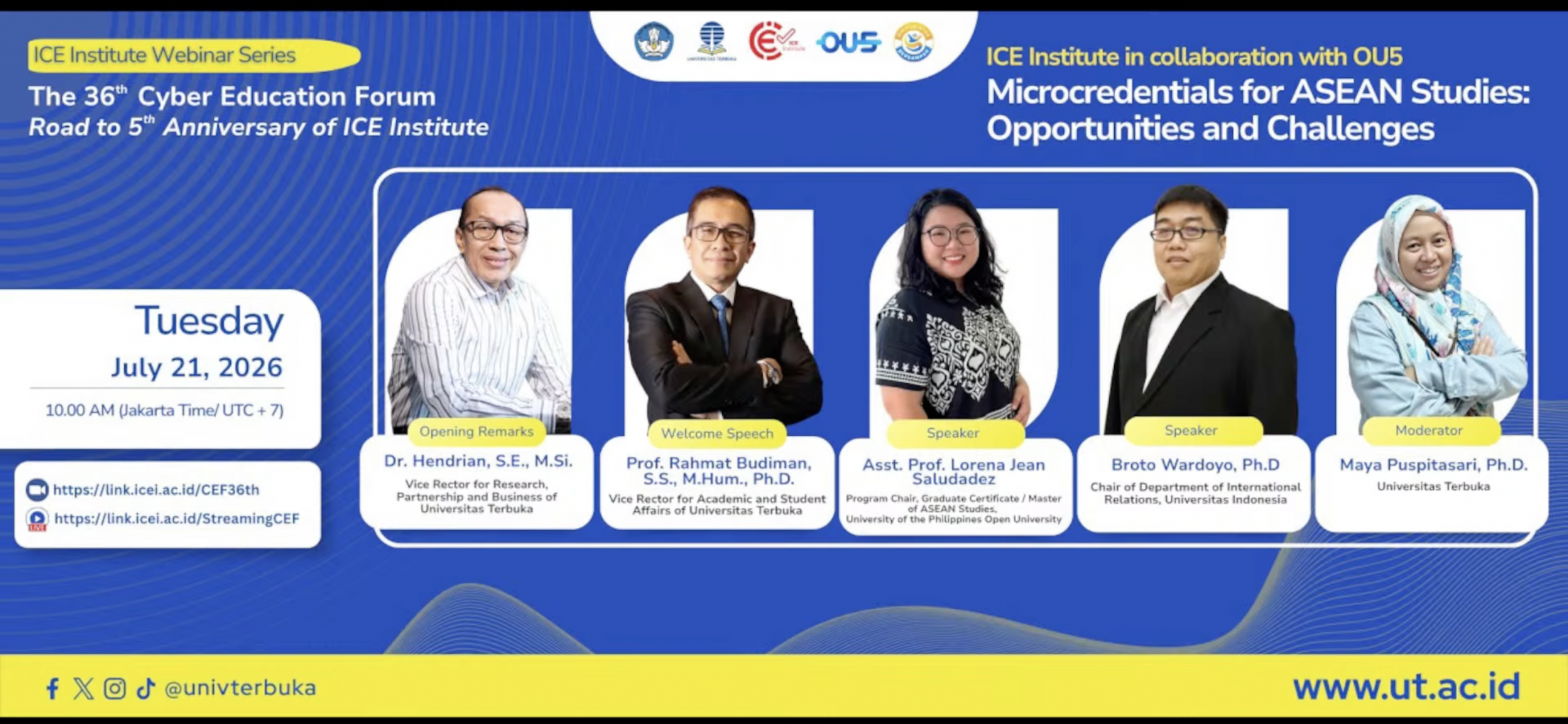
On 21 July 2026, Asst. Prof. Lorena Jean D. Saludadez, Chair of UPOU’s Graduate Certificate and Master of ASEAN Studies programs under the Faculty of Management and Development Studies (FMDS), participated as a keynote speaker at the 36th Cyber Education Forum, organized by the Indonesia Cyber Education (ICE) Institute in collaboration with Universitas Terbuka (UT).
Asst. Prof. Lorena Jean D. Saludadez, Chair of the UPOU ASEAN Studies Graduate Program, delivers her keynote presentation during the 36th Cyber Education Forum organized by the Indonesia Cyber Education (ICE) Institute in collaboration with Universitas Terbuka on 21 July 2026.
Held under the theme “Microcredentials for ASEAN Studies: Opportunities and Challenges,” the regional forum brought together approximately 200 participants, including experts and educators, to discuss the evolving role of microcredentials in advancing ASEAN-focused education and lifelong learning.
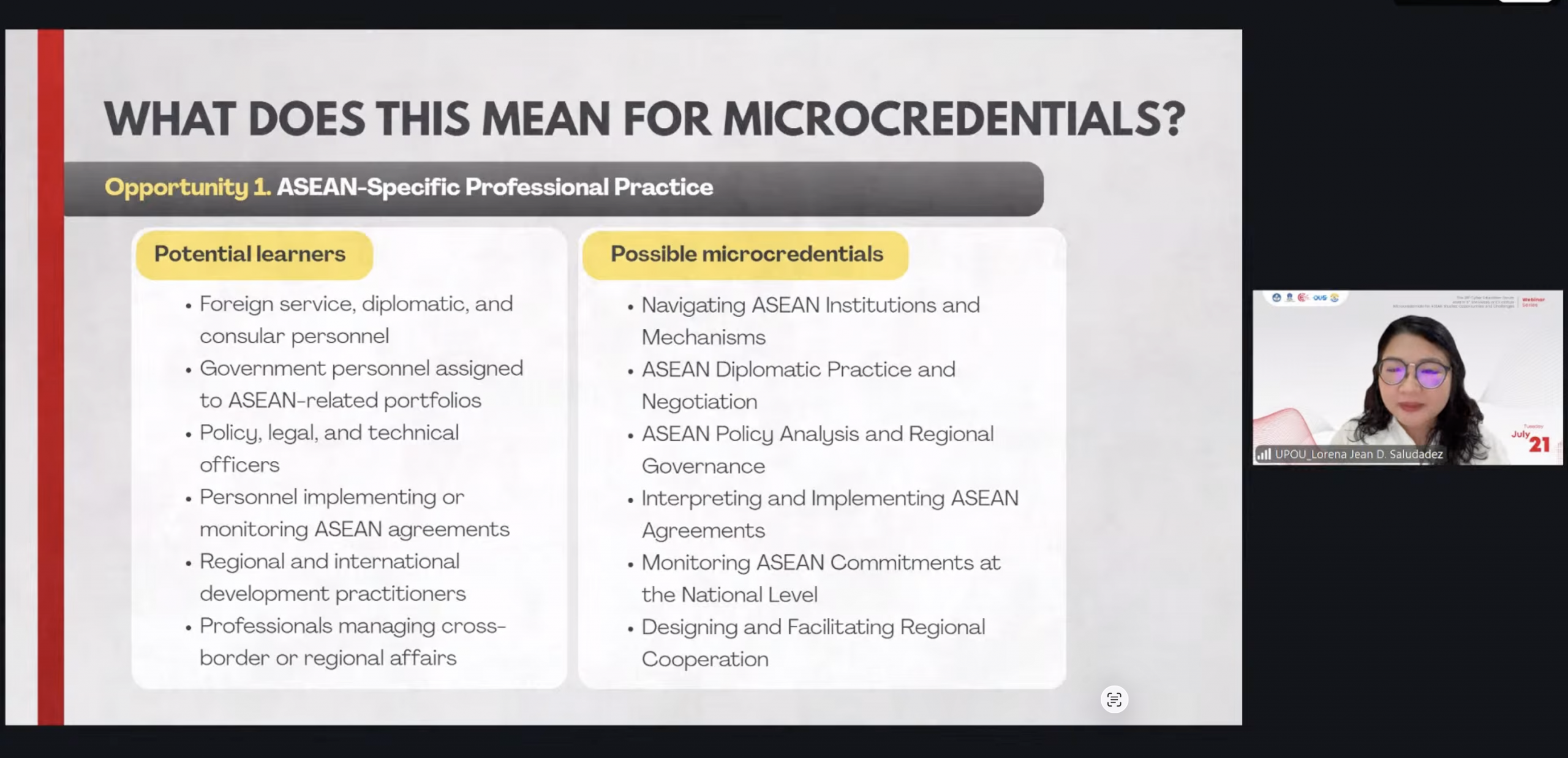
Asst. Prof. Saludadez presented “Shaping ASEAN Studies: Connecting Scholarship and Professional Practice through Microcredentials,” drawing from more than a decade of experience in implementing the ASEAN Studies Graduate Program at UPOU.
A key insight highlighted in the presentation was the relevance of ASEAN Studies beyond professions or roles explicitly connected to ASEAN. Experiences of ASGP students and graduates suggest that ASEAN Studies can develop a transferable “ASEAN lens”—a regionally grounded way of understanding and interpreting issues through greater attention to Southeast Asian contexts, diversity, lived realities, and regional dynamics.
The presentation situated this insight within emerging opportunities for microcredentials. While ASEAN-focused microcredentials may provide specialized competencies for professionals directly involved in regional affairs, they may also enable educators, public servants, and professionals across different fields to incorporate an ASEAN perspective into their own areas of practice.
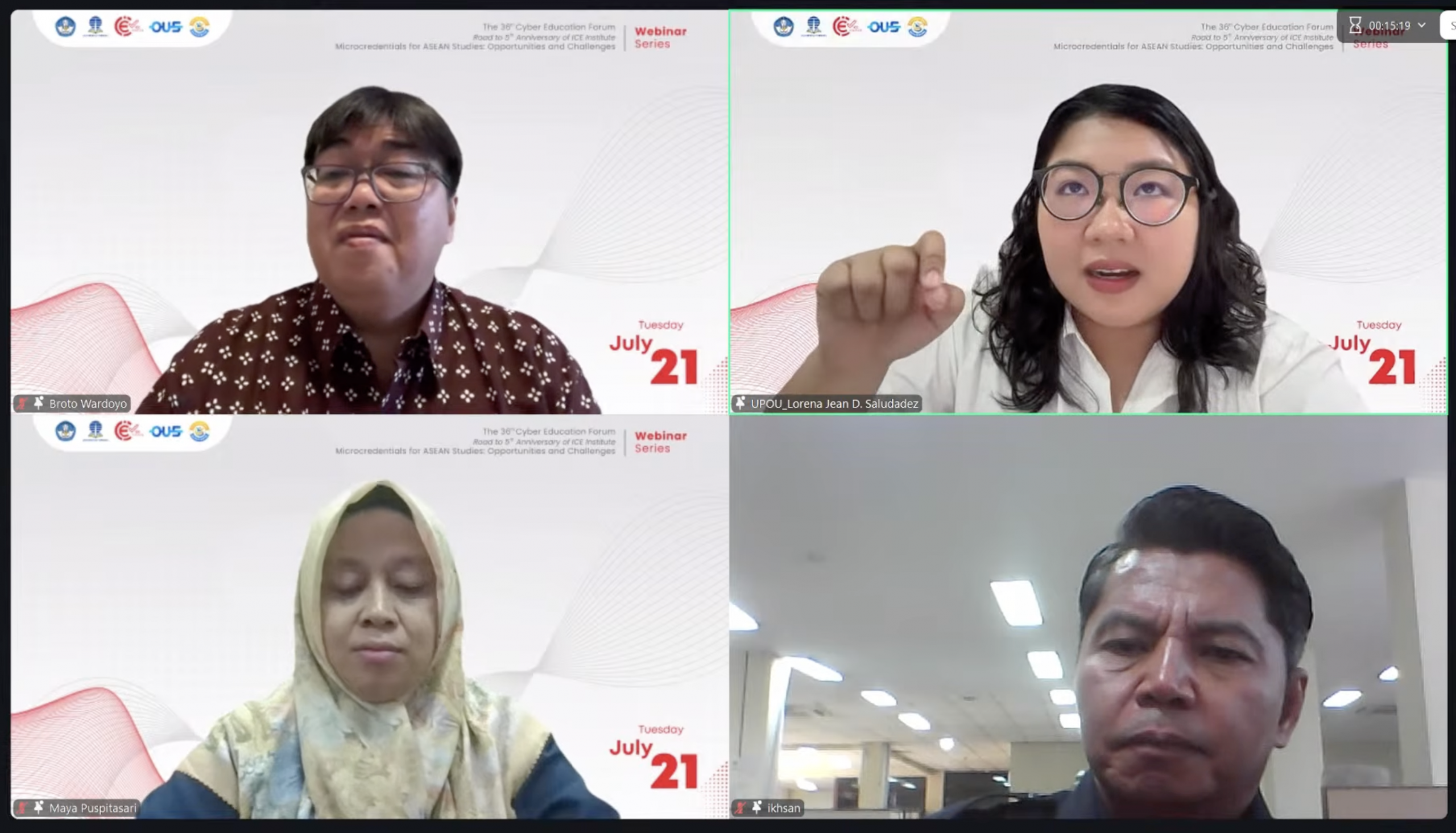
Around 200 participants joined the regional forum, which explored opportunities and challenges in developing microcredentials for ASEAN Studies.
Contributing to CHED-NCR’s ASEAN Month Opening and First NCR ASEAN Dialogue
As ASEAN Month formally commenced, Asst. Prof. Saludadez joined higher education leaders and ASEAN experts as a resource speaker during the 2026 ASEAN Month Opening Ceremonies and the 1st NCR ASEAN Dialogue, held on 3 August 2026 at the Quezon City University Auditorium.
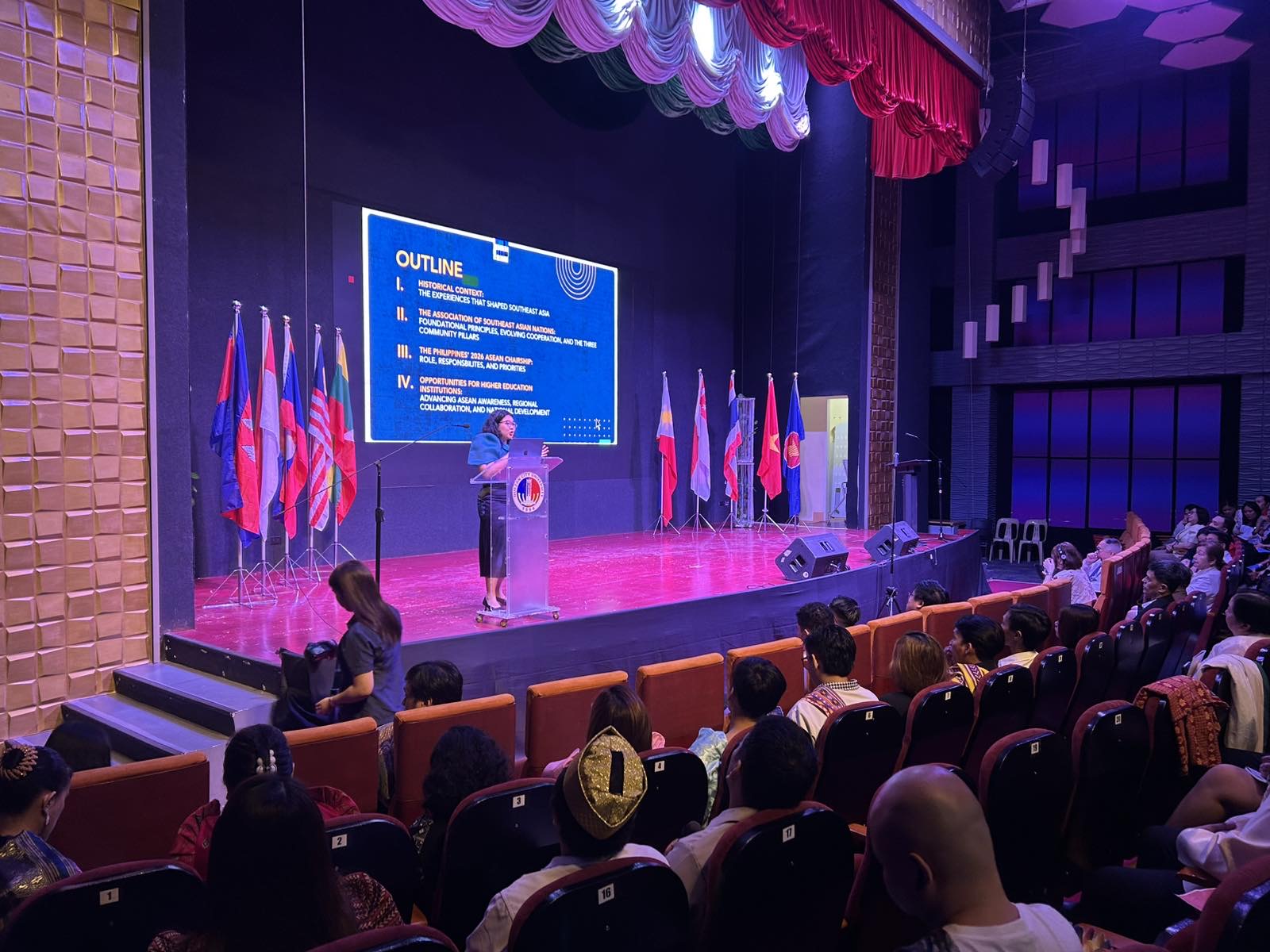
Asst. Prof. Lorena Jean D. Saludadez joins the 2026 ASEAN Month Opening Ceremonies and 1st NCR ASEAN Dialogue as a resource speaker on 3 August 2026 at the Quezon City University Auditorium. Photo courtesy of Quezon City University and the CHED-NCR Transnational Higher Education Unit.
Organized by the Commission on Higher Education National Capital Region (CHED-NCR), with the participation of the CHED International Affairs Service (CHED IAS), the event carried the theme “Strengthening ASEAN Awareness and Building Future-Ready Higher Education through Regional Cooperation” and gathered around 200 participants from higher education institutions across the National Capital Region.
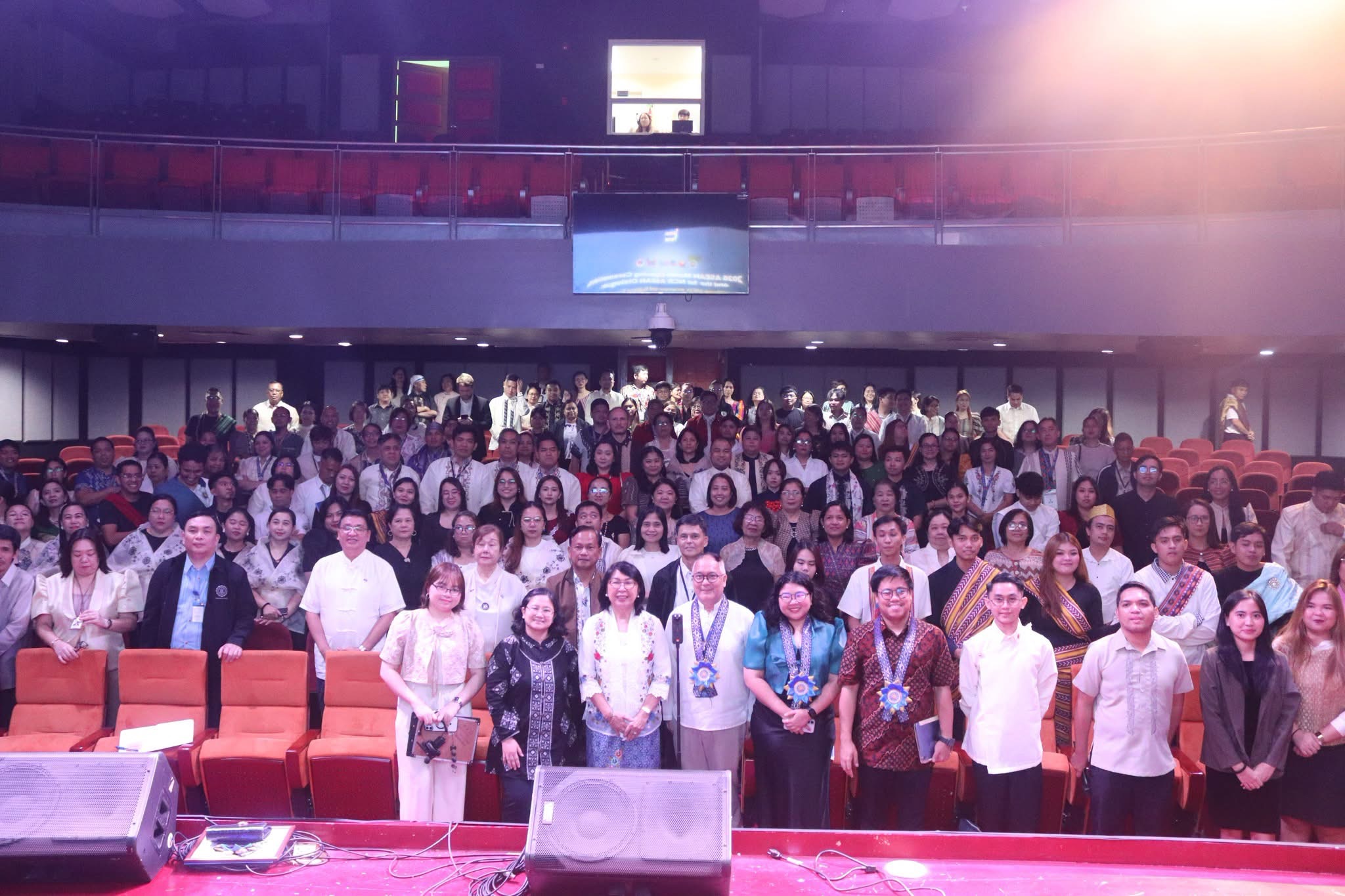
Around 200 representatives from higher education institutions across the National Capital Region participated in the 1st NCR ASEAN Dialogue. Photo courtesy of Quezon City University and the CHED-NCR Transnational Higher Education Unit.
Asst. Prof. Saludadez delivered an ASEAN awareness discussion that situated the regional organization within the historical experiences of Southeast Asia and introduced participants to ASEAN’s foundations, principles, communities, and continuing process of regional integration.
The discussion emphasized the importance of strengthening knowledge and understanding of ASEAN as a foundation for realizing the region’s broader aspirations. While ASEAN cooperation has traditionally been driven by states and governments, deeper regional integration also requires greater participation among educational institutions, businesses, civil society, communities, and ordinary citizens.
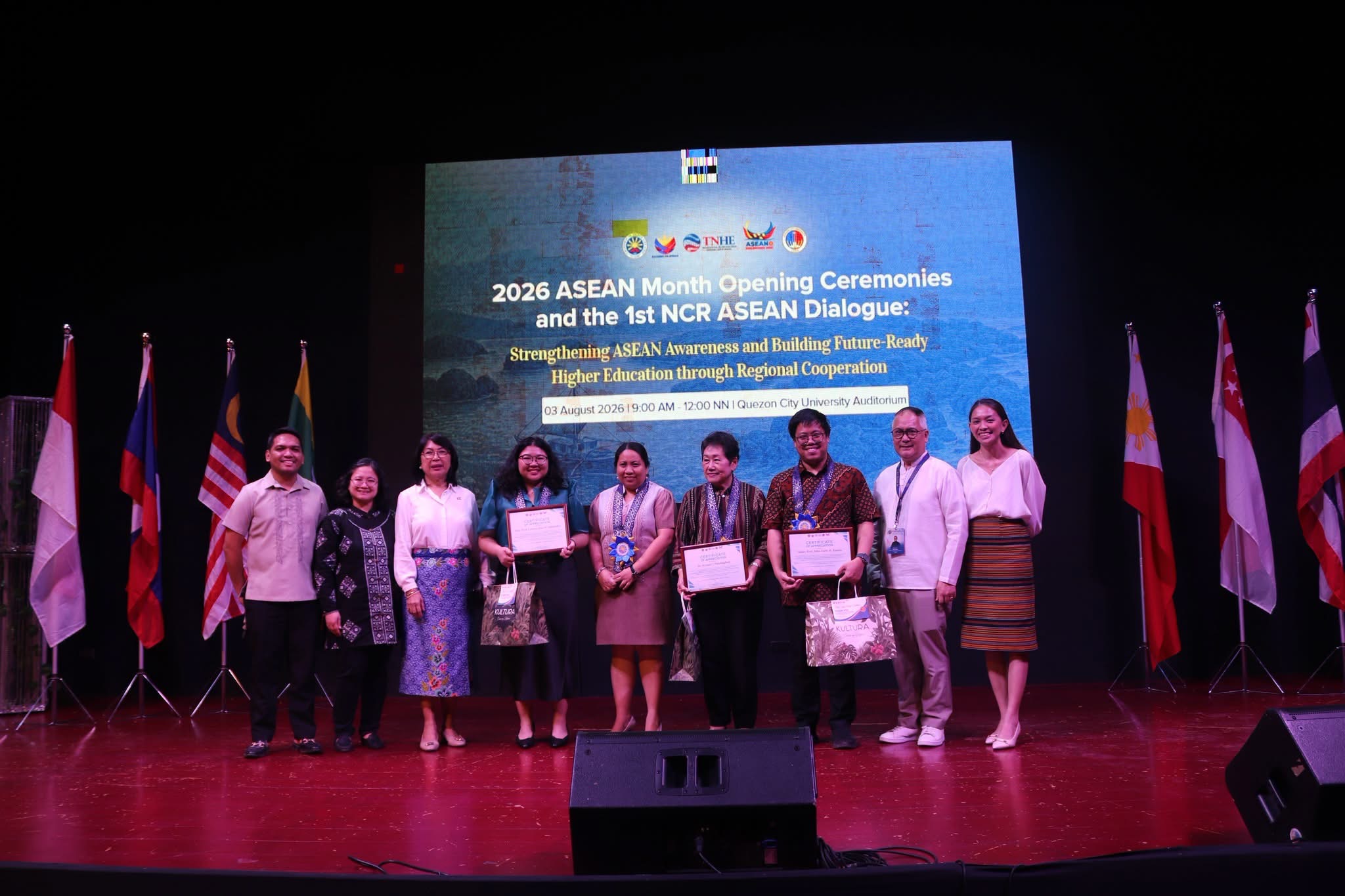
Asst. Prof. Saludadez (fourth from left) joined fellow resource speakers Prof. John Carlo Ramos, Executive Director of the Association of Southeast Asian Teacher Education Network (AsTEN) (third from right), and Dr. Wyona C. Patalinghug, Special Advisor to the ASEAN University Network Executive Director and Trainer and Lead Assessor at the ASEAN University Network-Quality Assurance (AUN-QA) (sixth from left). Photo courtesy of Quezon City University and the CHED-NCR Transnational Higher Education Unit.
Advancing ASEAN Studies through the ASEAN Studies Lecture Series
The Program continued its ASEAN Month activities on 22 August 2026 through Episode 5 of the ASEAN Studies Lecture Series (ASLS), which gathered approximately 90 participants via Zoom.
Titled “Advancing ASEAN Studies in Southeast Asia and Beyond: Scholarship, Relevance, and Regional Contributions,” the session provided an opportunity for the Program to reflect on the development and continuing direction of ASEAN Studies as an academic field.
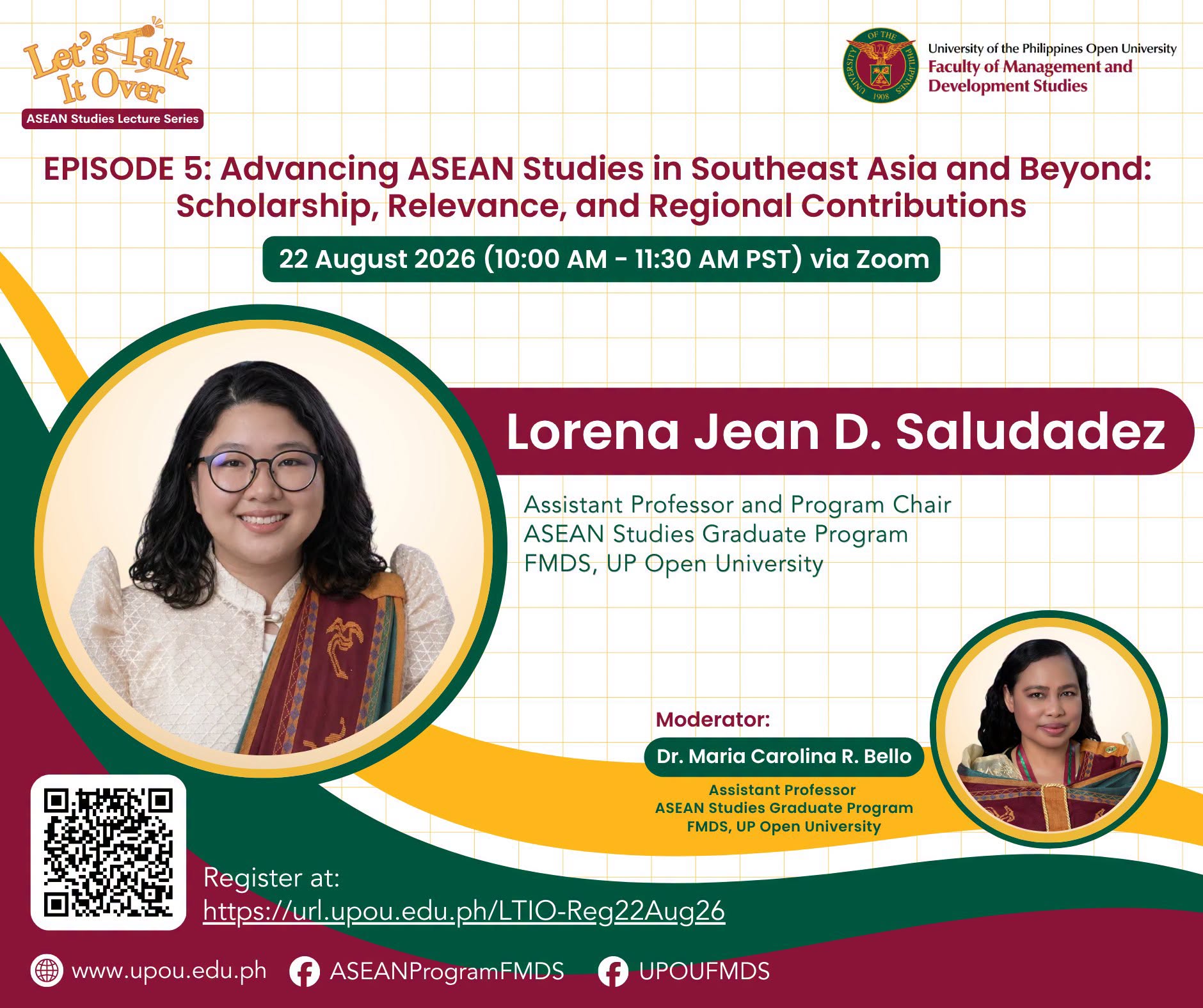
The ASEAN Studies Graduate Program continued its ASEAN Month observance through Episode 5 of the ASEAN Studies Lecture Series, “Advancing ASEAN Studies in Southeast Asia and Beyond: Scholarship, Relevance, and Regional Contributions,” on 22 August 2026.
Drawing from 12 years of implementing the ASEAN Studies Graduate Program, Asst. Prof. Saludadez discussed some of the fundamental questions that have accompanied the Program since its development: What constitutes ASEAN Studies as a field? What makes ASEAN Studies relevant when it does not correspond to a single profession? How can ASEAN become more meaningful when many people have limited opportunities to encounter the regional organization in their everyday lives?
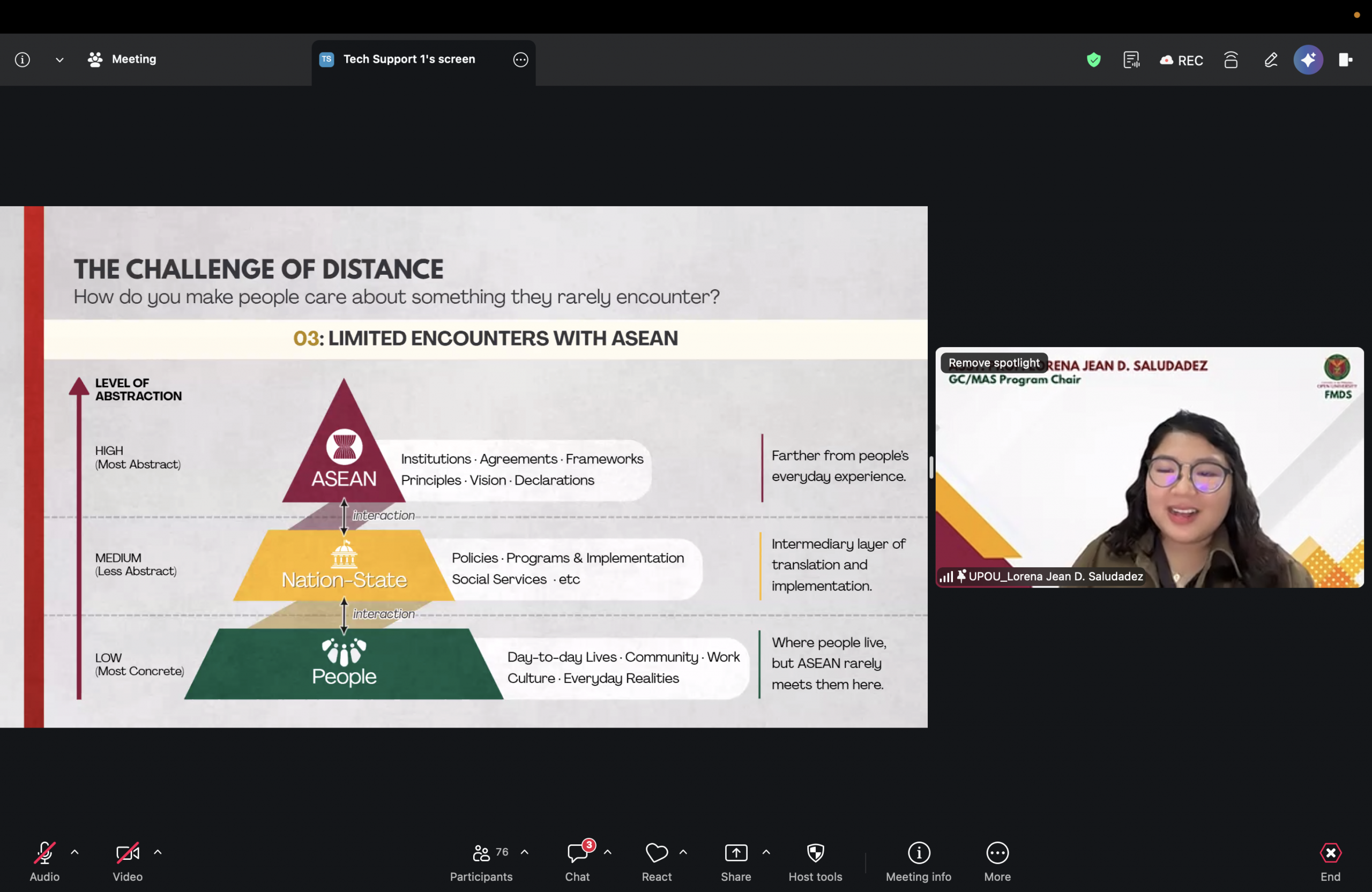
Asst. Prof. Saludadez reflects on the evolving scholarship, professional relevance, and regional contributions of ASEAN Studies.
The discussion highlighted experiences from the Program’s diverse community of students and graduates, whose professional backgrounds span education, government, diplomacy, law, development, business, media, tourism, technology, and other fields.
Despite these varied contexts, the Program’s experience points to the emergence of a shared outcome: the development of an ASEAN perspective that allows learners to interpret issues through a more regionally grounded understanding of Southeast Asian histories, societies, experiences, and realities.
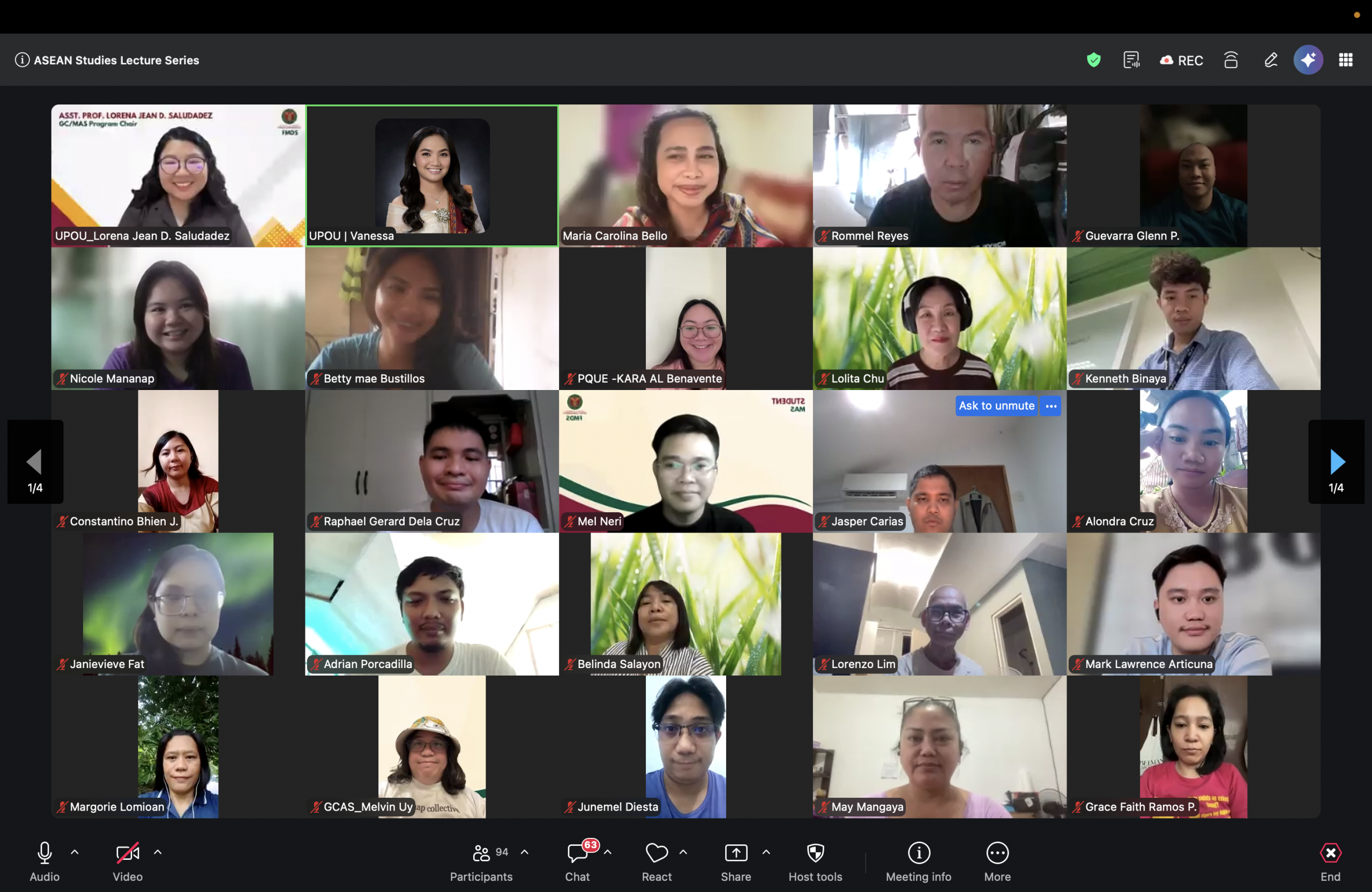
Around 90 participants joined the online session, which explored the continuing development and relevance of ASEAN Studies in Southeast Asia and beyond.
The session further reflected on the potential contribution of ASEAN Studies to regional knowledge-building—not only by examining ASEAN as an institution, but also by creating spaces to understand the region through the perspectives and lived experiences of the communities and peoples who constitute it.
Extending ASEAN Awareness to the Philippine Civil Service
On 26 August 2026, Asst. Prof. Saludadez once again served as a Subject Matter Expert (SME) for the “ASEAN Awareness Program: Understanding the ASEAN Community,” a public learning activity conducted by the Civil Service Institute (CSI) via Zoom and attended by approximately 30 participants.
The CSI serves as the learning and development arm of the Civil Service Commission, providing competency-based learning and development programs for government officials and employees. The invitation provided an important opportunity for the ASEAN Studies Graduate Program to extend its academic and public service engagement to members of the Philippine civil service.
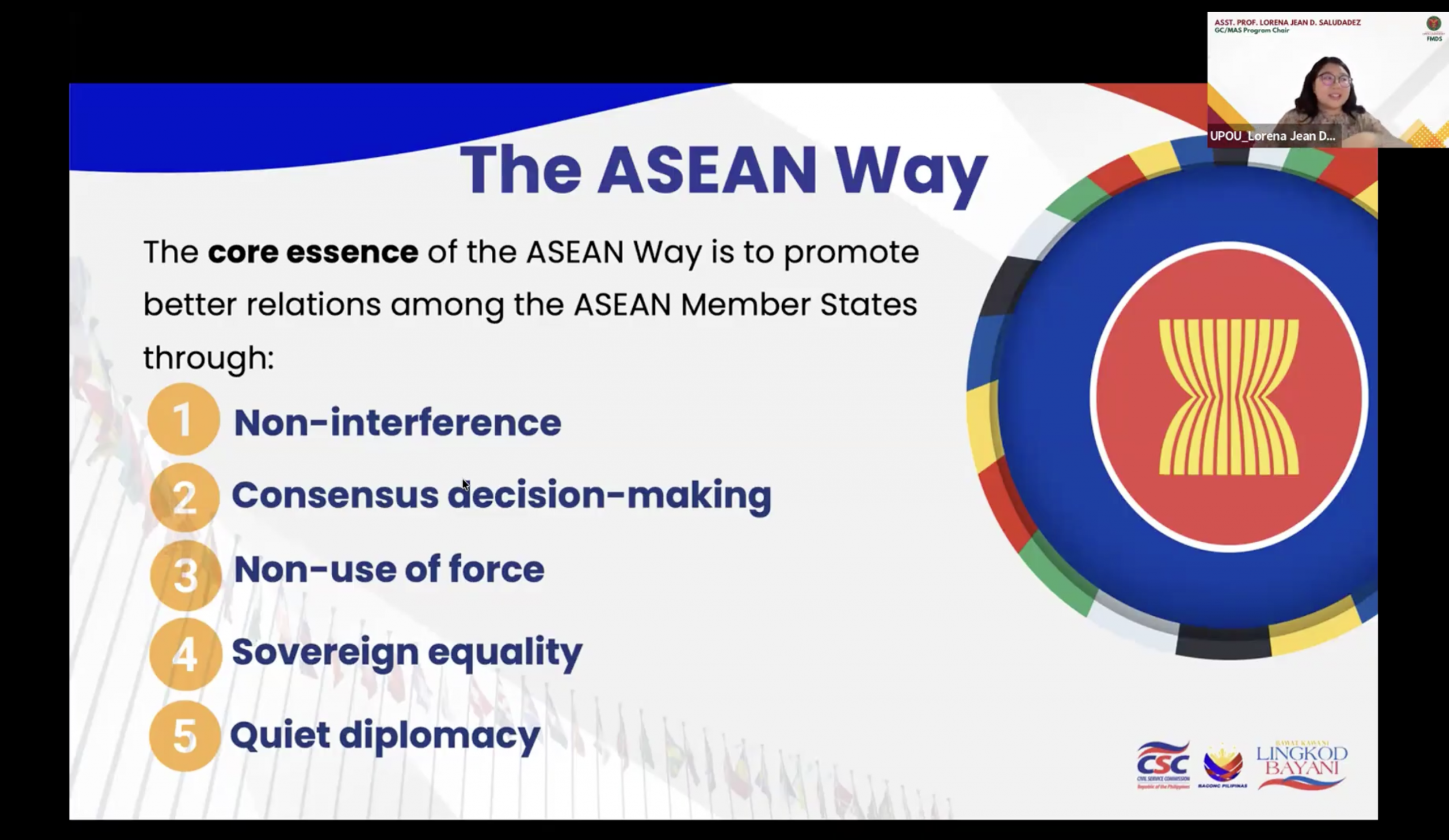
Asst. Prof. Lorena Jean D. Saludadez served as Subject Matter Expert for the Civil Service Institute’s “ASEAN Awareness Program: Understanding the ASEAN Community” on 26 August 2026. Photo courtesy of the Philippine Civil Service Institute.
Through the ASEAN Awareness Program, ASEAN knowledge was brought into the context of public service, where regional developments, commitments, and cooperation increasingly intersect with national policies and the work of government institutions.
ASGP’s participation in the program also reflects the broader relevance of ASEAN Studies beyond the university. By engaging public servants in conversations about the ASEAN Community, the Program contributes to strengthening understanding of the regional environment within which Philippine governance and public administration operate.
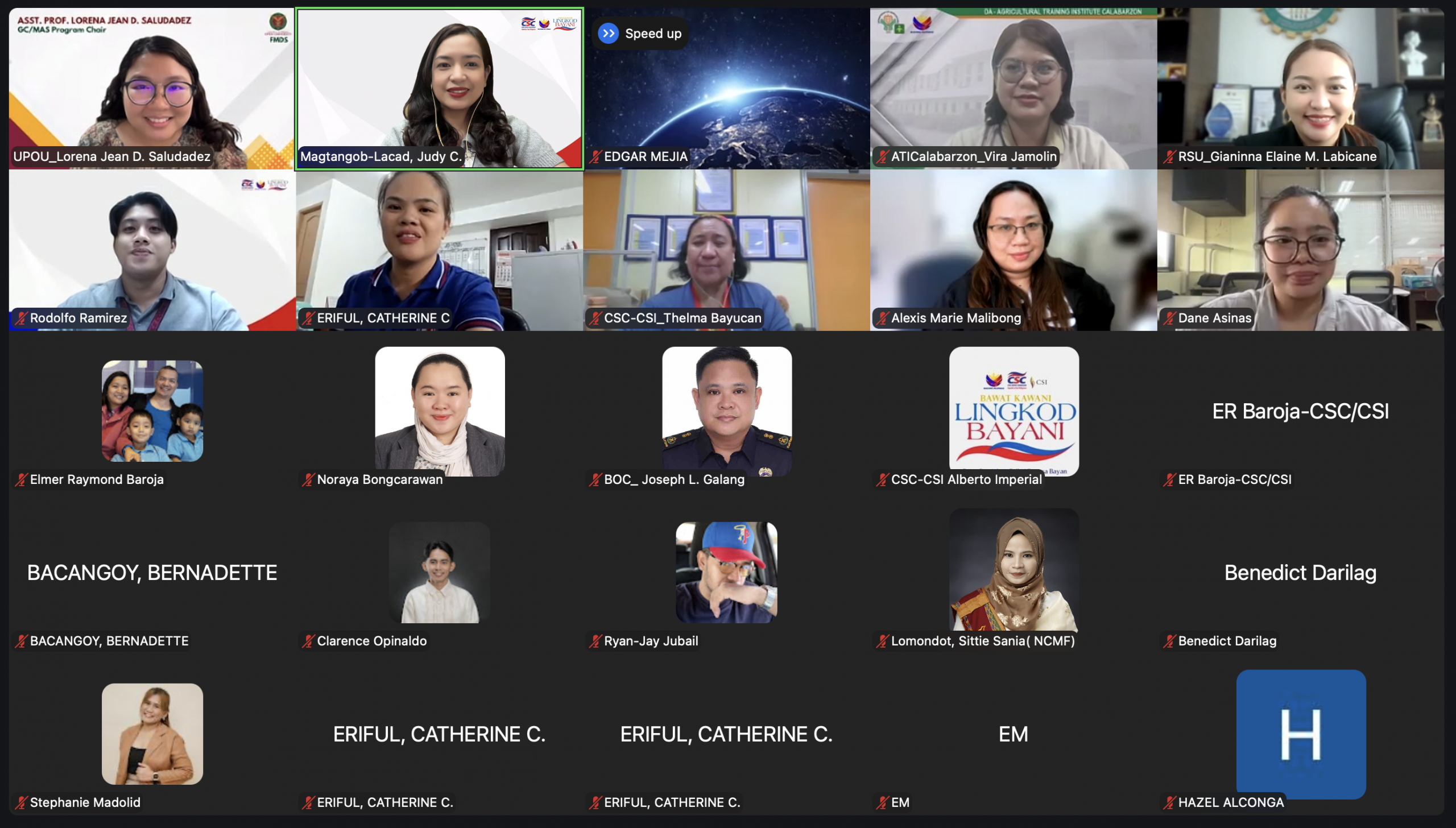
Asst. Prof. Saludadez with participants of the “ASEAN Awareness Program: Understanding the ASEAN Community,” which brought together around 30 participants for discussions on ASEAN and its relevance to Philippine public service. Photo courtesy of the Philippine Civil Service Institute.
Culminating ASEAN Month by Returning to the Program’s Beginnings
The series of engagements culminated on 28 August 2026, when ASGP held a special ASEAN Studies Lecture Series session titled “The Program We Imagined: Reflecting on the Beginnings of the ASEAN Studies Graduate Program,” which brought together approximately 60 participants via Zoom.
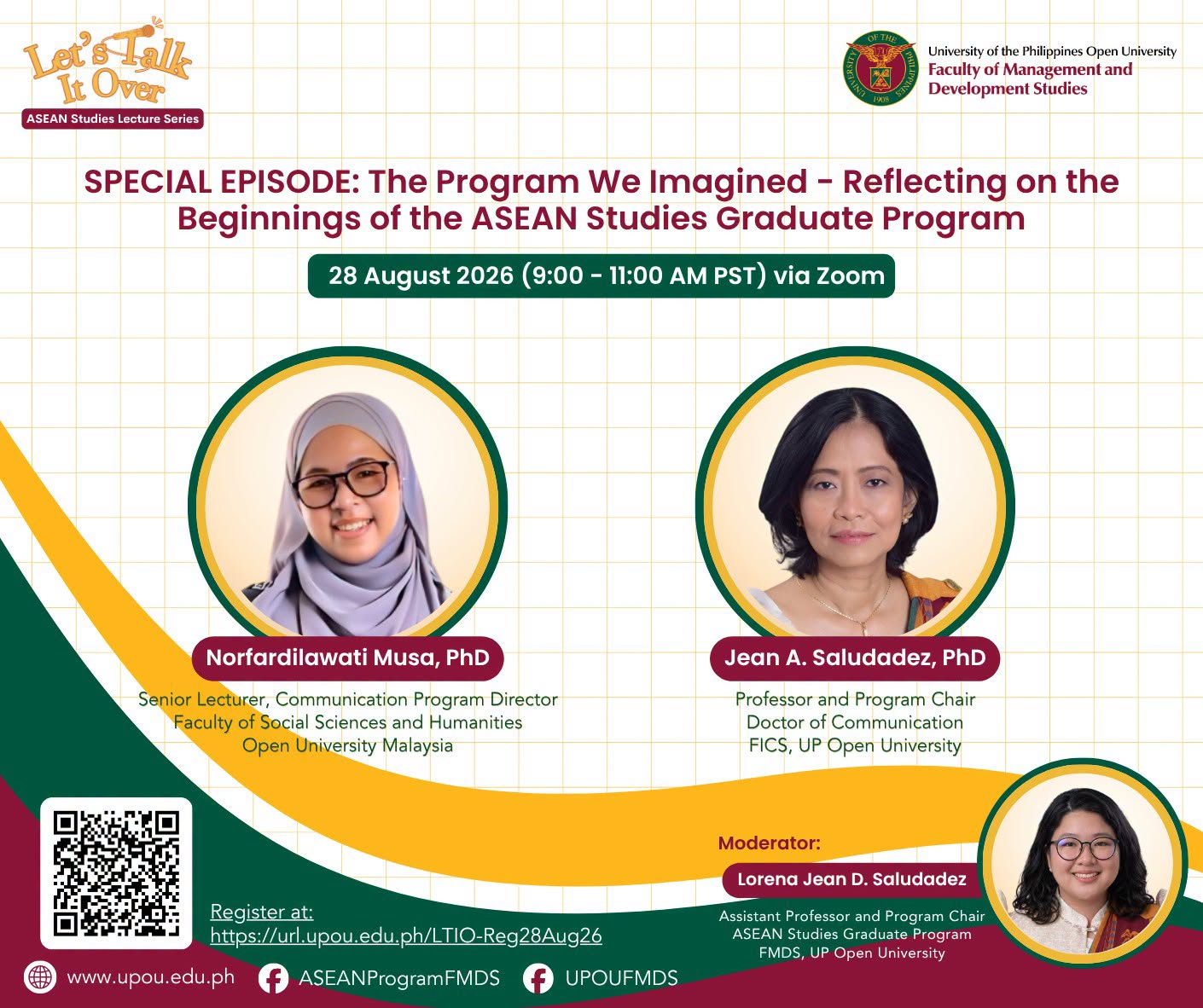
The ASEAN Studies Graduate Program culminated its ASEAN Month activities with the special ASEAN Studies Lecture Series session, “The Program We Imagined: Reflecting on the Beginnings of the ASEAN Studies Graduate Program,” held on 28 August 2026.
The online session featured Dr. Jean A. Saludadez, the first Chair of the ASEAN Studies Graduate Program and among those involved in developing the Program proposal, and Dr. Norfardilawati Musa of Open University Malaysia (OUM), who was part of the OUM team involved in the development of learning materials for the Program as it moved toward implementation.
Drawing from their respective experiences, they reflected on the work involved in translating the vision for the ASEAN Studies Graduate Program into practice, including the challenges they encountered and the decisions they had to make as the Program took shape. They also shared the realizations they gained during this period about ASEAN Studies and what it meant to develop and implement an academic program around an emerging field.
Established in 2014, the ASEAN Studies Graduate Program emerged from a regional effort involving open universities in Southeast Asia to respond to the need for greater ASEAN knowledge, consciousness, and identity through higher education.
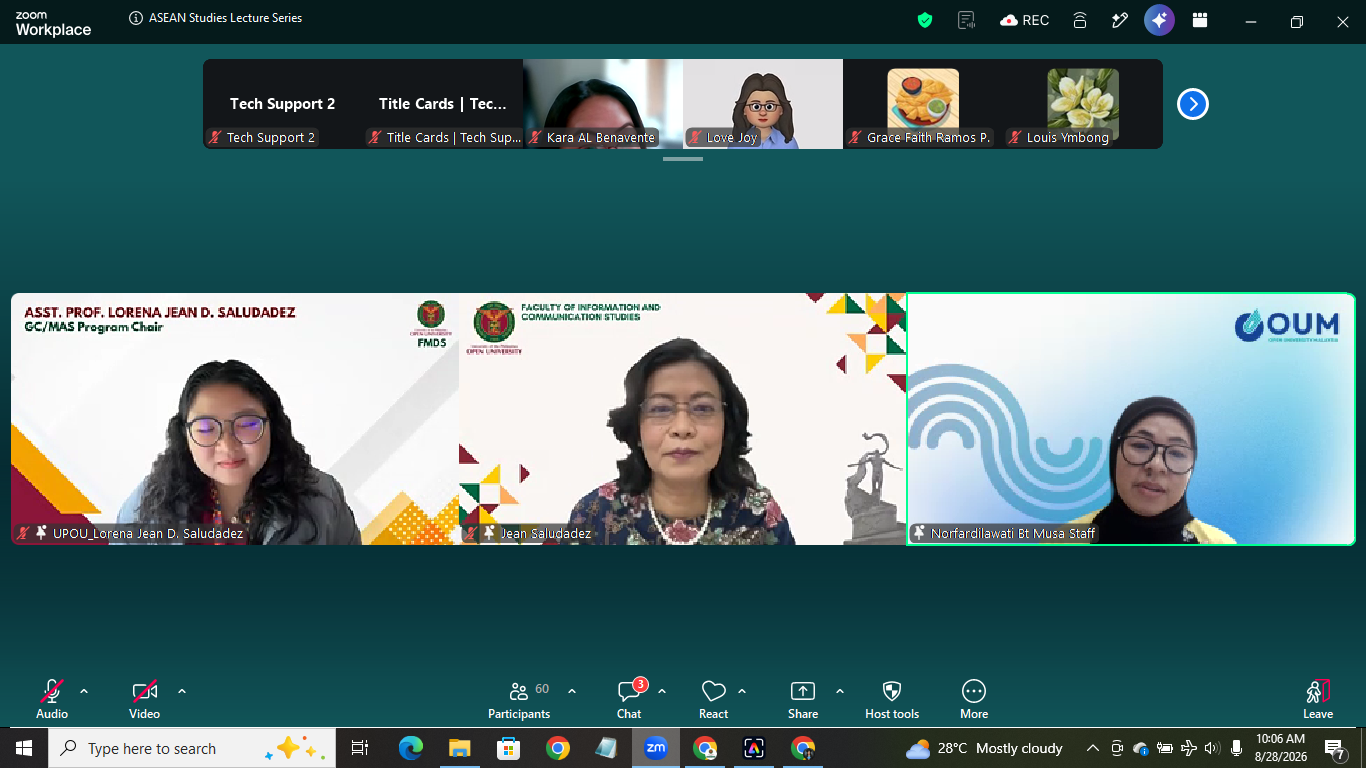
Dr. Jean A. Saludadez and Dr. Norfardilawati Musa revisit their experiences in the early conceptualization and development of the ASEAN Studies Graduate Program during “The Program We Imagined” on 28 August 2026.
Looking back on these experiences also offered an opportunity to reflect on how these early realizations continue to inform the Program today, as ASEAN Studies itself continues to develop and respond to an evolving regional context.
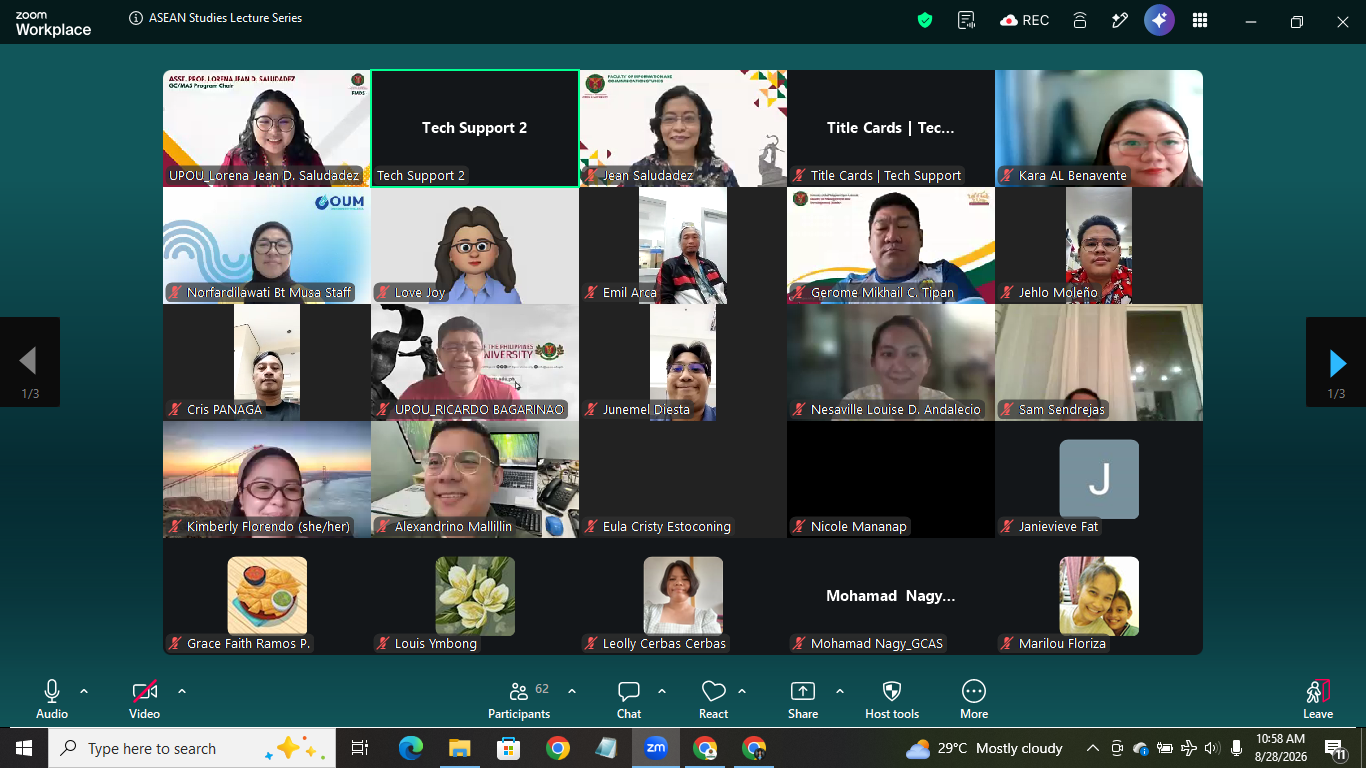
Speakers and participants of “The Program We Imagined.” Around 60 participants joined the online session, which revisited the ideas and aspirations that shaped the ASEAN Studies Graduate Program and reflected on their continuing relevance to ASEAN Studies today.
Taken together, the five engagements reflected the different spaces in which ASEAN Studies can contribute—from higher education and regional academic exchange to professional learning and public service. They also provided opportunities for ASGP to bring its academic and programmatic experiences into broader conversations on how ASEAN is understood, taught, and made relevant across different sectors and contexts.
As ASEAN Studies continues to evolve, ASGP remains committed to advancing scholarship, dialogue, and public engagement that deepen understanding of ASEAN not only as a regional organization, but also as a region shaped by diverse societies, experiences, and perspectives.
Written by: Dona Lyn Piamonte • Edited by: Larry N. Cruz
Sustainable Development Goals




FMDS Socials