
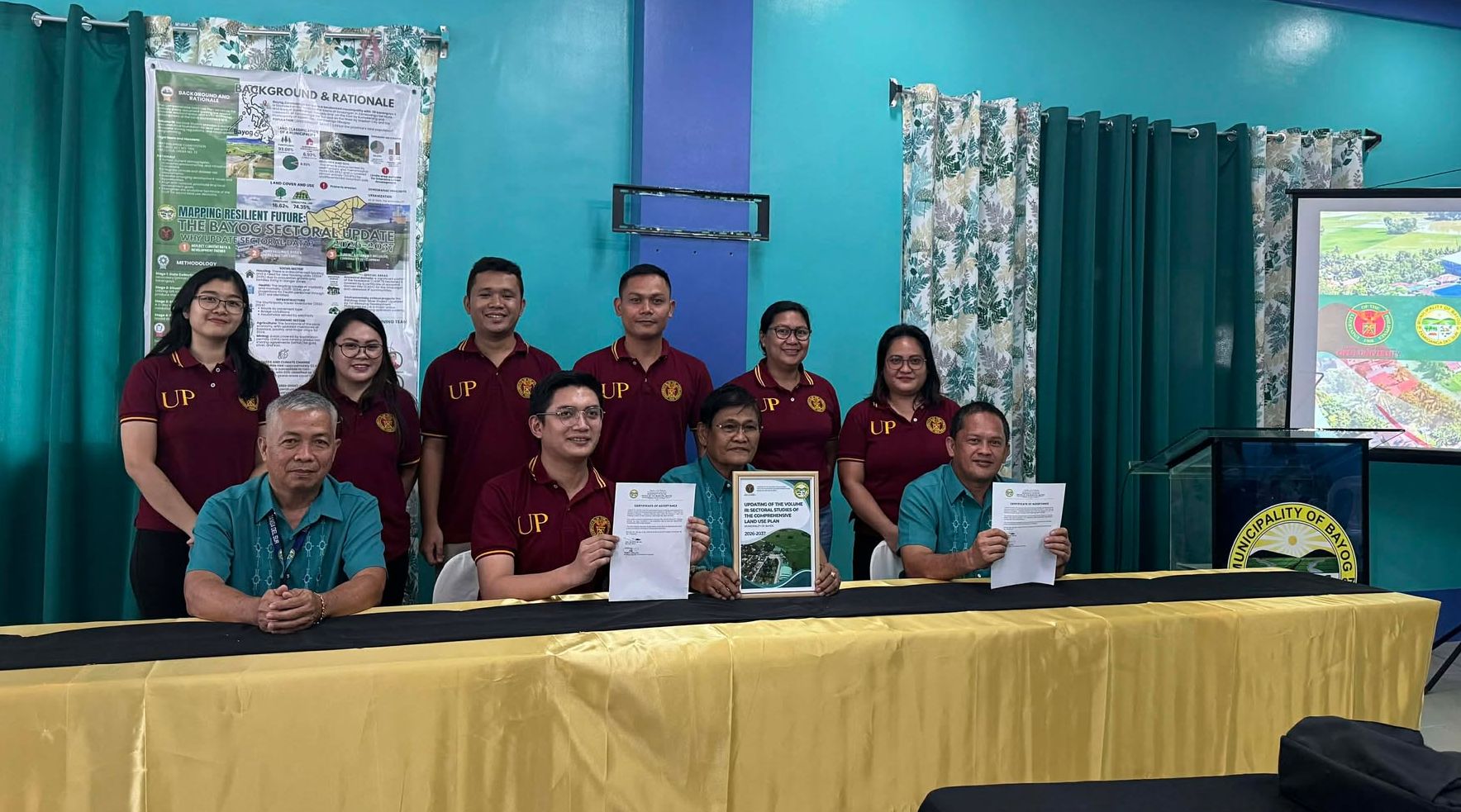
The Eco-Axis Planning Team formally turned over the planning documents and project output to the Municipality of Bayog, represented by the Municipal Planning and Development Coordinator, EnP. Renie Astillero, Municipal Administrator Virgilio Zamora, and Municipal Engineer, Engr. Jeremias Florida. (seated from left to right)
Marking the culmination of the P210.1 Urban Planning Workshop course, students under the Diploma of the Land Use Planning Program of the Faculty of Management and Development Studies successfully completed the updating of the Sectoral Studies Volume of the Municipality of Bayog’s Comprehensive Land Use Plan (CLUP), on May 11, 2026.
The initiative was undertaken in partnership with the Local Government Unit (LGU) of Bayog under the leadership of Municipal Mayor Celso A. Matias. The project was guided by primary Faculty-in-Charge EnP Beverly M. Abad, together with DLUP Program Chair, EnP Remsce Pasahol. The planning team, known as the Eco-Axis Planning Team, is composed of DLUP students Ar. Feliciano Ababon III, EnP. James Neacer Agot, Engr. Darren Mark Andres, Charise Joy Benedicto, Michelle Buligan, Engr. Alinor Diabo, Engr. Freshyll Resoor-Suarez, and Ar. Ma. Diane Petate.
The collaboration forms part of the Pamayanan Urban Planning Studio, which implements the P210.1 course through community-based planning engagements that allow the students to participate in the actual preparation of planning outputs alongside local government units and partner institutions.
The initiative was officially set in motion through a Memorandum of Agreement (MOA) signing between the Municipal Government of Bayog and the University of the Philippines Open University Planning Team. Mayor Matias provided the formal framework for the Eco-Axis Planning Team to provide technical assistance for the municipality’s CLUP Volume III: Sectoral Studies.
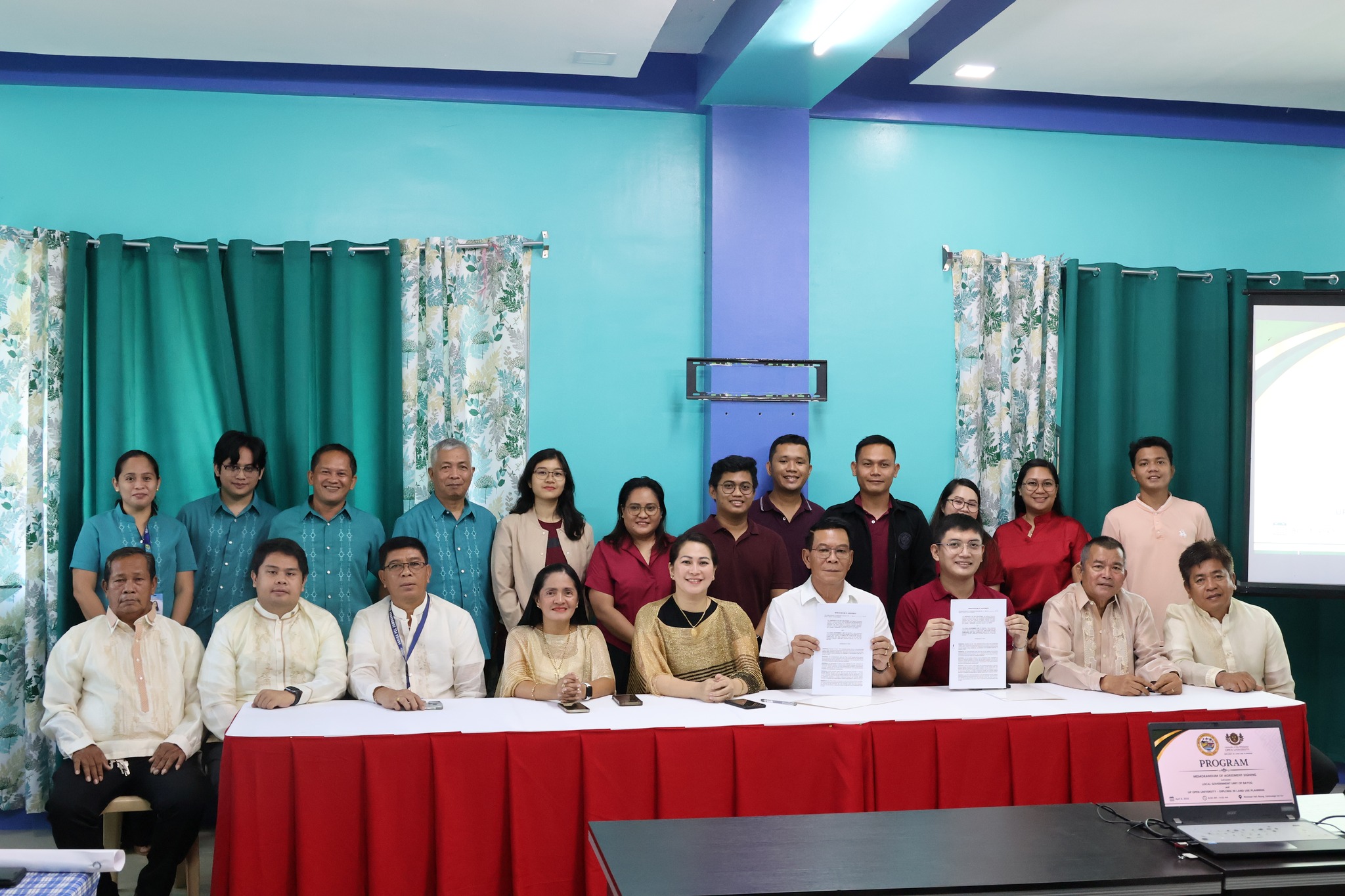
Formalizing the Partnership: The MOA signing between the LGU of Bayog and the planning team, establishing the context for the P210.1 Urban Planning workshop engagement.
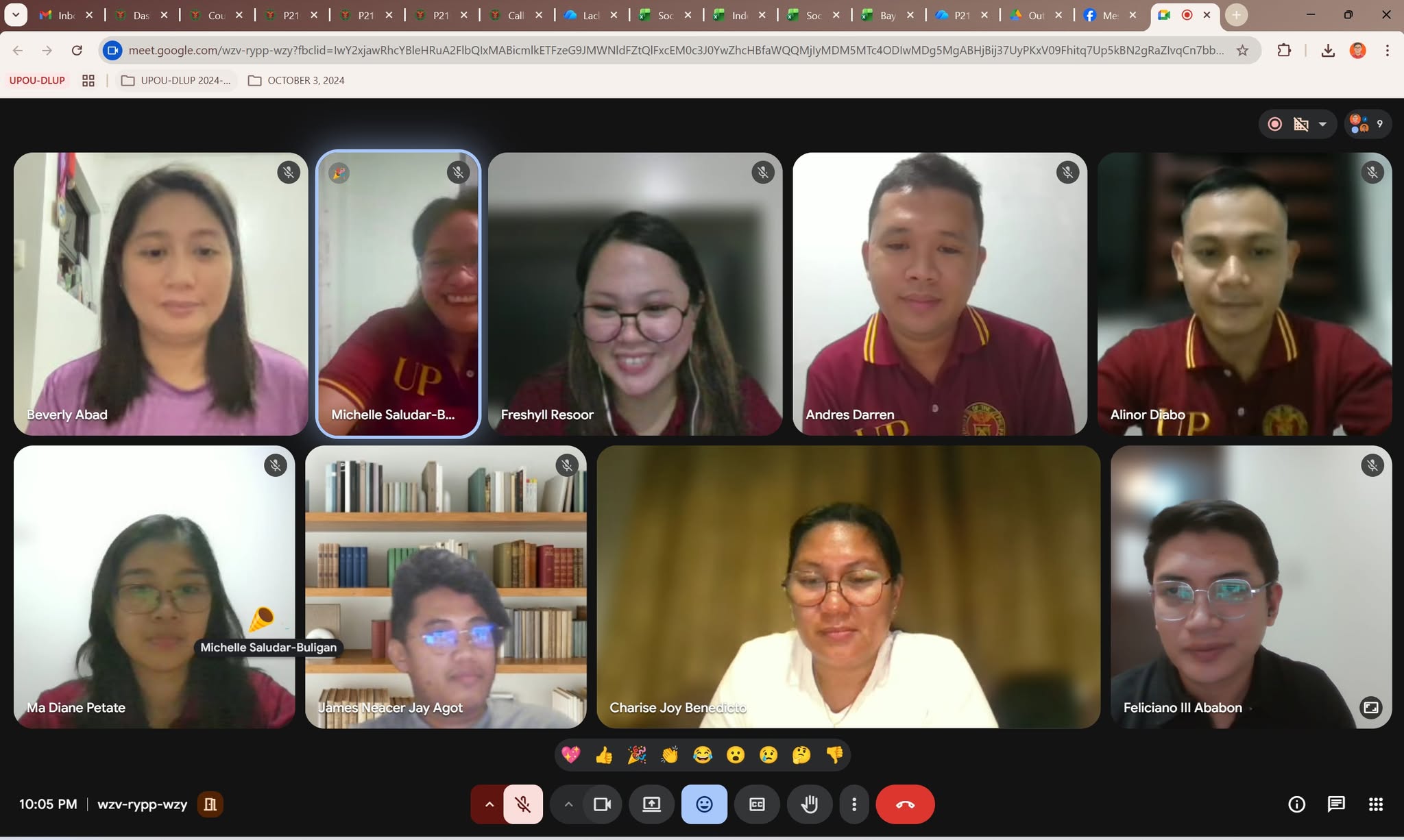
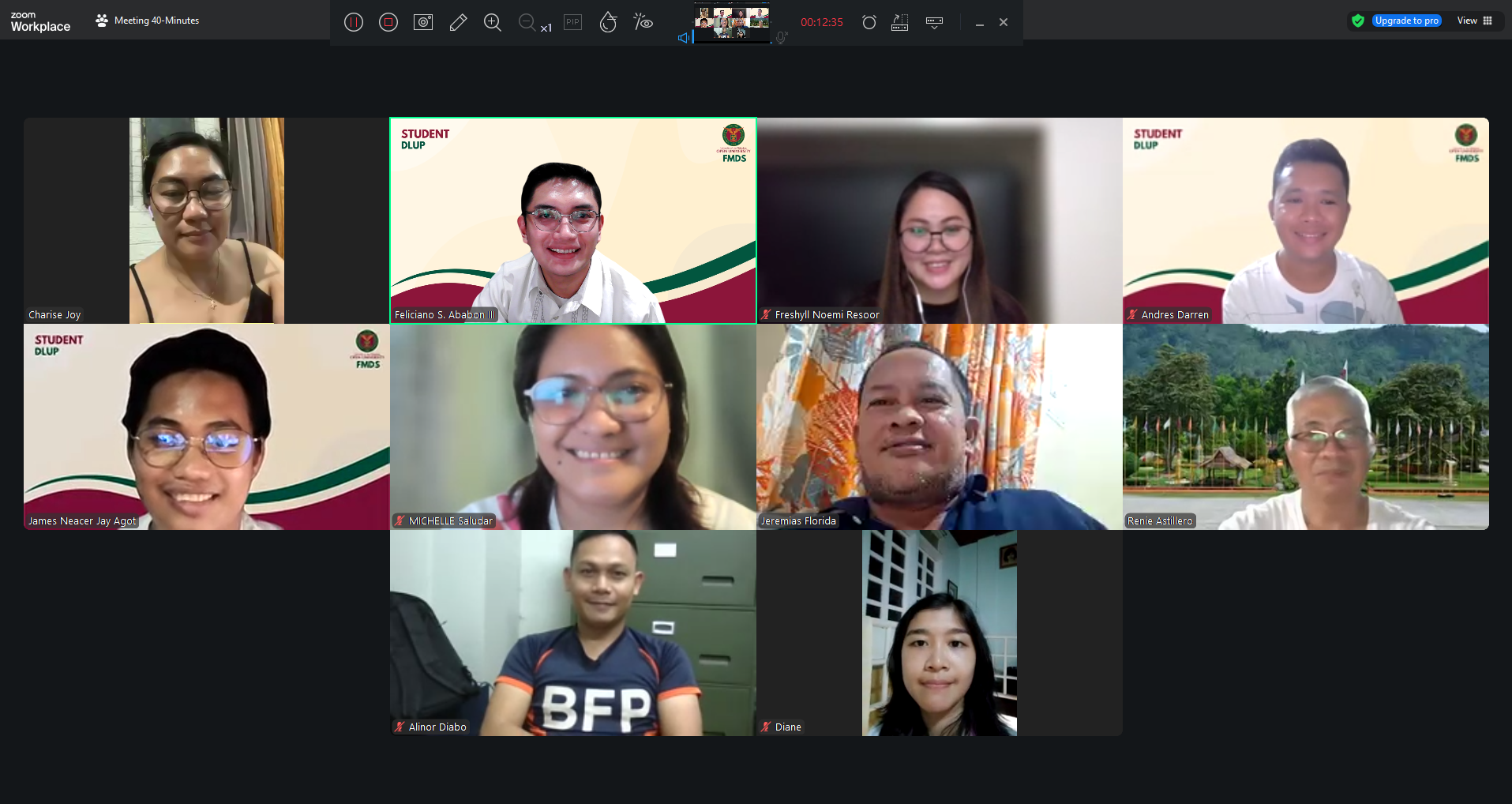
As part of the planning process, the team conducted coordination meetings, data gathering and validation activities, field inspections, GIS mapping, workshops, and secondary data review using existing municipal records and reports. These activities ensured that the planning outputs remained data-driven, participatory, and aligned with local conditions and national planning standards.
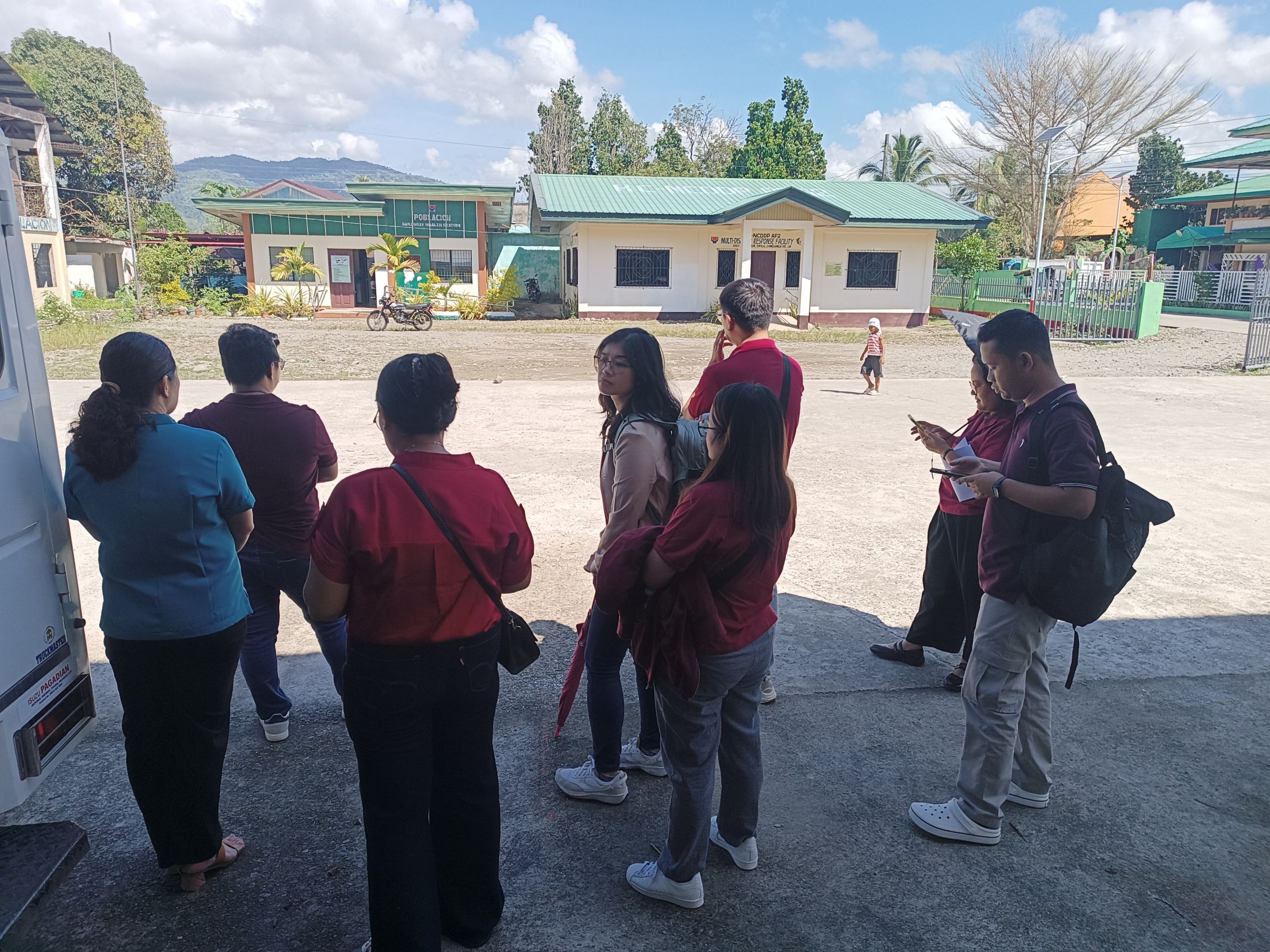
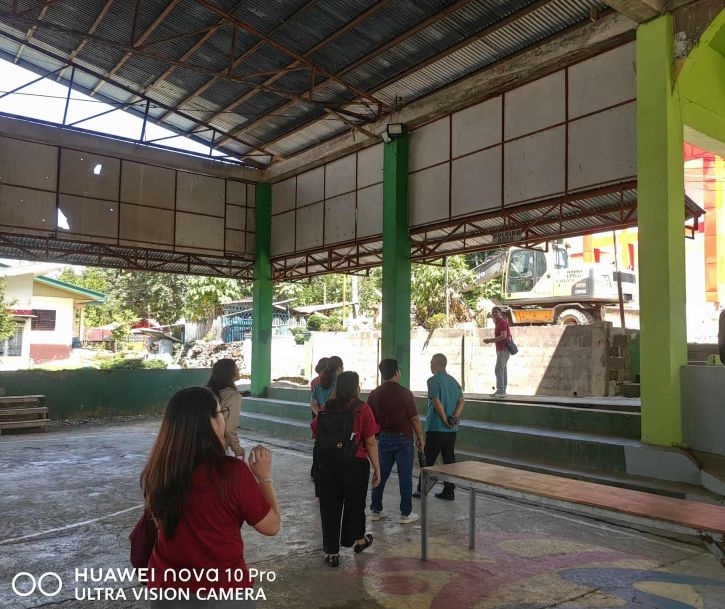
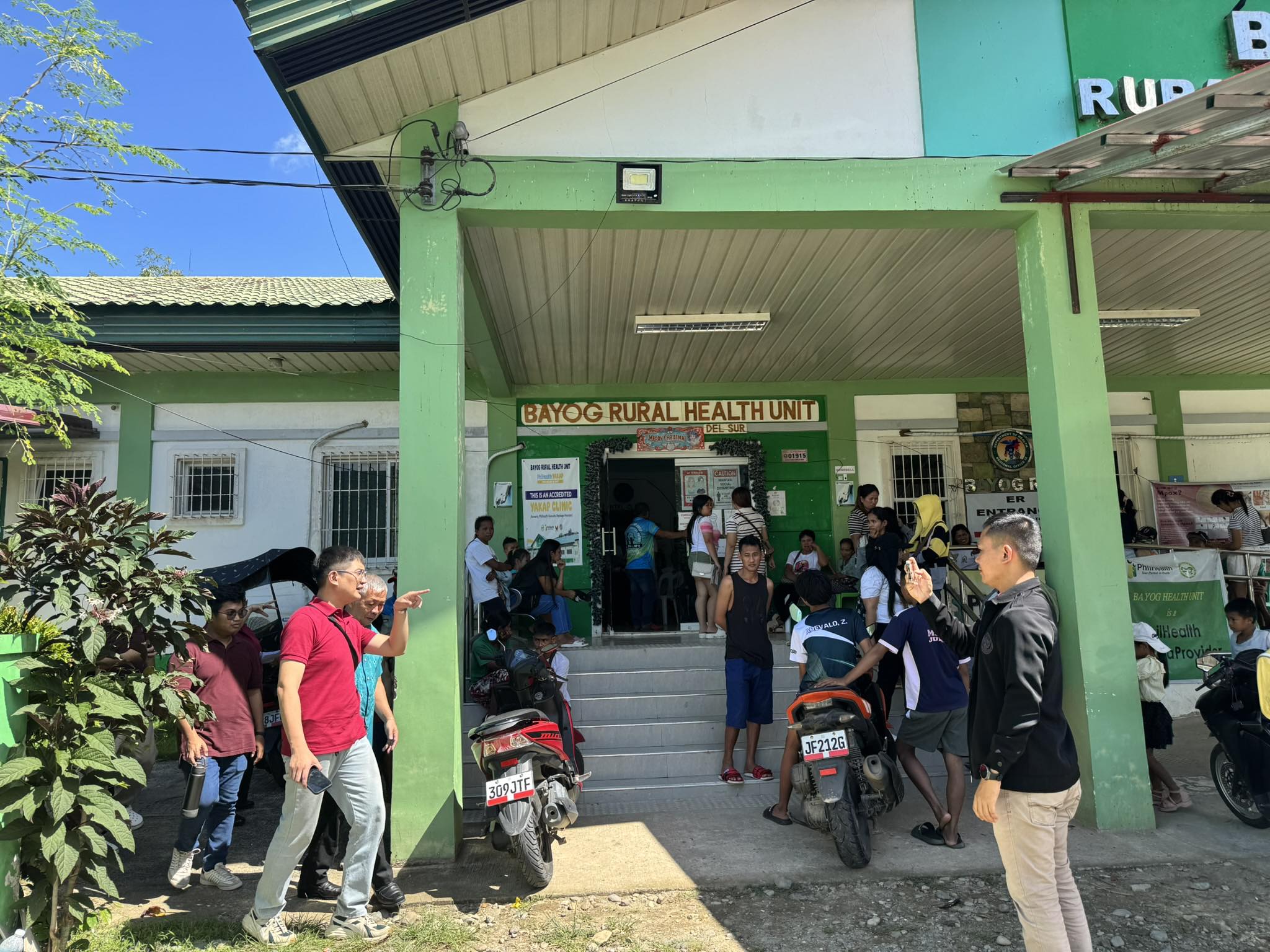
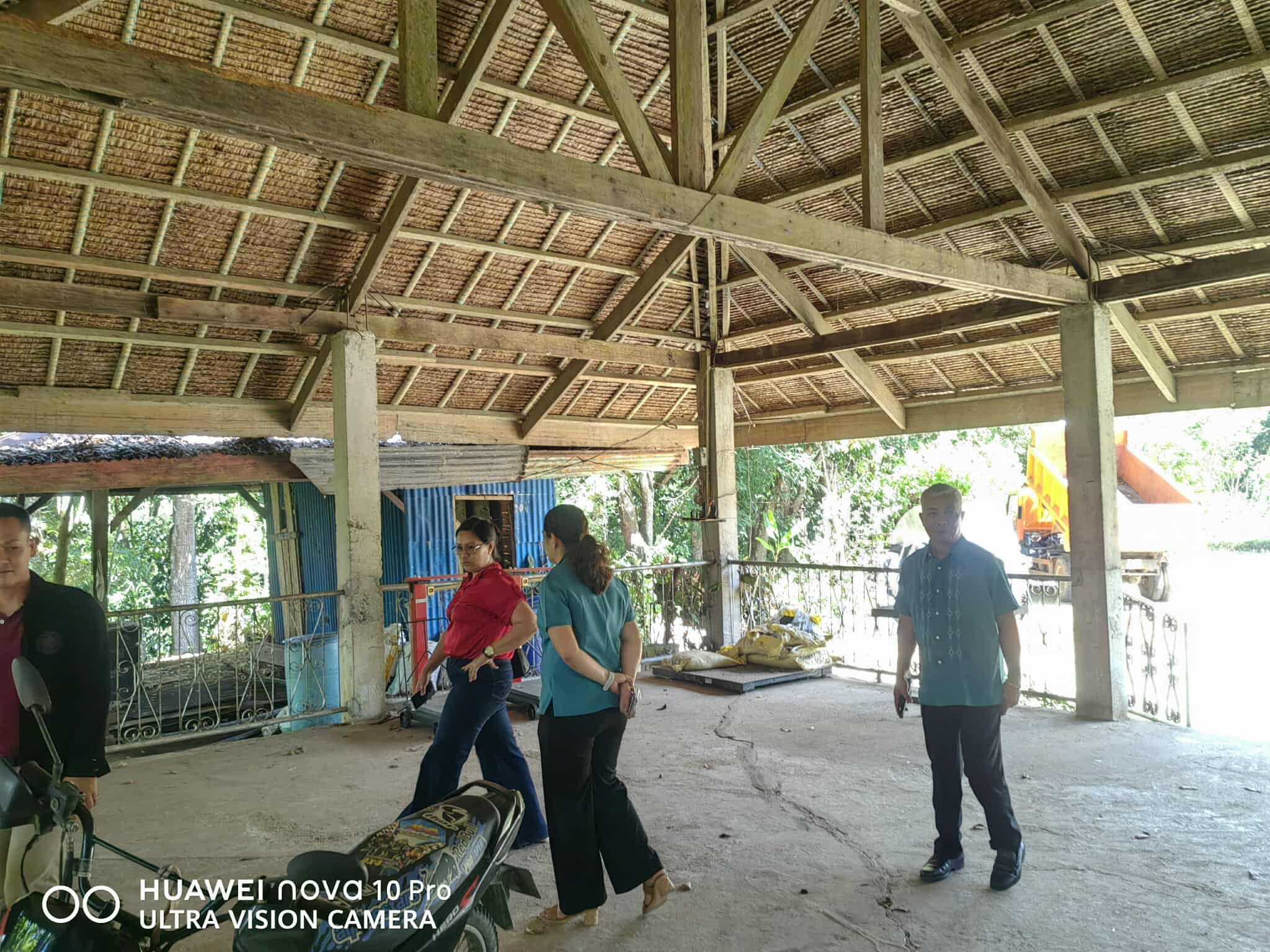
Sectoral workshops and data validation sessions:
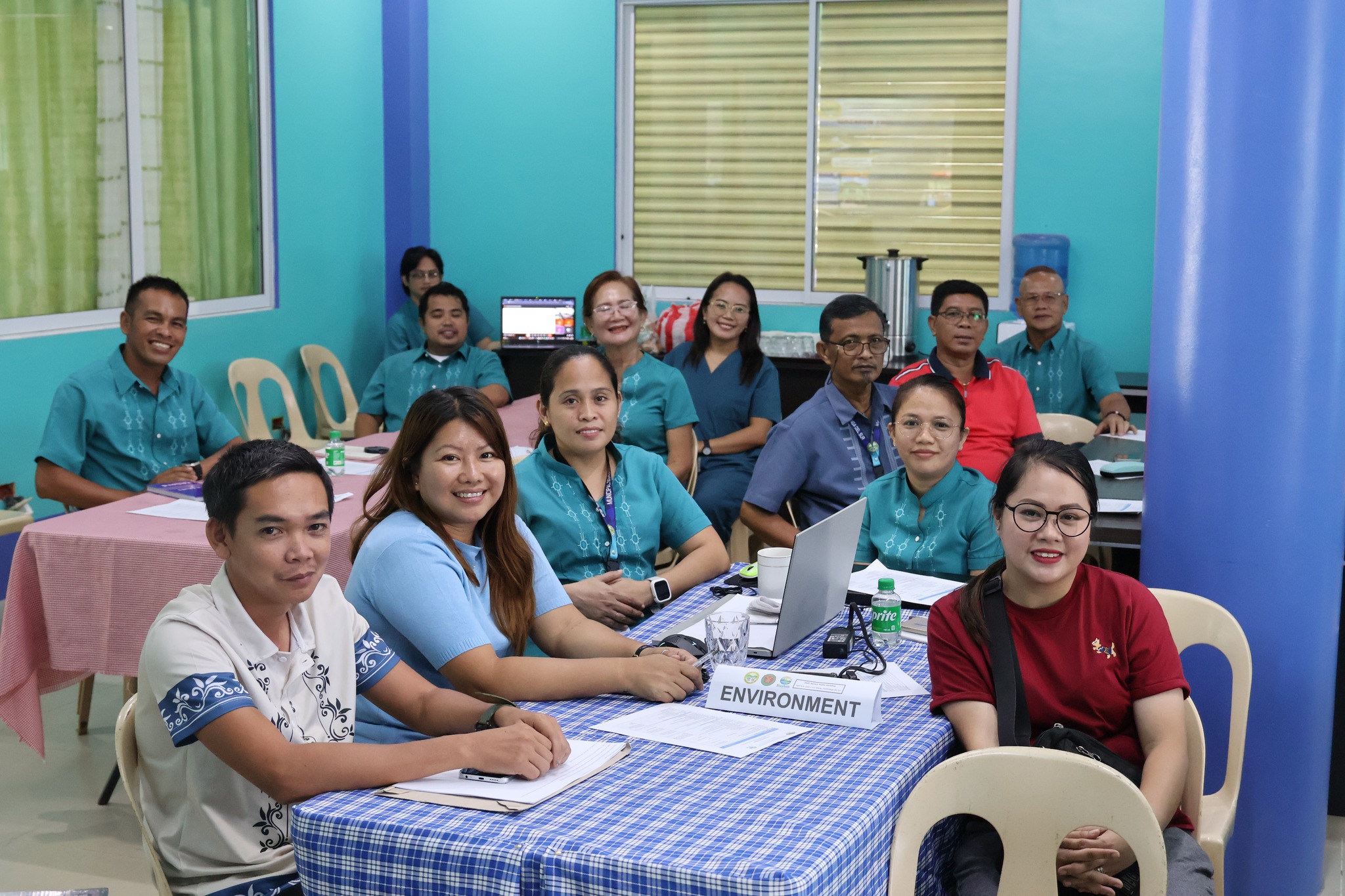
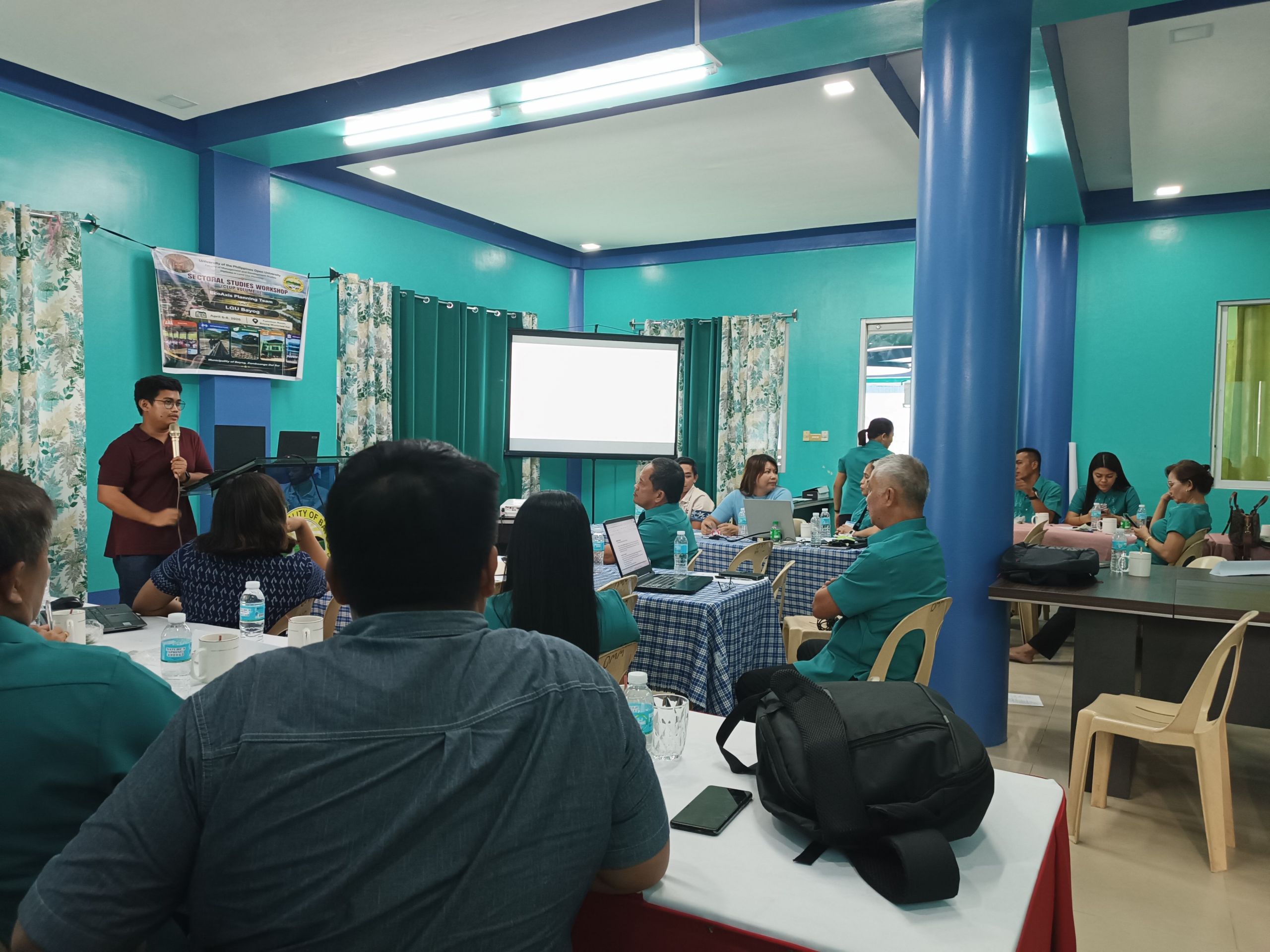
Workshop Day 1: LGU Bayog government officials with their respective sector
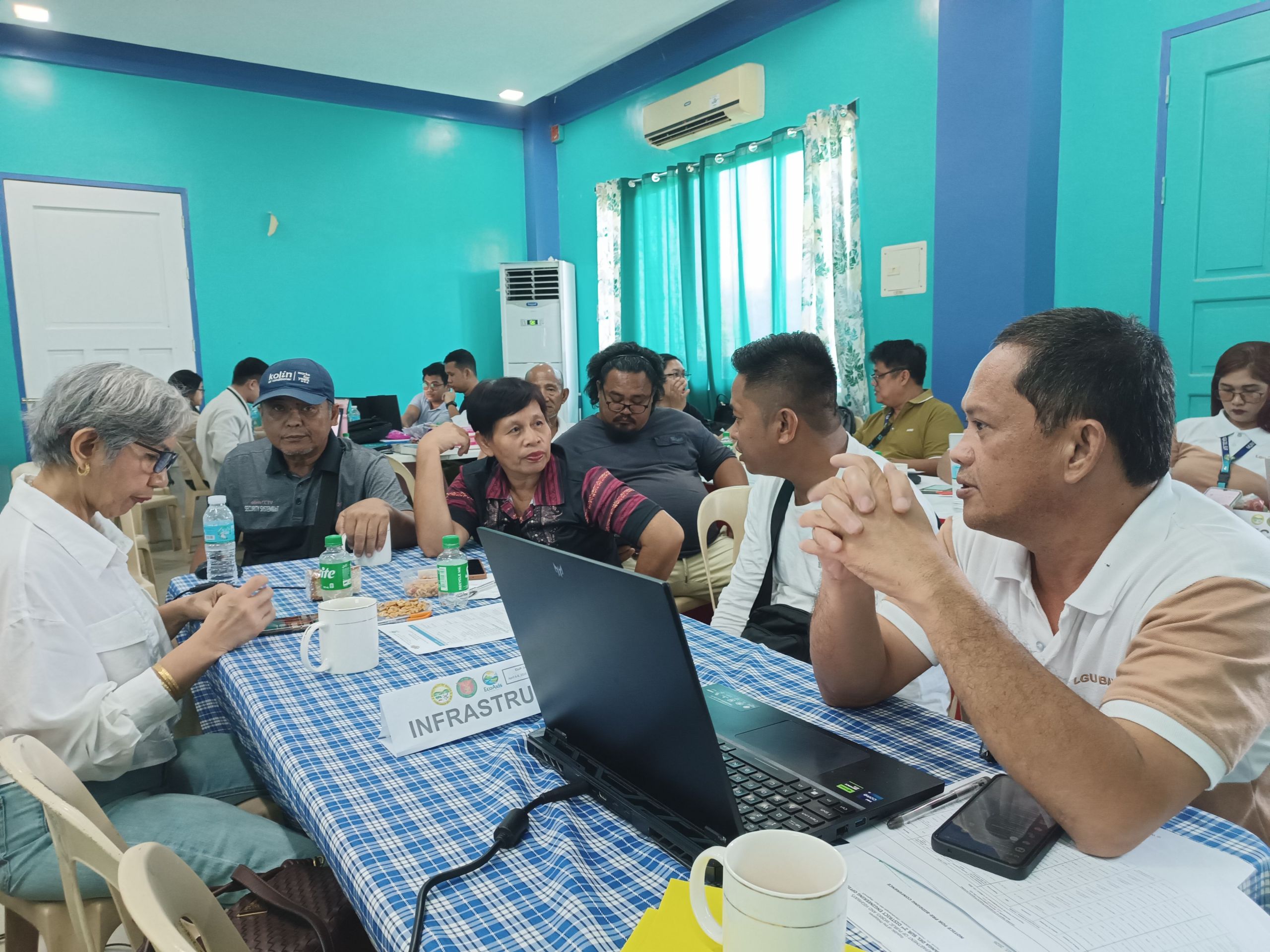
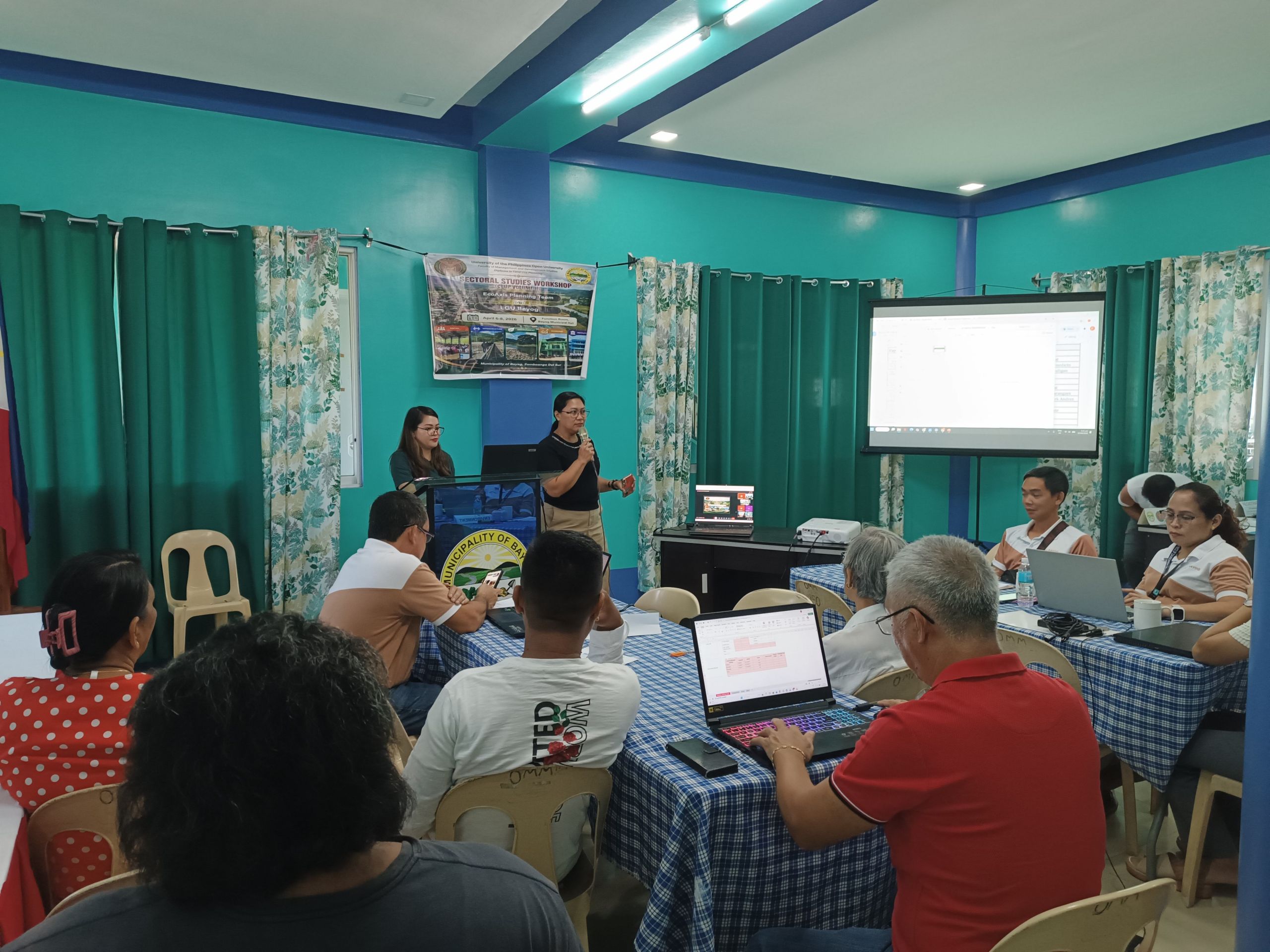
Workshop Day 2: LGU Bayog government officials and the barangay officials with their respective sectors.
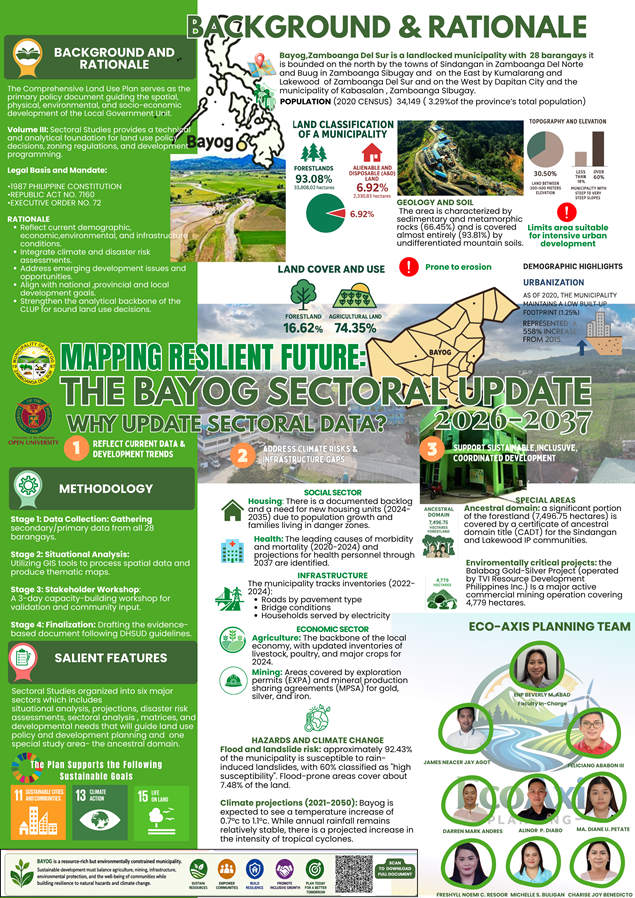 To further present the planning initiative, the team also developed a project poster summarizing the rationale of the sector update, planning methodologies, major sectoral components, and the overall vision of promoting sustainable and disaster-resilient municipalities. The poster served as a visual presentation of the planning process and key outputs generated through the collaboration.
In a message delivered by Municipal Administration Vigilio Q. Zamora on behalf of Municipal Mayor Matias, the municipality expressed its gratitude to the Eco-Axis Planning Team for their technical and partnership in updating the CLUP. The mayor recognized the team’s dedication and contribution in strengthening Bayog’s planning initiatives, particularly in advancing disaster resilience, environmental protection, and sustainable development. He also emphasized that the outputs of the collaboration will serve as important guides in shaping a more progressive and resilient municipality.
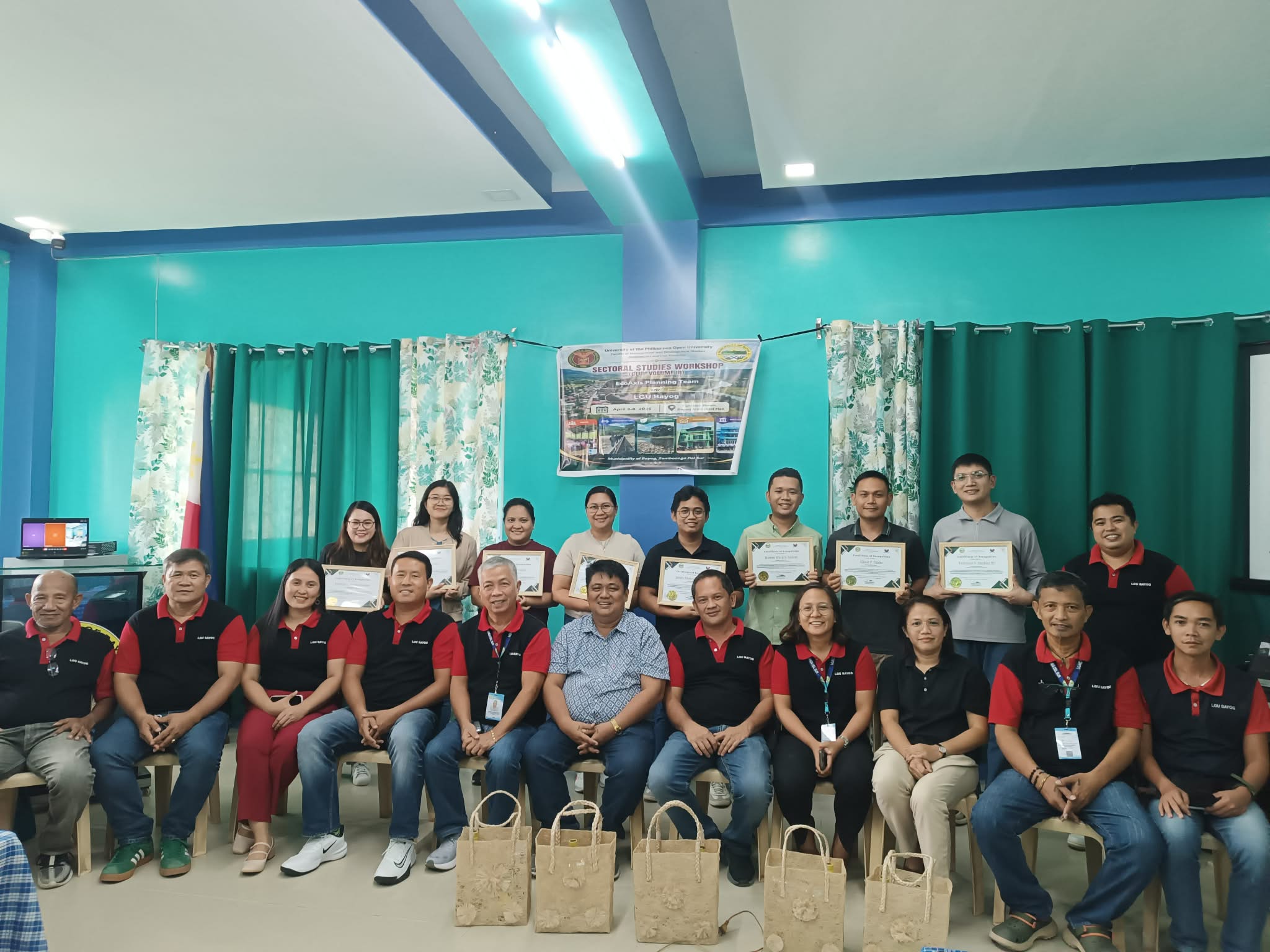
The Eco-Axis Planning Team receives a certificate of appreciation and tokens from the LGU of Bayog on April 8, 2026, in recognition of their dedicated technical assistance in the updating of the municipality’s sectoral studies.
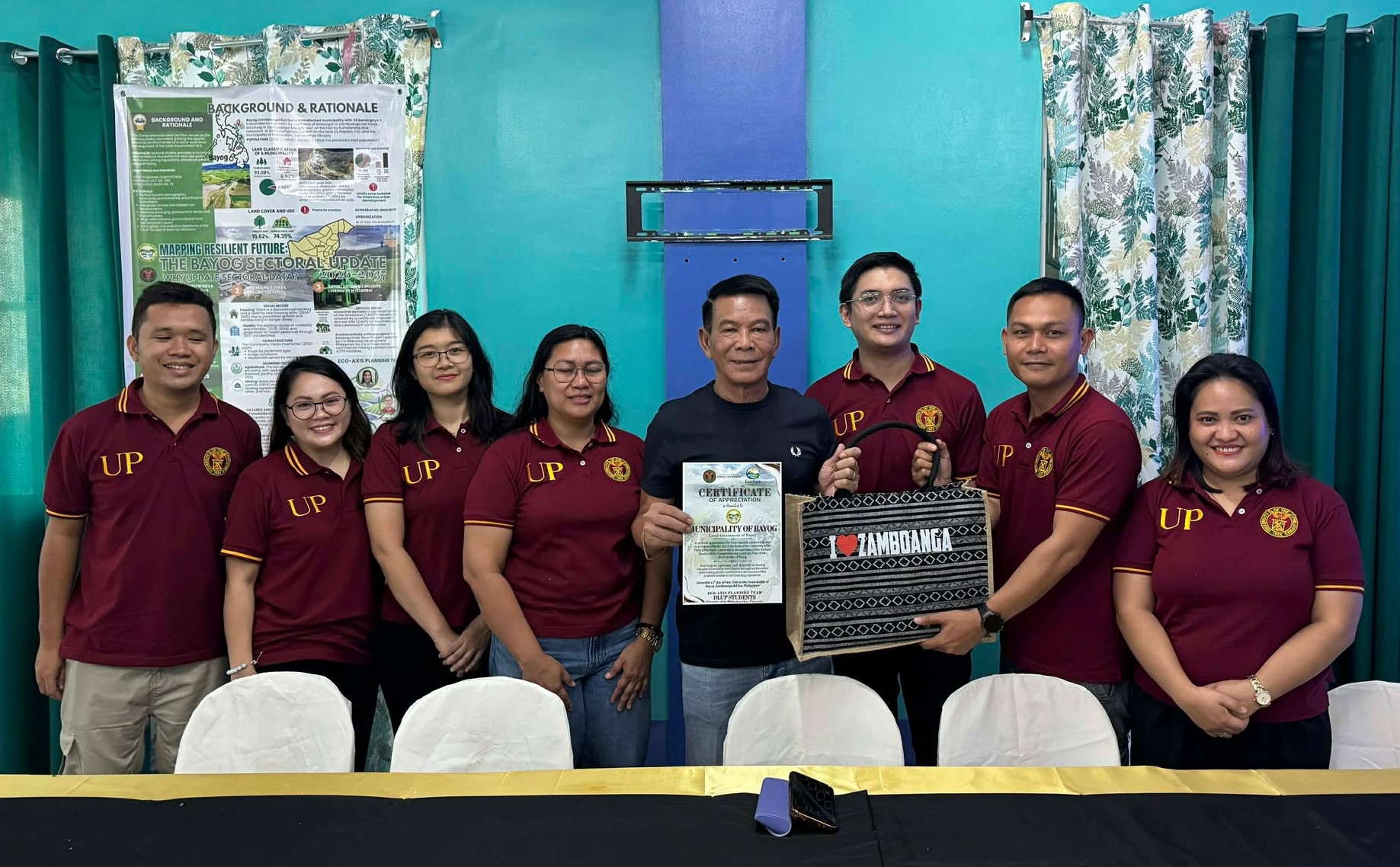
Members of the Eco-Axis Planning Team present a token of appreciation to Mayor Celso A. Matias during the turnover ceremony in recognition of the municipality’s partnership and support on May 11, 2026.
The initiative also reflects the commitment of UPOU to its open and distance education framework by providing students with opportunities to engage in actual local development planning and community-based initiatives. Through faculty mentorship and collaboration with local government units, the program continues to strengthen participatory planning practice while supporting communities in building sustainable and resilient futures.
The initiative likewise supports the achievement of relevant United Nations Sustainable Development Goals (SDGs), particularly SDG 11: Sustainable Cities and Communities, through collaborative and inclusive local planning efforts.
Written by: Michelle S. Buligan & Charise Joy V. Benedicto • Edited by: Ar. Feliciano S. Ababon III, Asst. Prof. Remsce A. Pasahol and Larry N. Cruz
Photo Credits: Eco-Axis Planning Team
Sustainable Development Goals



FMDS Socials