
The UPOU Faculty of Management and Development Studies (FMDS) concluded this year’s ASEAN Studies Lecture Series (ASLS) under its Let’s Talk it Over (LTiO). The series brought together experts and participants to exchange insights and engage in meaningful discussions on pressing economic, political, security, and academic issues shaping the ASEAN region.
Featuring eight lectures, the series provided diverse perspectives on regional developments, challenges, and opportunities while fostering a deeper understanding of ASEAN’s evolving landscape and its significance in advancing regional cooperation.
Steering ASEAN: The Role of the Chairship in Shaping Regional Priorities
The series opened with the lecture on “Steering ASEAN: The Role of the Chairship in Shaping Regional Priorities,” which explored how the ASEAN Chairship provides direction and leadership in advancing the region’s collective agenda.
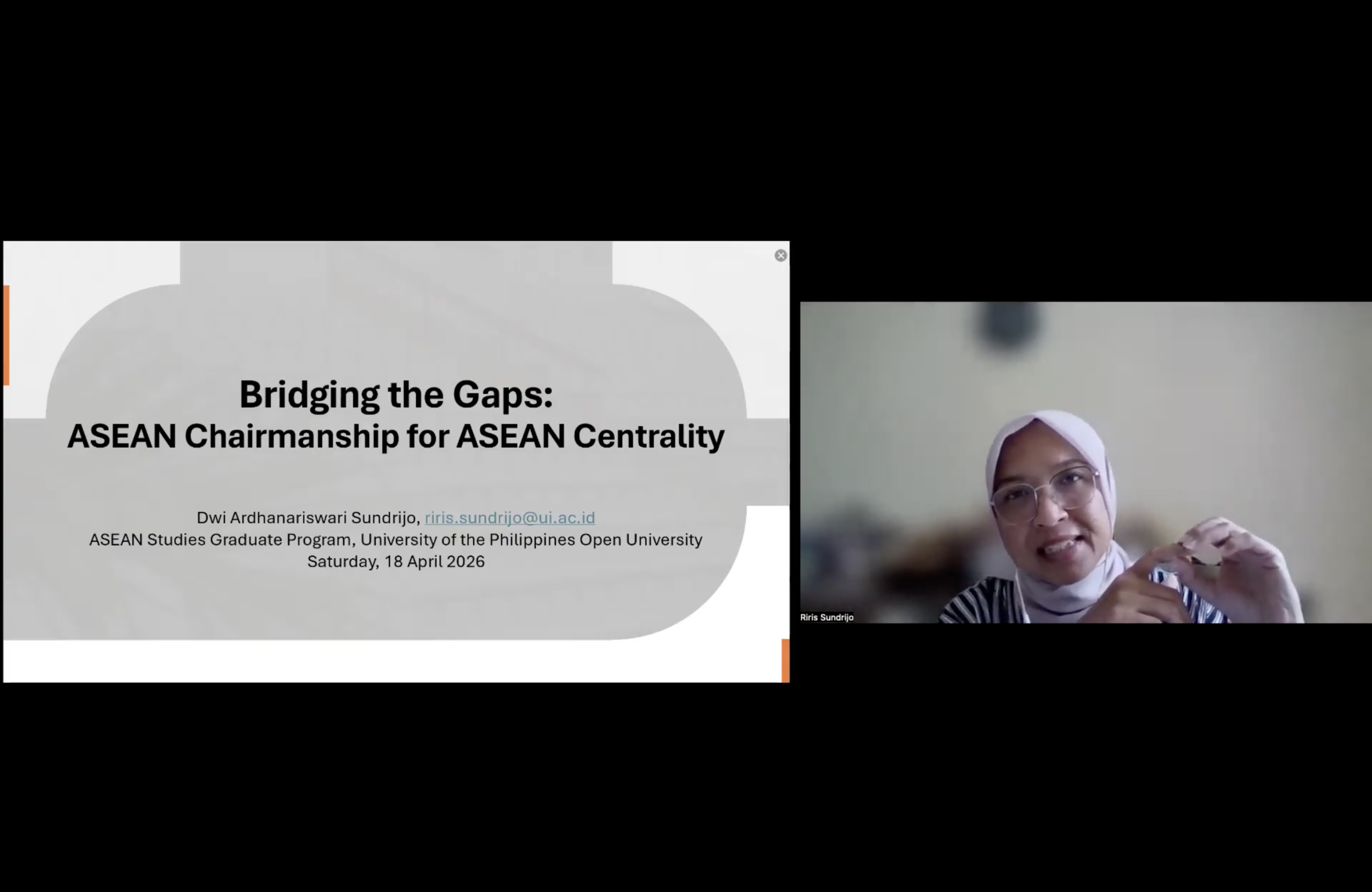
Dr. Dwi Ardhanariswari Sundrijo, Assistant Professor of Transnationalism at the Department of International Relations, Universitas Indonesia, discussed the Chairship’s role in setting regional priorities, facilitating dialogue among member states, building consensus, and strengthening cooperation on shared challenges.
She also introduced the concept of “decentralizing the center,” which calls for strengthening the ASEAN Way through shared leadership and collective responsibility among member states. This approach emphasizes the need for more effective regional mechanisms that enable ASEAN members to work together in pursuing common goals.
The discussion underscored that the ASEAN Chairship goes beyond a ceremonial leadership position. Rather, it serves as a vital mechanism for translating regional aspirations and commitments into concrete collective action.
ASEAN Economic Community 2026–2030
Building on the discussion on regional leadership, the second lecture, held on 23 May 2026, turned to the ASEAN Economic Community (AEC) and its pathways toward becoming the world’s fourth-largest economy.
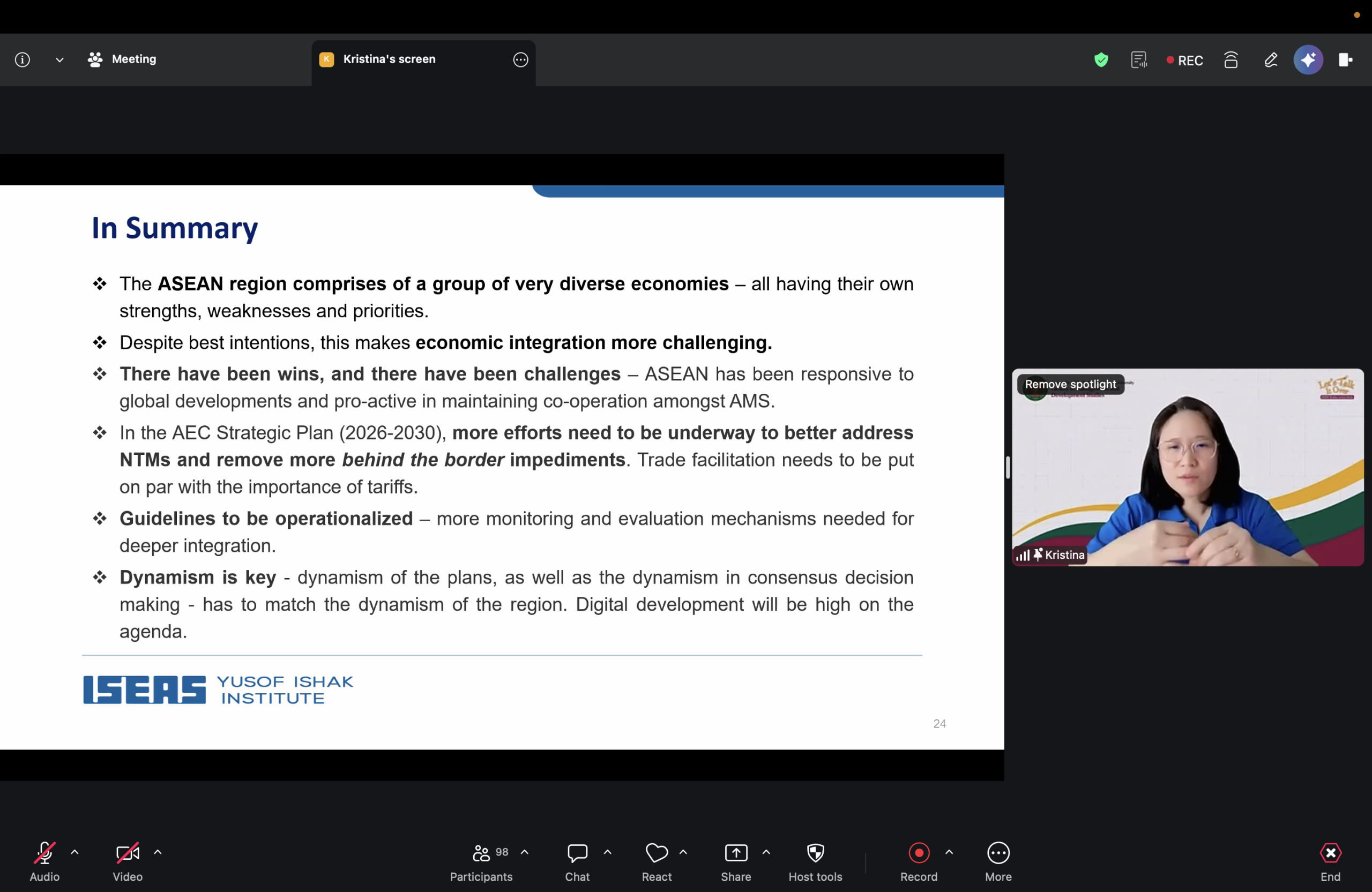
Ms. Kristina Fong Siew Leng, MEcon, Lead Researcher for Economic Affairs at the ASEAN Studies Centre of the ISEAS–Yusof Ishak Institute, guided participants through ASEAN’s economic outlook, highlighting the opportunities and challenges that could influence the region’s growth and global competitiveness.
Her presentation emphasized the importance of regional collaboration in addressing economic challenges, strengthening integration, and advancing the objectives of the ASEAN Economic Community.
ASEAN, Regional Order, and Navigating Conflict and Security in an Evolving Regional Security Landscape
As geopolitical developments continue to reshape Southeast Asia, the third lecture, held on 27 June 2026, examined the theme “ASEAN, Regional Order, and Navigating Conflict and Security in an Evolving Regional Security Landscape.” The session explored emerging challenges to regional peace and stability and the role of ASEAN in navigating an increasingly complex geopolitical environment.
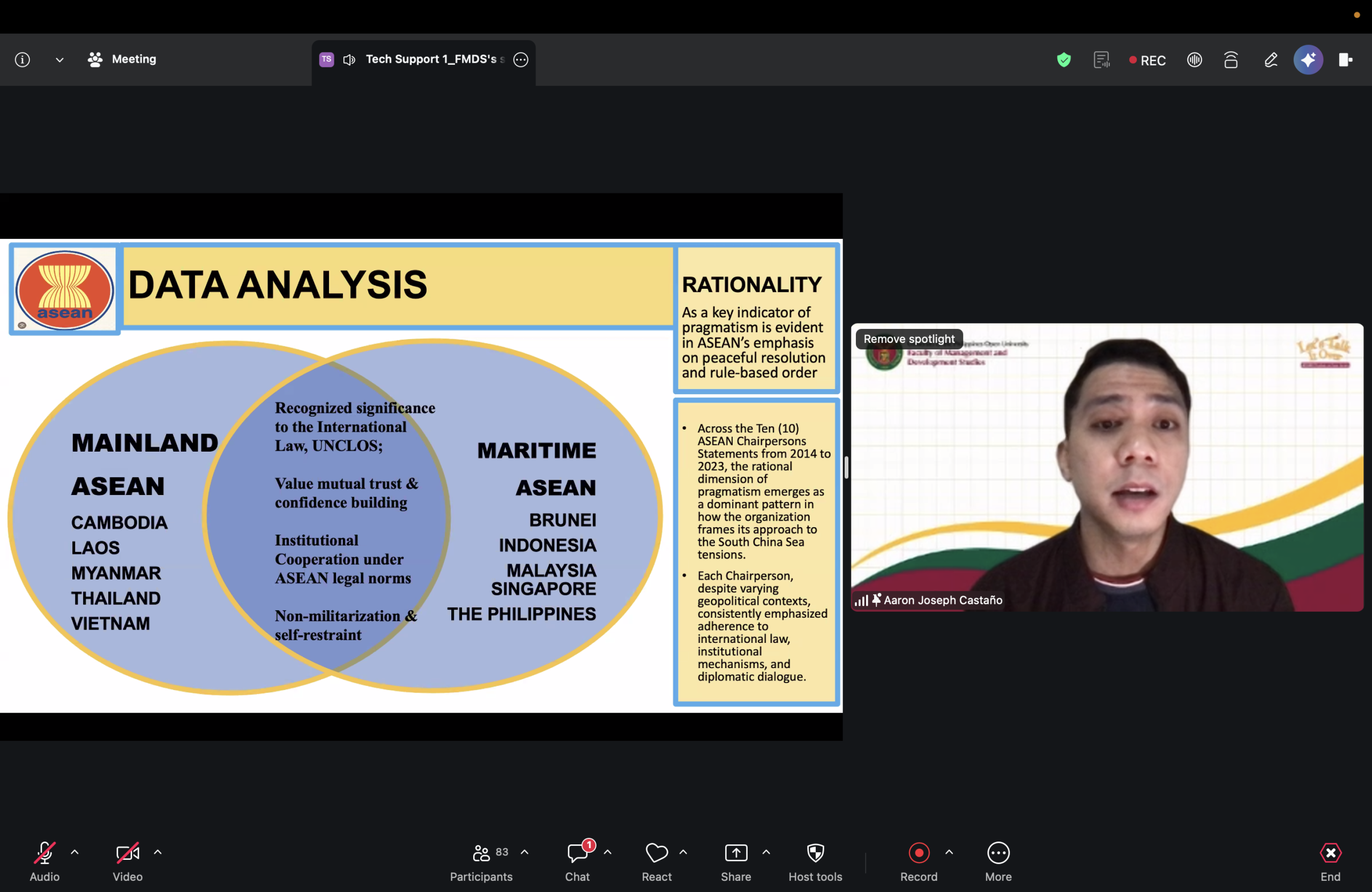
Prof. Aaron Joseph H. Castaño of West Visayas State University examined ASEAN Chair’s Statements as political discourse, focusing on the organization’s pragmatic approach to tensions in the West Philippine Sea. His presentation also considered the implications of emerging geopolitical developments and regional security challenges for ASEAN.
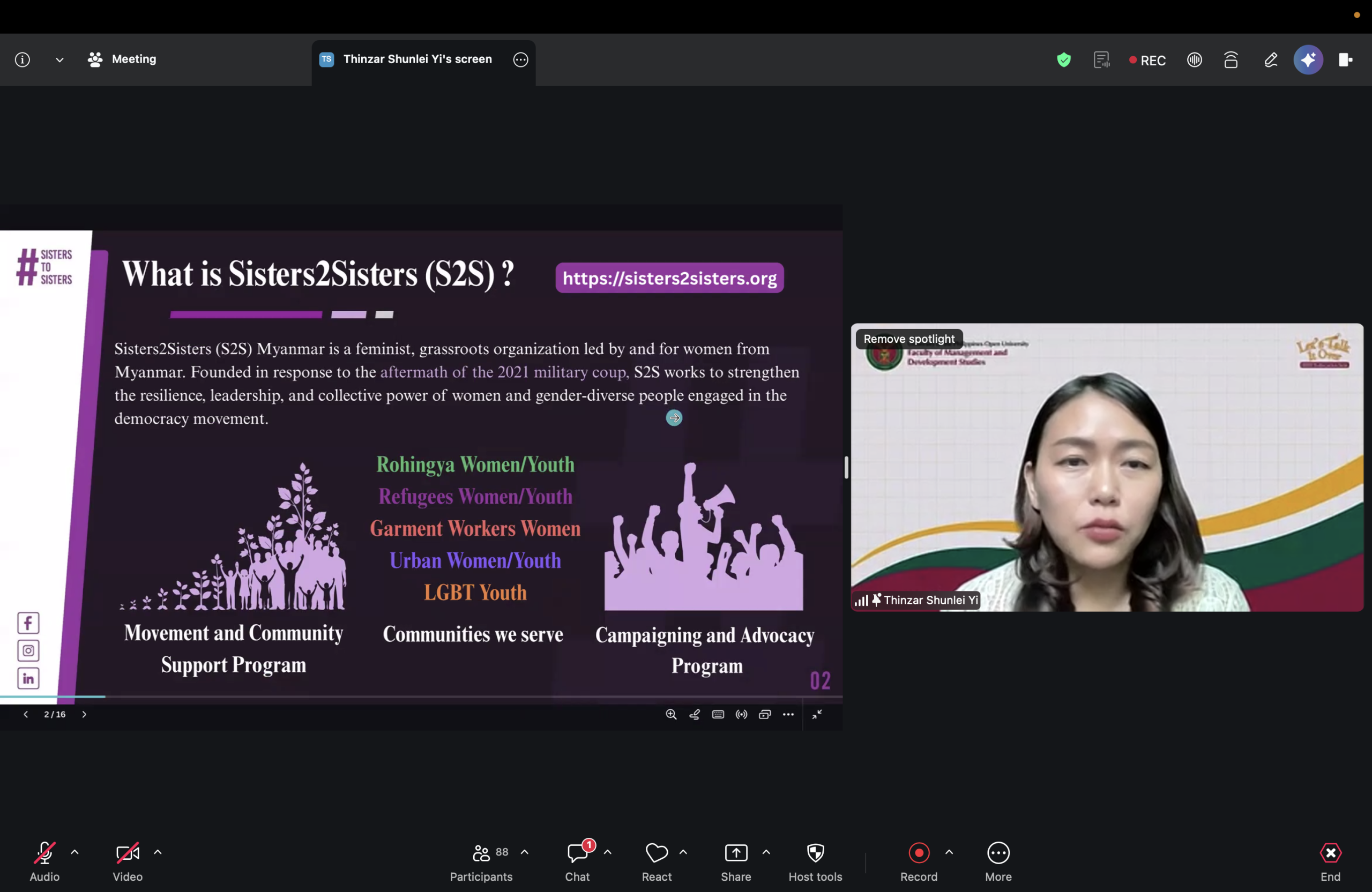
Meanwhile, Ms. Thinzar Shunlei Yi, Program Director of Sisters 2 Sisters in Myanmar, discussed ASEAN’s role in promoting dialogue, cooperation, and regional stability. Her presentation highlighted the organization’s efforts to navigate regional uncertainties and strengthen mechanisms for collective engagement.
Together, the presentations offered a deeper understanding of the challenges confronting ASEAN and reinforced the continuing importance of ASEAN-led cooperation in addressing conflict, managing geopolitical tensions, and sustaining peace and stability in Southeast Asia.
ASEAN Centrality in a Changing Regional Architecture
On 18 July 2026, the lecture series delved into the development and continuing relevance of ASEAN Centrality amid a changing regional landscape.
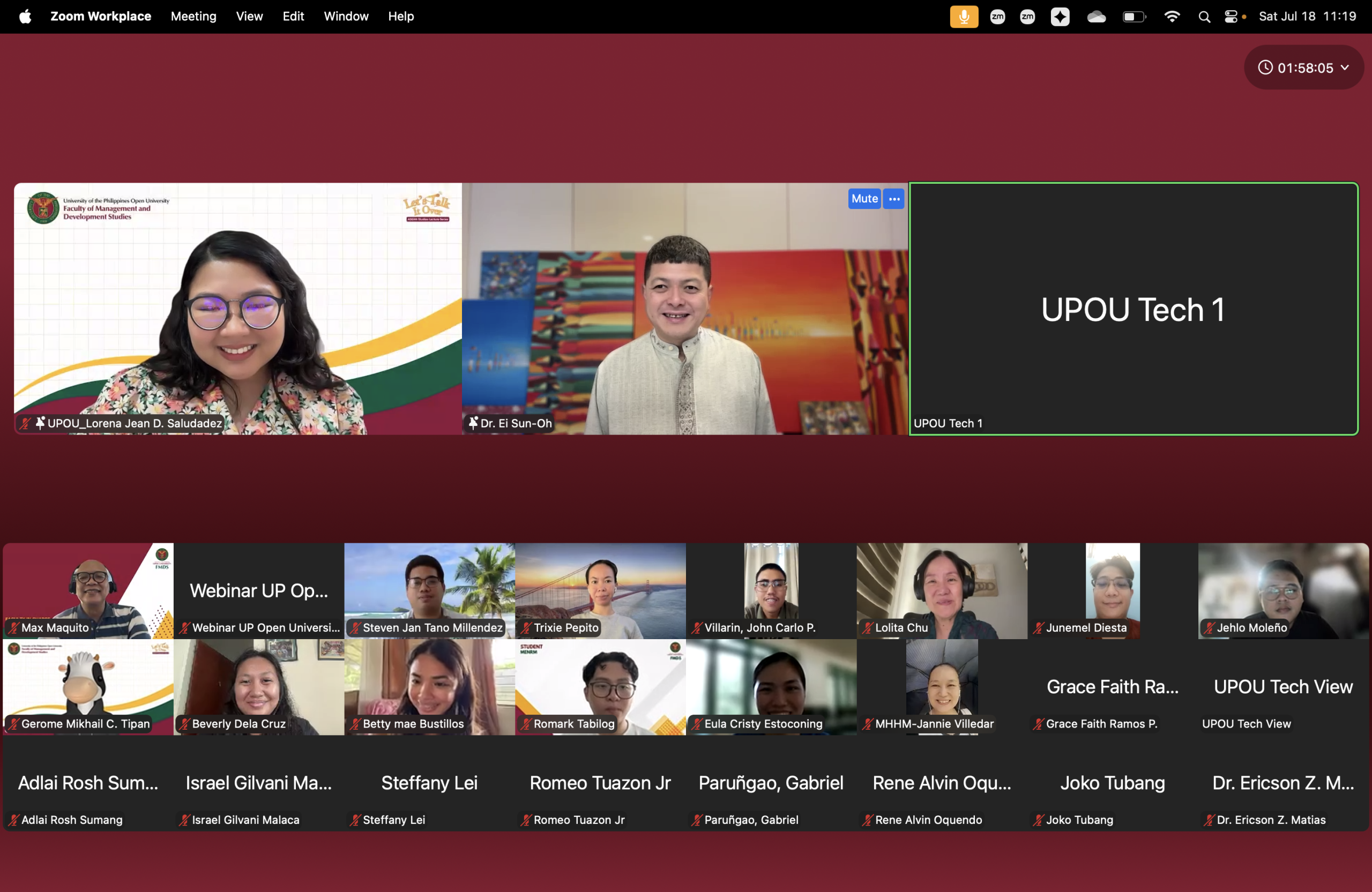
Dr. Ei Sun Oh, Principal Adviser at the Pacific Research Center of Malaysia and Senior Fellow at the Singapore Institute of International Affairs, shared valuable insights on the theme “ASEAN Centrality in a Changing Regional Architecture.”
His discussion underscored the importance of preserving ASEAN Centrality amid evolving regional and geopolitical dynamics. He emphasized that ASEAN must continue to adapt while strengthening its role through sustained engagement, regional cooperation, inclusive dialogue, and a shared commitment to peace, security, and stability.
The discussion highlighted ASEAN’s continued relevance and its capacity to navigate emerging regional challenges while maintaining its position as a key platform for regional dialogue and cooperation.
Advancing ASEAN Studies through Academic Dialogue
The lecture series shifted its focus to the academic foundations and continuing relevance of ASEAN Studies through two sessions that reflected on the field’s development and contributions.
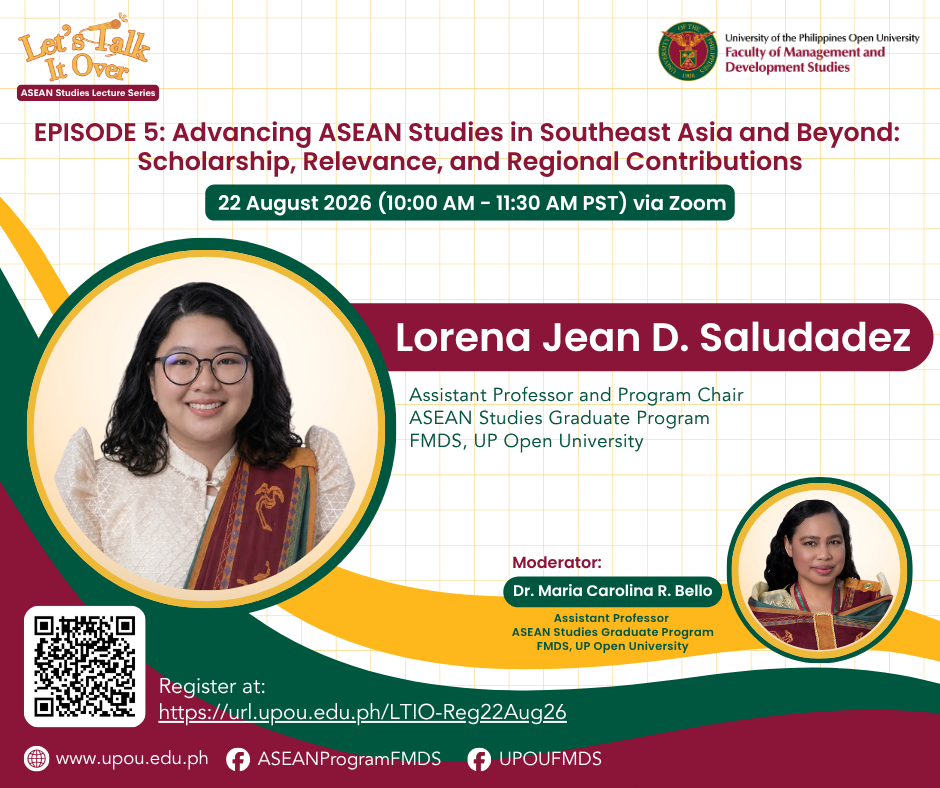
The fifth episode, held on 22 August 2026, explored the evolving scholarship and professional relevance of ASEAN Studies in Southeast Asia and beyond. The session provided an opportunity to examine how academic research and regional expertise contribute to a deeper understanding of ASEAN’s developments and inform professional engagement with the region.
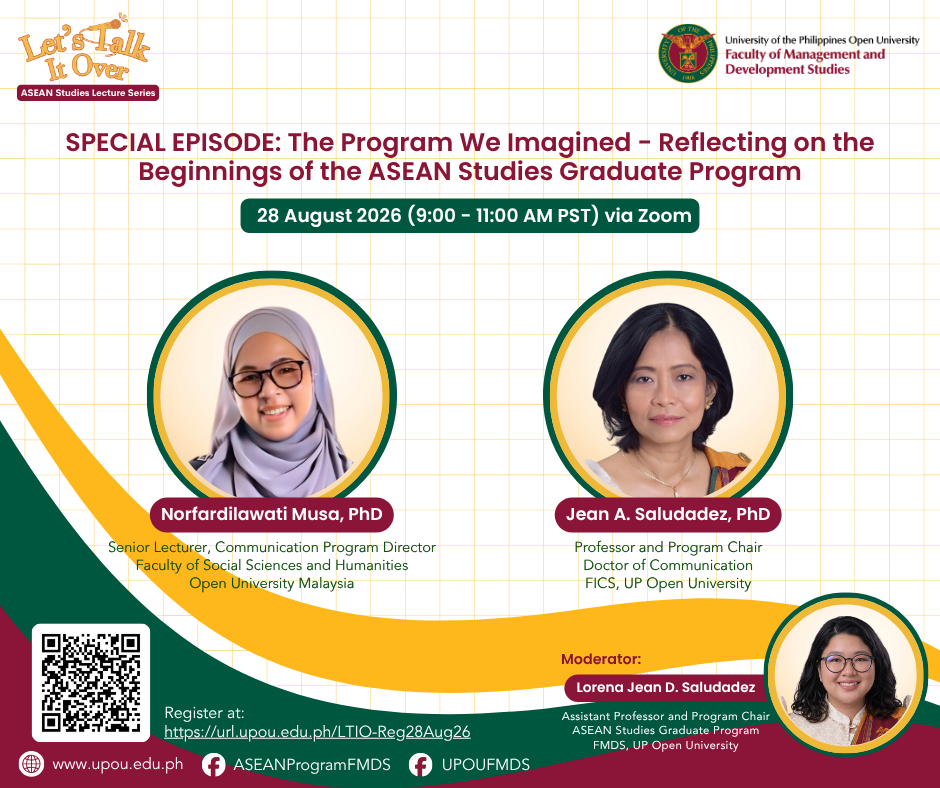
In celebration of ASEAN Month last August, the series marked its sixth installment with a special episode held on 28 August 2026. Featuring a moderated discussion, the session revisited the origins of the ASEAN Studies Graduate Program, exploring the ideas, experiences, and aspirations that shaped its establishment and laid the foundation for its continued development.
Together, the two sessions stressed the importance of sustaining academic inquiry, developing regional expertise, and nurturing a community of scholars and practitioners committed to advancing ASEAN Studies.
From Listener to Citizen: Music as a Constitutive Force of ASEAN Community
Moving beyond conventional discussions of ASEAN as an institution, the seventh lecture, held on 29 September 2026, tackled how music contributes to the formation of an ASEAN community and the development of a shared regional identity.
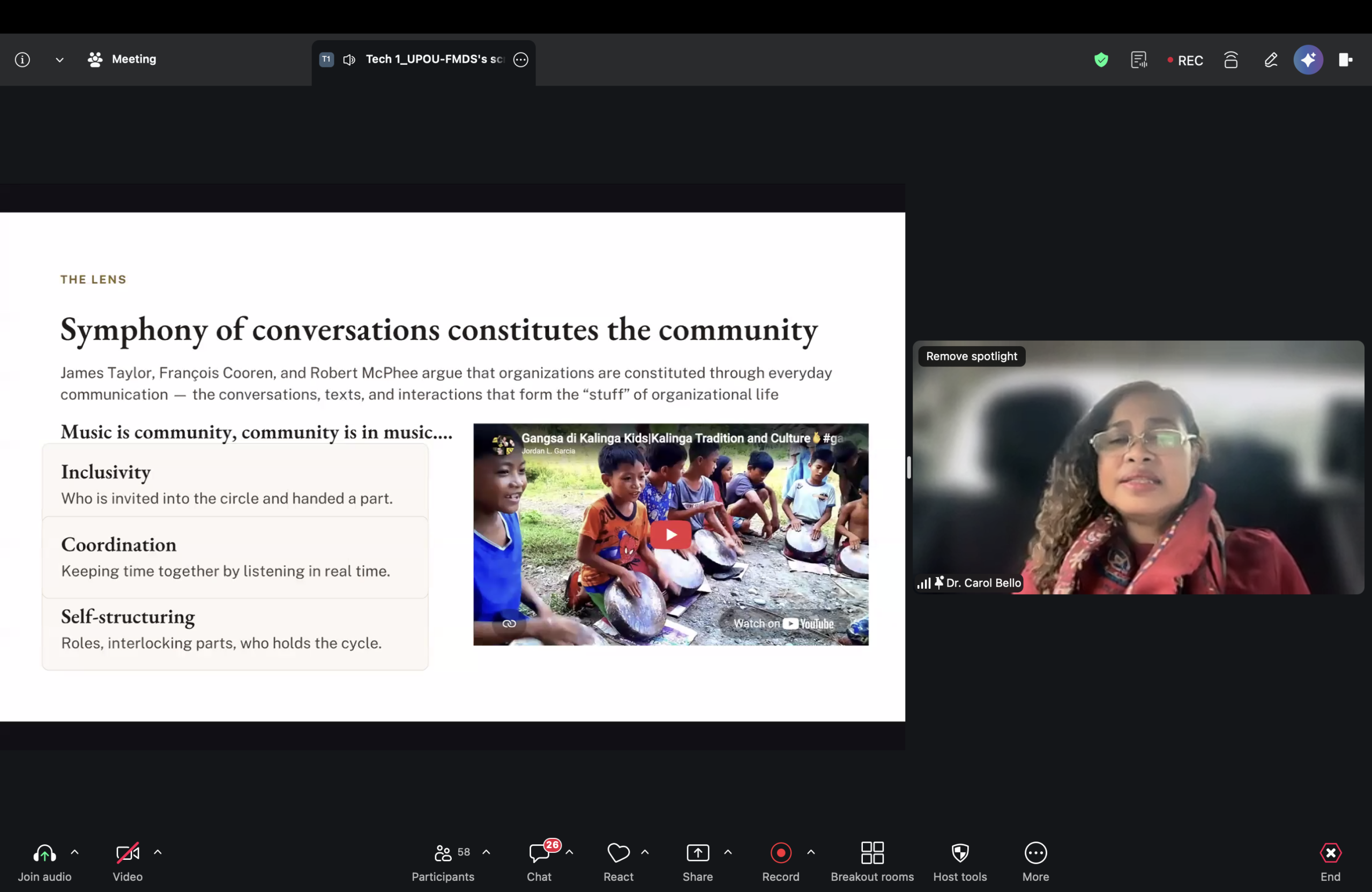
Dr. Maria Carolina Bello, Assistant Professor under the FMDS’ ASEAN Studies Graduate Program, walked the participants through an exploration of how music shapes collective identities, transcends cultural and national boundaries, and contributes to the construction of a shared regional community. She emphasized that ASEAN integration extends beyond political and economic cooperation, encompassing cultural connections and people-to-people engagement that bring the region closer together.
The session offered a different perspective on regional integration, highlighting the role of cultural expression in fostering mutual understanding, recognizing diversity, and strengthening a sense of belonging among the peoples of Southeast Asia.
Quiet Diplomacy, Loud Voices: Can Civil Society Be Heard in ASEAN?
The series culminated on 29 October 2026 with the eighth and final lecture for this year, “Quiet Diplomacy, Loud Voices: Can Civil Society Be Heard in ASEAN?” The session explored the role of civil society in shaping the regional agenda and raised a fundamental question about ASEAN’s commitment to building a people-oriented and people-centred community: Whose voices are truly heard in regional decision-making?
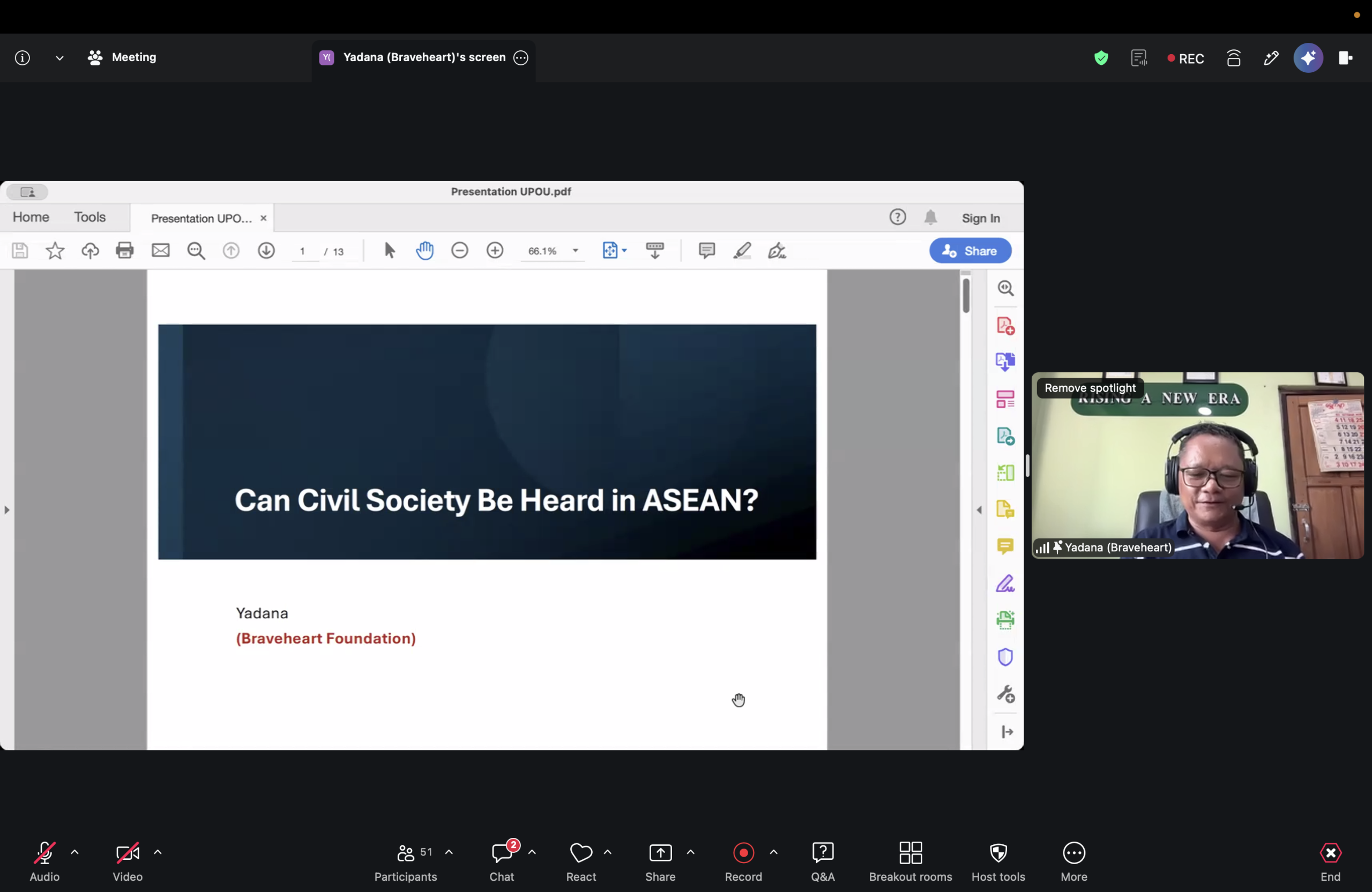
Yadana Than Htaik, Director and Co-founder of Braveheart Foundation in Myanmar, highlighted the key barriers to meaningful civil society engagement in ASEAN, including limited resources, fragmented networks, and lack of coordination, among others. As pathways forward, he called for stronger regional coordination, youth empowerment, support for local champions, and learning exchanges to build a more inclusive and connected ASEAN community.
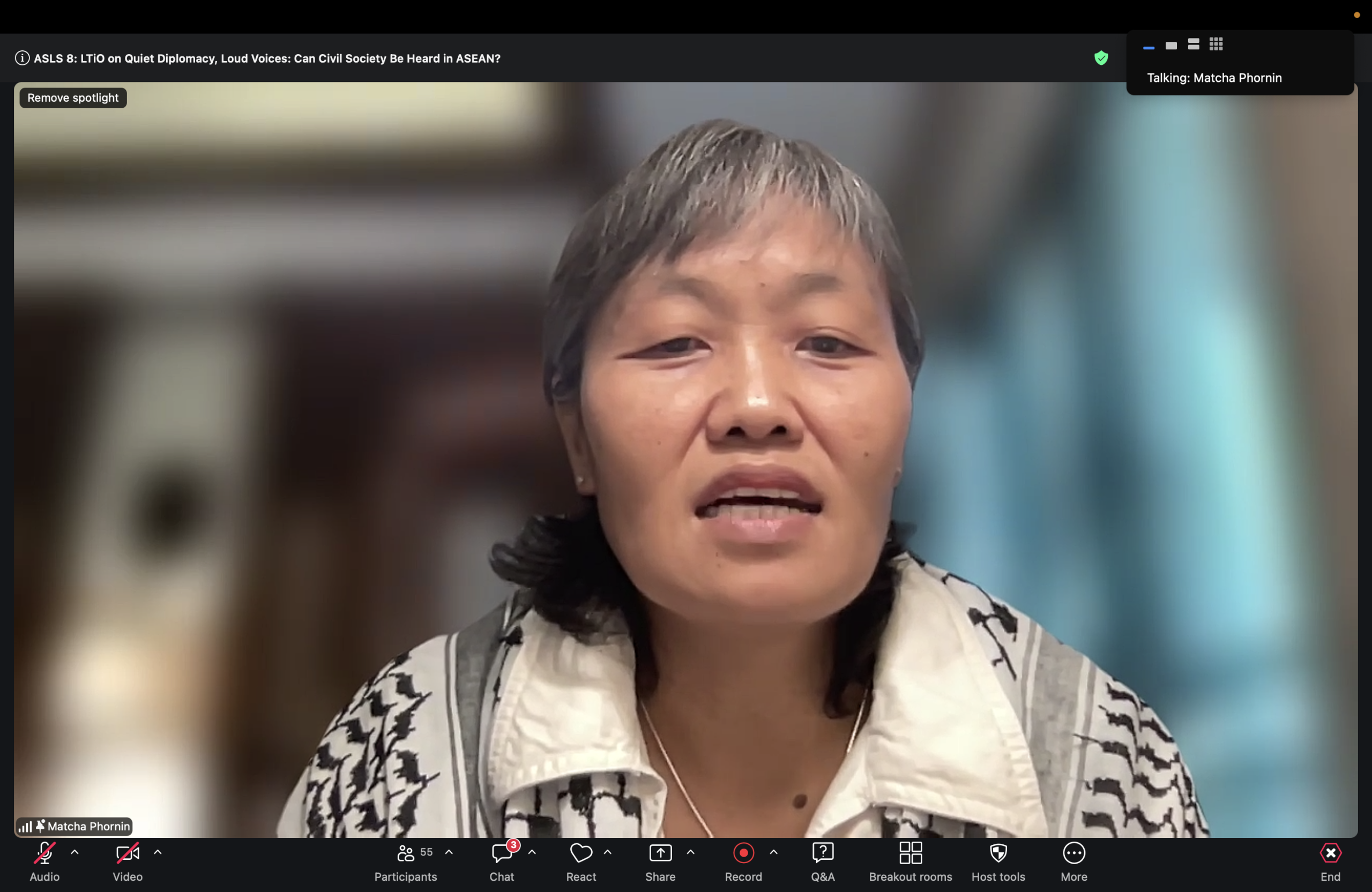
Meanwhile, the second speaker, Matcha Phorn-in, Founder and Executive Director of Sangsan Anakot Yawachon Foundation, highlighted the gap between ASEAN’s regional commitments and the realities faced by marginalized communities, including youth, LGBTQIA+ people, women, children, and Indigenous Peoples. She called on ASEAN to establish meaningful mechanisms that ensure people’s voices are heard and that regional policies reflect realities on the ground.
Beyond fostering academic dialogue and knowledge exchange, this year’s ASLS contributes to the achievement of several Sustainable Development Goals (SDGs) including SDG 4: Quality Education, SDG 10: Reduced Inequalities, SDG 16: Peace, Justice, and Strong Institutions, and SDG 17: Partnerships for the Goals.
Across its eight lectures, the series provided a platform for examining ASEAN from multiple perspectives—from regional leadership and economic integration to geopolitics, academic scholarship, cultural identity, and civil society participation.
While the first season concludes this year, ASLS is set to return next year, continuing the conversation on ASEAN and the issues shaping the region. For more updates about activities and events of FMDS, please check out our FB Page at https://www.facebook.com/UPOUFMDS.
Written by: Vanessa T. Autor • Edited by: Larry N. Cruz
Sustainable Development Goals



FMDS Socials