
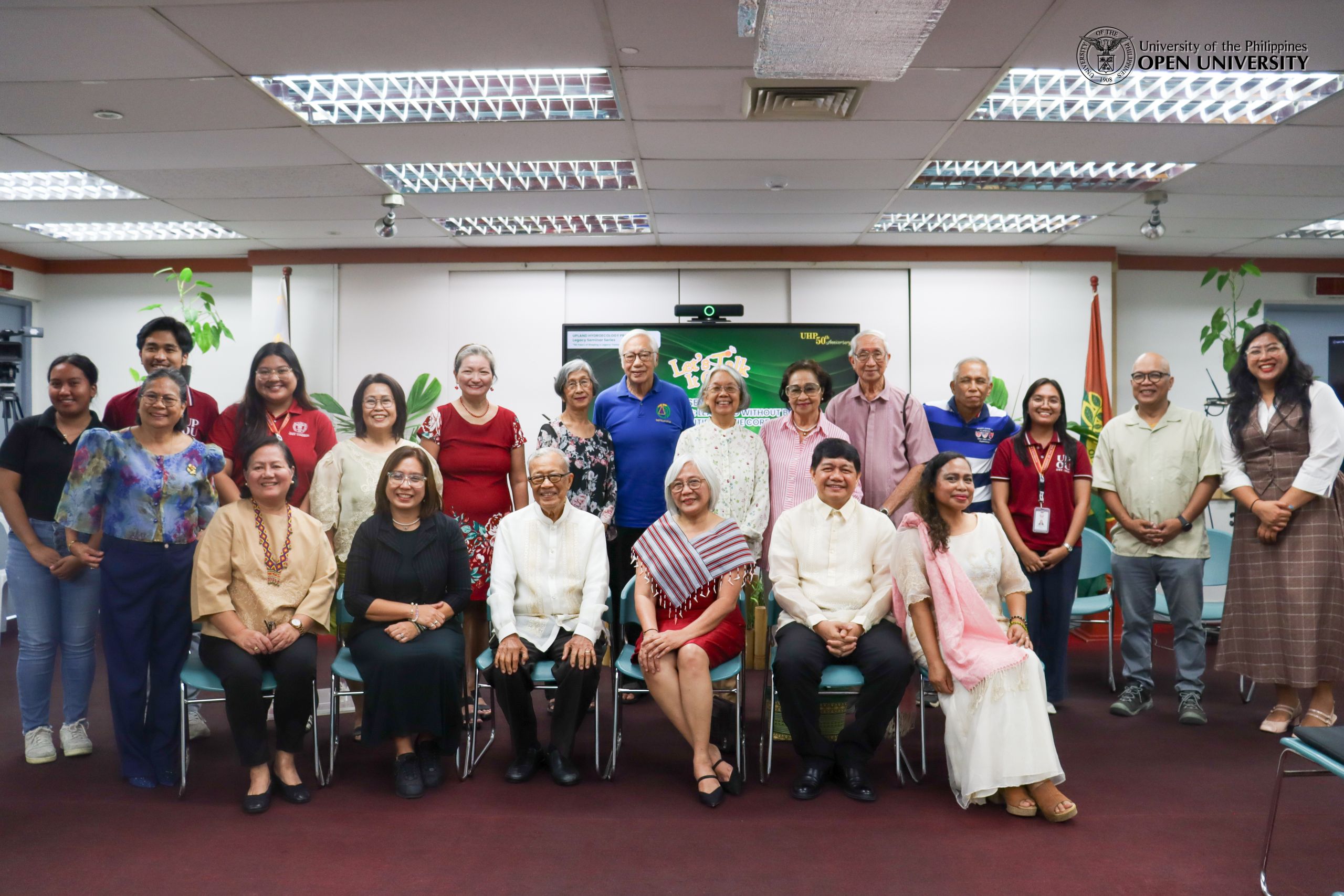
The speakers and attendees of the LTiO on Sustainable Uplands
The Faculty of Management and Development Studies (FMDS) of the University of the Philippines Open University (UPOU), in collaboration with the Philippine Watershed Management Coalition (PWMC), hosted a hybrid webinar under the Let’s Talk it Over (LTiO) series titled “Sustainable Uplands: Learning Without Borders, Communities at the Core” last 29 April 2026 at the UPOU Audio-visual Room, via Zoom, and was also livestreamed across various UPOU streaming platforms. The event was the 5th installment of the Upland Hydroecology Program (UHP) Legacy Seminar Series, held in celebration of its 50th Anniversary.
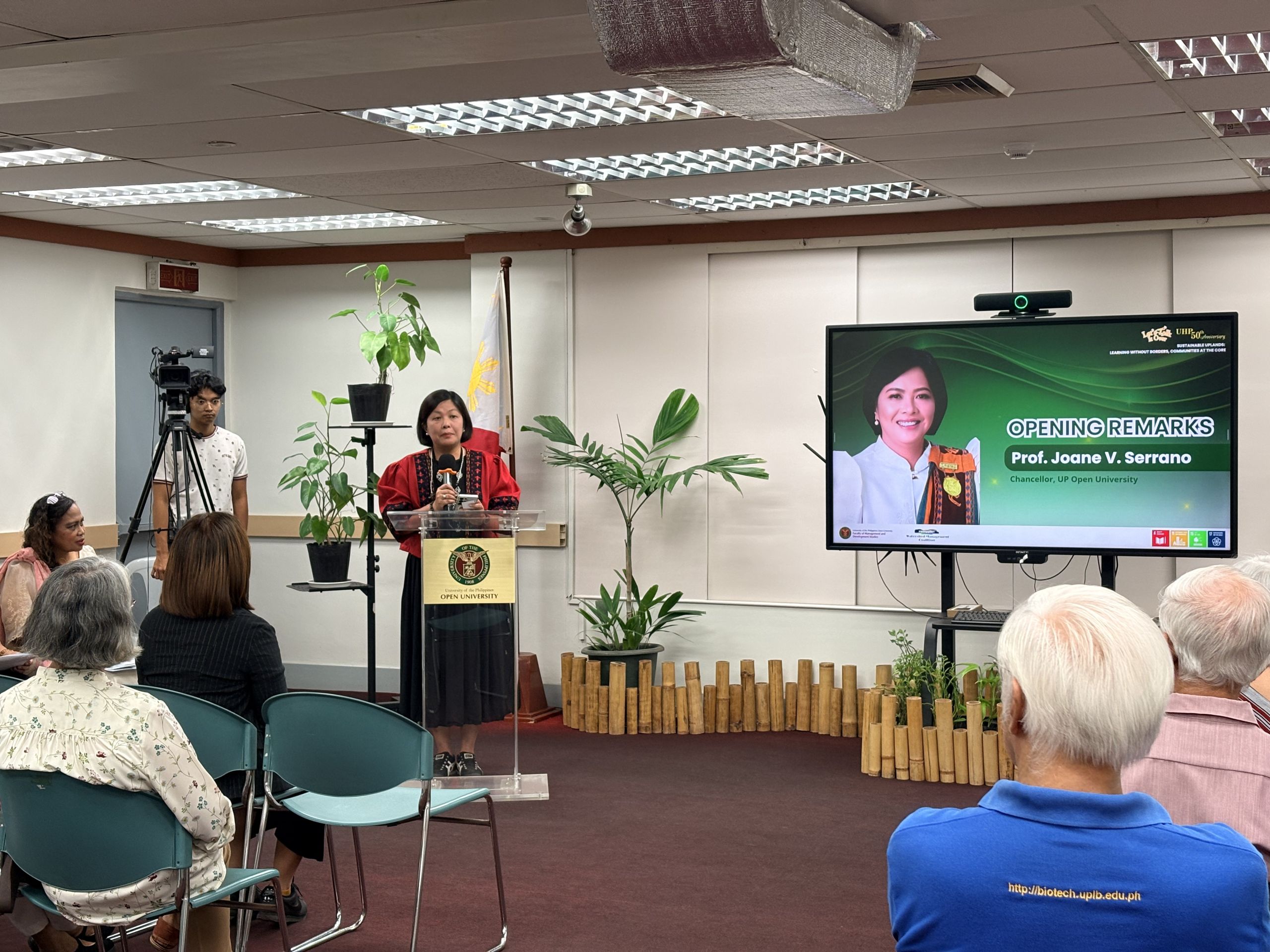
Chancellor Joane V. Serrano delivers the opening remarks.
Prof. Joane V. Serrano, UPOU Chancellor, formally opened the program with her welcome remarks, expressing her gratitude to the organizers, partners, and participants for supporting the event. She emphasized the significance of the gathering in celebrating the Golden Anniversary of UHP and highlighted the importance of advancing sustainable upland development through research, policy, community engagement, and innovations in open learning and digital education at a time when environmental challenges are more pressing than ever. Chancellor Serrano also underscored UPOU’s vision to become a transformative university that promotes learning, well-being, sustainability, and inclusive growth, while empowering future generations of environmental stewards and changemakers.
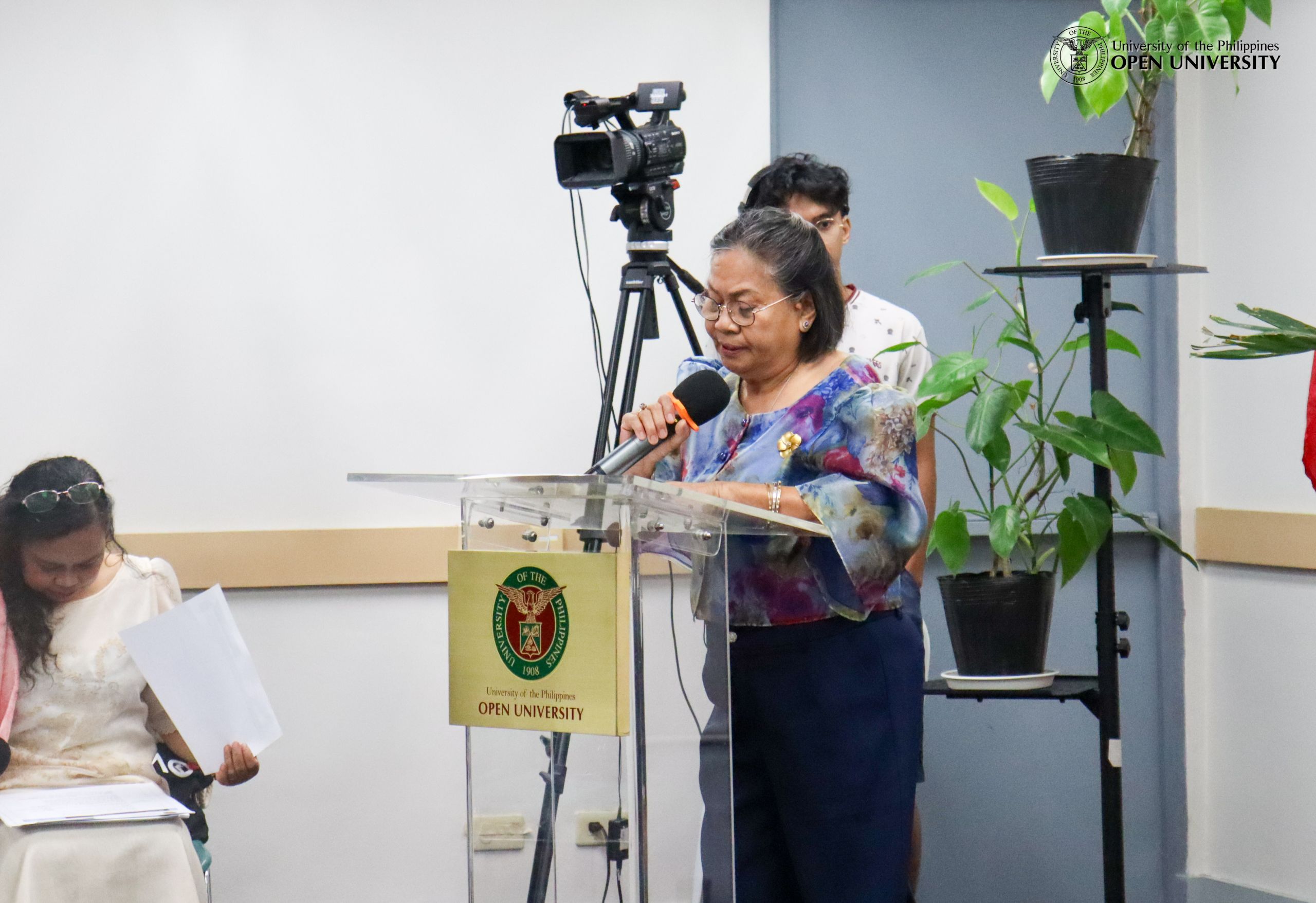
Ms. Fe M. Rañola shares a brief background about the UHP Legacy Seminar Series.
To provide a brief background about the UHP Legacy Seminar Series, Ms. Fe Rañola, former UHP research assistant, discussed the history of UHP, its pioneering role as University of the Philippines Los Baños’ (UPLB) first multidisciplinary research program, and its enduring contributions to upland development. She noted that UHP was organized in 1976 under the leadership of the late Dr. Romeo S. Raros and Dr. Percy E. Sajise, bringing together scientists from various disciplines to develop technological, social, and ecological solutions for the rehabilitation and sustainable management of the country’s upland resources.
Ms. Rañola also highlighted UHP’s lasting contributions to institution building, social and economic research, upland development, and human resource development. She emphasized that the seminar series seeks to reflect on these contributions and sustain UHP’s legacy through open learning, community-based education, and digital engagement.
Building on this historical context, the succeeding presentations examined how the principles and lessons of UHP remain relevant to contemporary challenges in sustainable upland management.
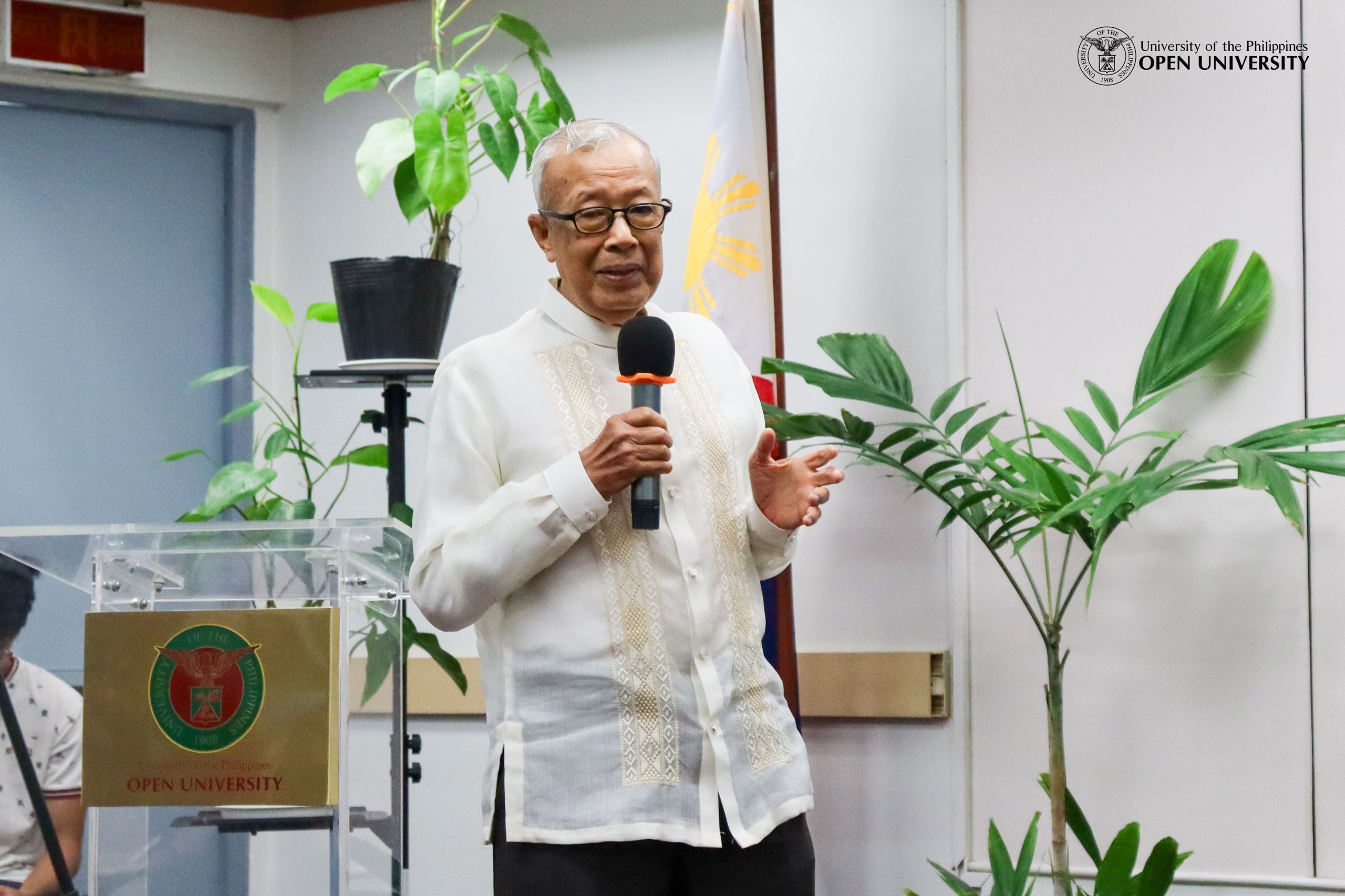
Dr. Percy E. Sajise presents the Sustainable Development Goals (SDGs) and Upland Resource Management.
Dr. Percy E. Sajise, co-founder of UHP, discussed the Sustainable Development Goals (SDGs) in relation to Upland Resource Management. He traced the evolution of sustainable development from the 1987 Brundtland Report to the adoption of the 2030 Agenda for Sustainable Development in 2015, emphasizing the need for development that balances ecological, economic, and social considerations.
He also highlighted the interconnectedness of the 17 SDGs, noting that effective governance, climate action, peace and justice, partnerships, renewable energy, and science-based approaches provide the foundation for sustainable development.
Dr. Sajise also acknowledged the challenges in achieving the SDGs by 2030, citing insufficient funding and disruptions in international commitments and policies. Despite these challenges, Dr. Sajise underscored the continuing importance of sustainable development as a framework for ensuring that development benefits not only the present generation but also those that will follow.
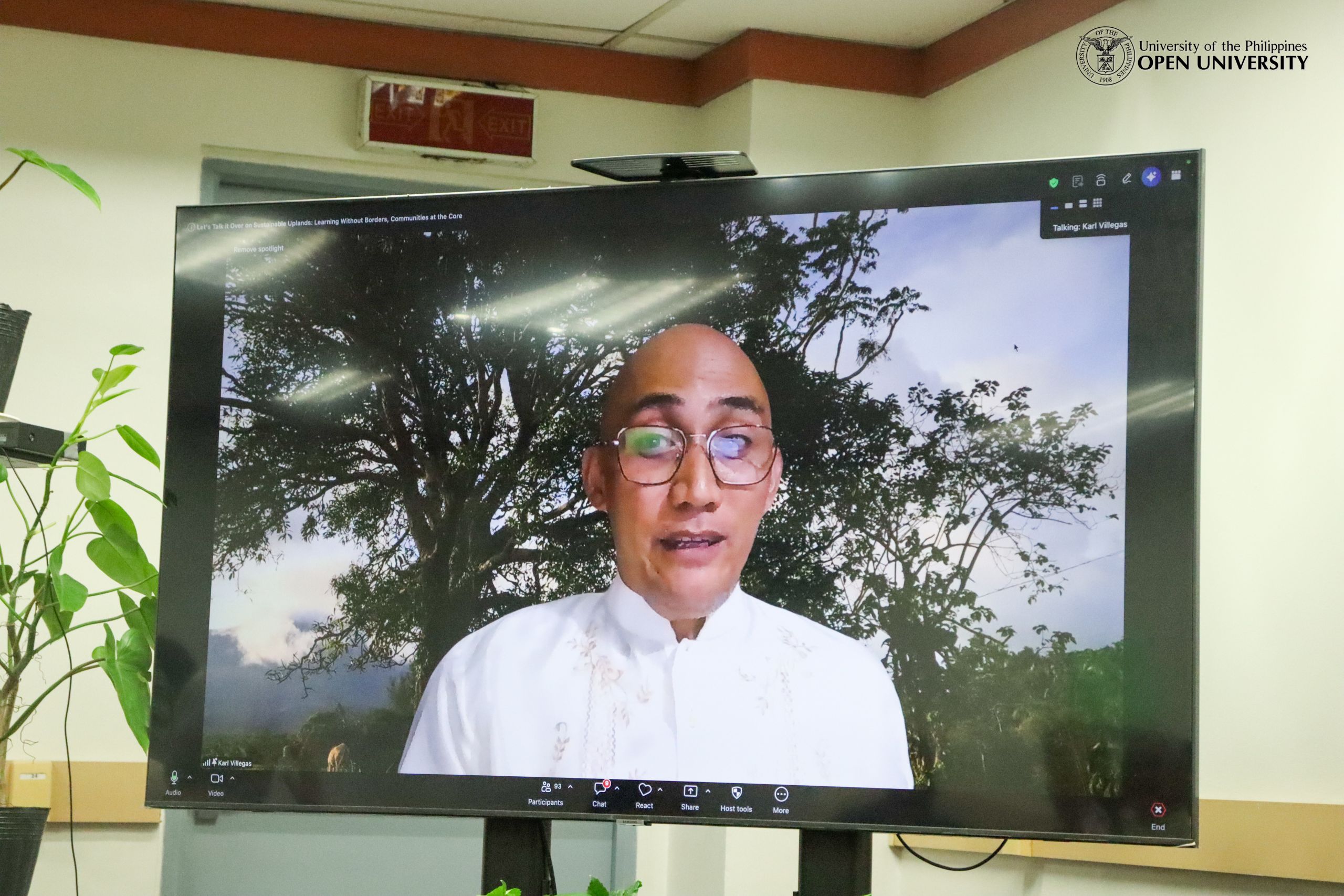
Asst. Prof. Karl Abelard Villegas discusses Distance Learning Innovations in Upland Management.
From the broader framework of sustainable development, the discussion then turned to the role of education in making environmental knowledge and training more accessible to upland stakeholders.
Assistant Professor Karl Abelard Villegas, Program Chair for the FMDS Diploma in and Master of Environment and Natural Resources Management (D/MENRM), highlighted how the program uses distance and blended learning to make environmental and natural resources management education more accessible to upland communities and practitioners. He emphasized its multidisciplinary approach, flexible pathways through microcredentials and MOOCs, and integration of experiential learning, research, and community engagement. Through these approaches, the program advances a vision of “learning without borders” while keeping communities at the center of knowledge creation and sustainable upland development.
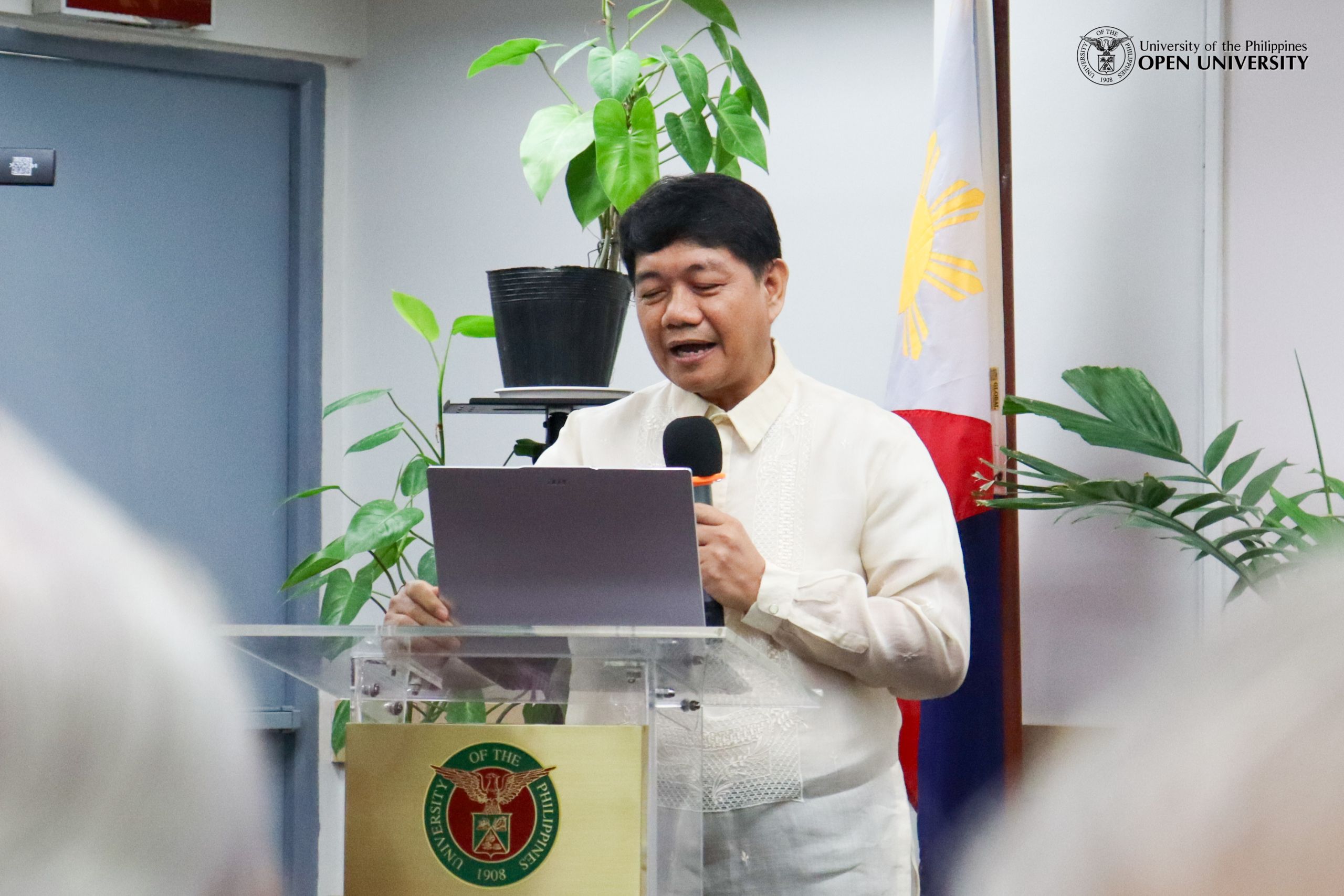
Prof. Ricardo T. Bagarinao shares insights on Open Access to Research and Knowledge Sharing: Democratizing Upland Knowledge.
Professor Ricardo T. Bagarinao, Program Chair for the FMDS Doctor in Sustainability, emphasized the importance of open access and knowledge sharing in democratizing upland research, making scientific information more accessible, understandable, and useful for upland communities, local governments, and practitioners. Prof. Bagarinao also stressed that making research accessible requires balancing academic rigor with clarity and inclusivity.
In addition, he discussed the barriers to accessing scientific knowledge, including paywalls, technical language, and limited local relevance, while highlighting the need for open-access journals, policy briefs, open databases, and community-based learning tools. Prof. Bagarinao also underscored the potential leadership role of the UHP in promoting open science, interdisciplinary collaboration, and inclusive knowledge systems that recognize communities as co-creators of sustainable upland solutions.
Dr. Ed Queblatin presents the UHP spirit, watershed networks, and agri-sector reforms.
Beyond knowledge access, the seminar also explored how UHP’s legacy has translated into policy reforms and evolving approaches to environmental and natural resource governance.
Mr. Eduardo Queblatin, Member of the Council of Advisors of PWMC, highlighted how the legacy of the UHP helped shape decades of environmental and natural resource reforms, influencing approaches such as community-based forest management, agroforestry, eco-governance, and biodiversity-friendly agriculture. He emphasized two “silent movements” emerging from this influence: the growing role of multi-stakeholder watershed networks in promoting inclusive watershed governance, and ongoing policy reforms between the Department of Agriculture (DA) and the Department of Environment and Natural Resources (DENR) toward biodiversity-friendly agriculture practices in ecologically fragile uplands.
Mr. Queblatin also noted that despite significant policy gains, upland agriculture continues to pose challenges, particularly with the expansion of commodity-driven farming, which contributes to environmental degradation, erosion, and pollution. He emphasized the need to deepen understanding of upland ecology and strengthen research, education, and evidence-based policy support for agricultural reforms. He proposed that a new generation of UHP-type initiatives focus on supporting policy dialogue in the agriculture sector, particularly in advancing biodiversity-friendly agriculture and sustainable food systems while keeping ecological governance and community empowerment at the center.
Dr. Soledad Sucaldito discusses Community Engagement and Participatory Research.
Furthermore, Dr. Soledad Sucaldito, Board Member of PWMC, discussed the importance of watershed networks in strengthening sustainable upland and water resource management using the Iloilo Watershed Management Council (IWMC) model as an example of a successful multi-sectoral governance system. She explained how IWMC evolved from a multi-stakeholder task force into a formal provincial body that organizes sub-watershed units, promotes participatory mapping and planning, and enables localized, cost-efficient watershed management. Dr. Sucaldito further stressed that meaningful community participation, capacity building, and collaborative decision-making are essential for empowering upland communities, improving stewardship, and ensuring the success of environmental programs and watershed development initiatives.
Through stronger collaboration among communities, local governments, national agencies, and other stakeholders, she noted that upland development initiatives can better address local environmental, socio-cultural, and economic needs while supporting long-term sustainability.
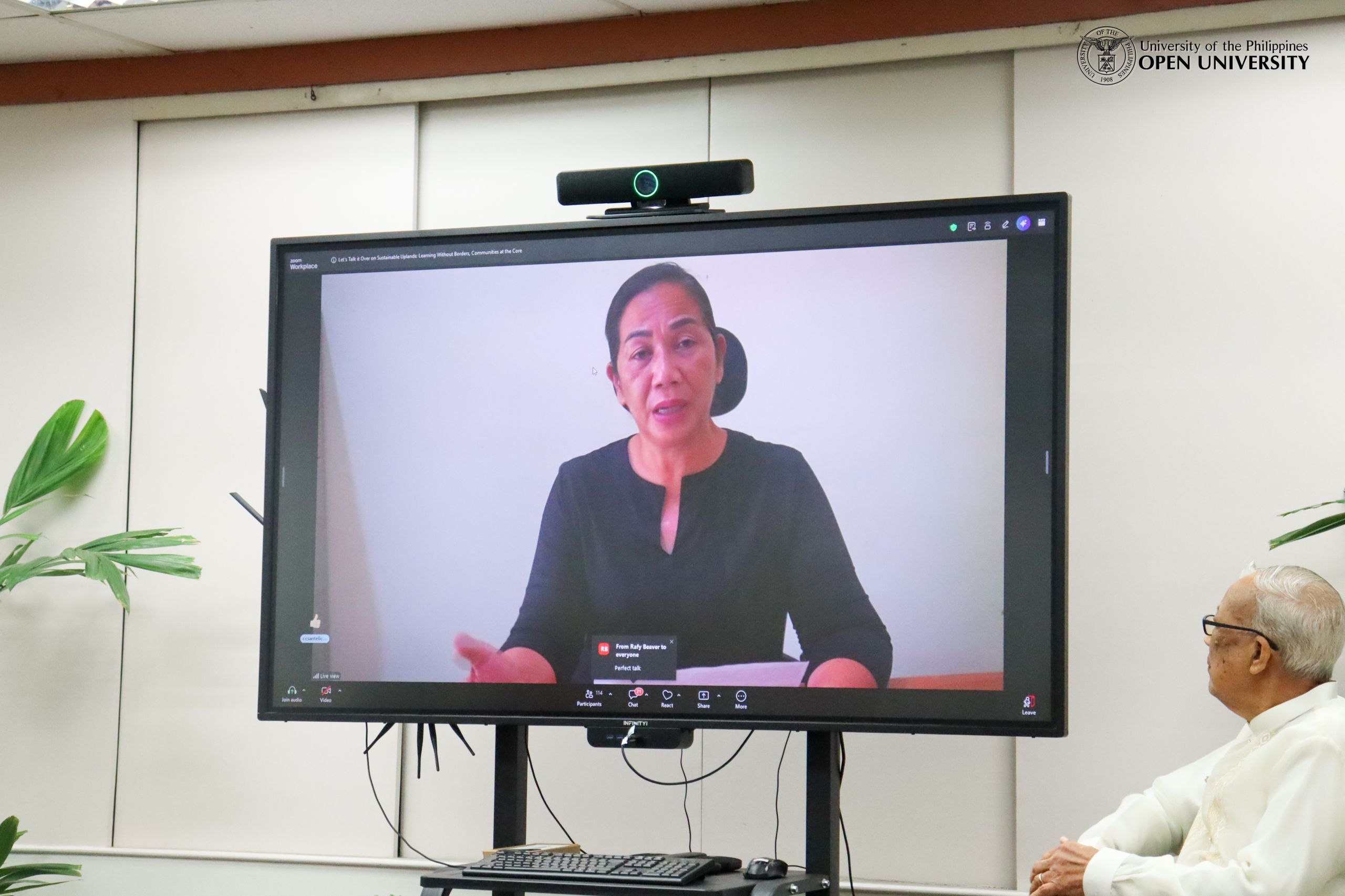
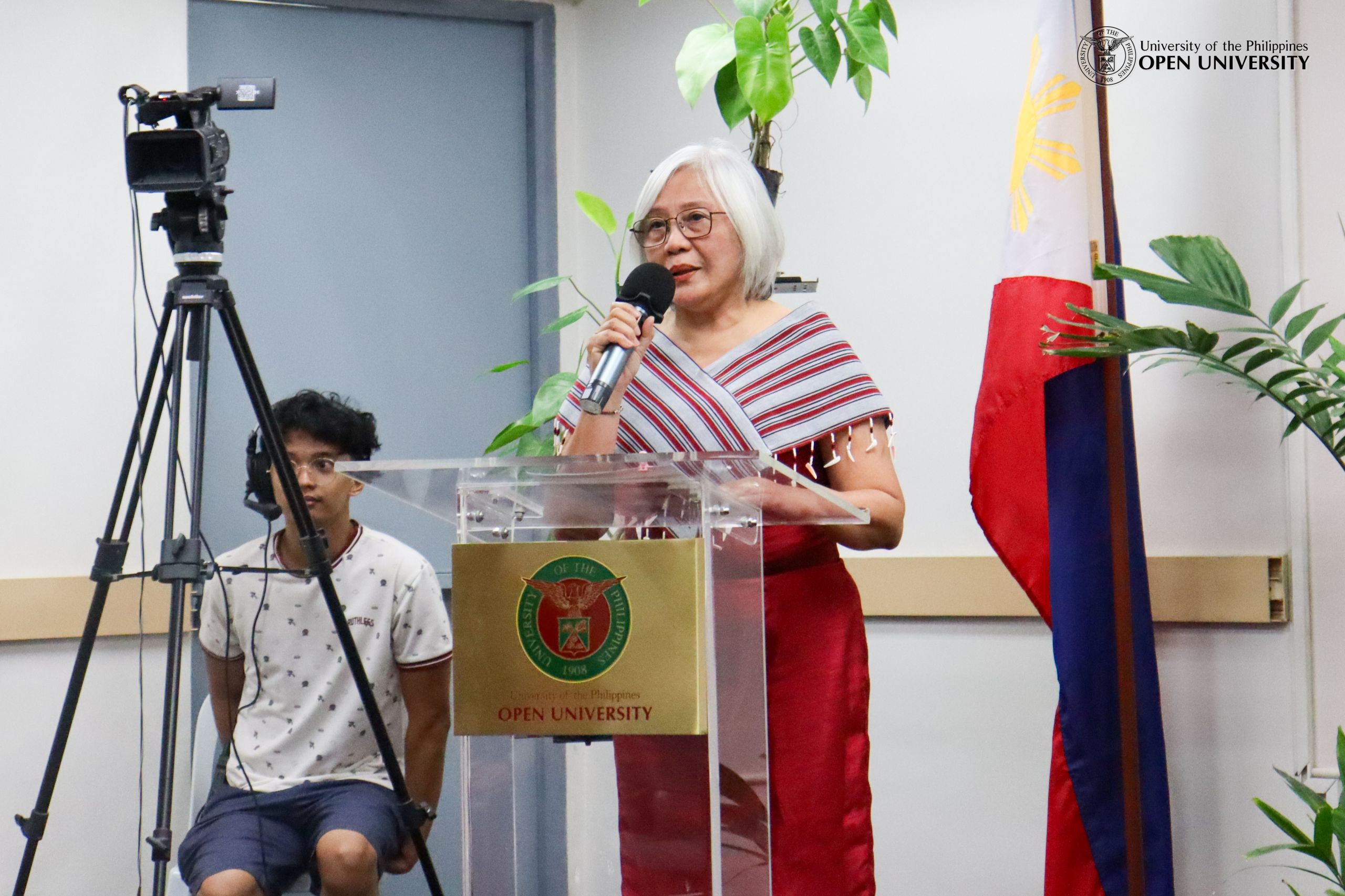
Dr. Lea Escantilla-Lebuna shares insights on Community Engagement and Participatory Research.
From the role of communities in watershed governance and local decision-making, Dr. Maria Lea Escantilla-Lebuna of PWMC broadened this perspective by examining how communities can also become active partners in generating and owning knowledge.
She emphasized that upland sustainability must be built with communities rather than imposed upon them. Drawing from experiences in the Jalaur River Basin and upland communities in Panay, she highlighted the importance of inclusive governance that connects academic institutions, local governments, watershed councils, and communities.
Dr. Lebuna also underscored the value of involving upland communities as research partners rather than merely subjects, ensuring that their knowledge and voices help shape research and development priorities. She noted that participatory approaches can be integrated into watershed management, climate adaptation, and community-based monitoring, with local governments playing an important role in supporting implementation. Ultimately, she stressed that sustainability is not merely a technical achievement but a social one, rooted in meaningful participation and grounded in the ecological and social realities of upland communities.
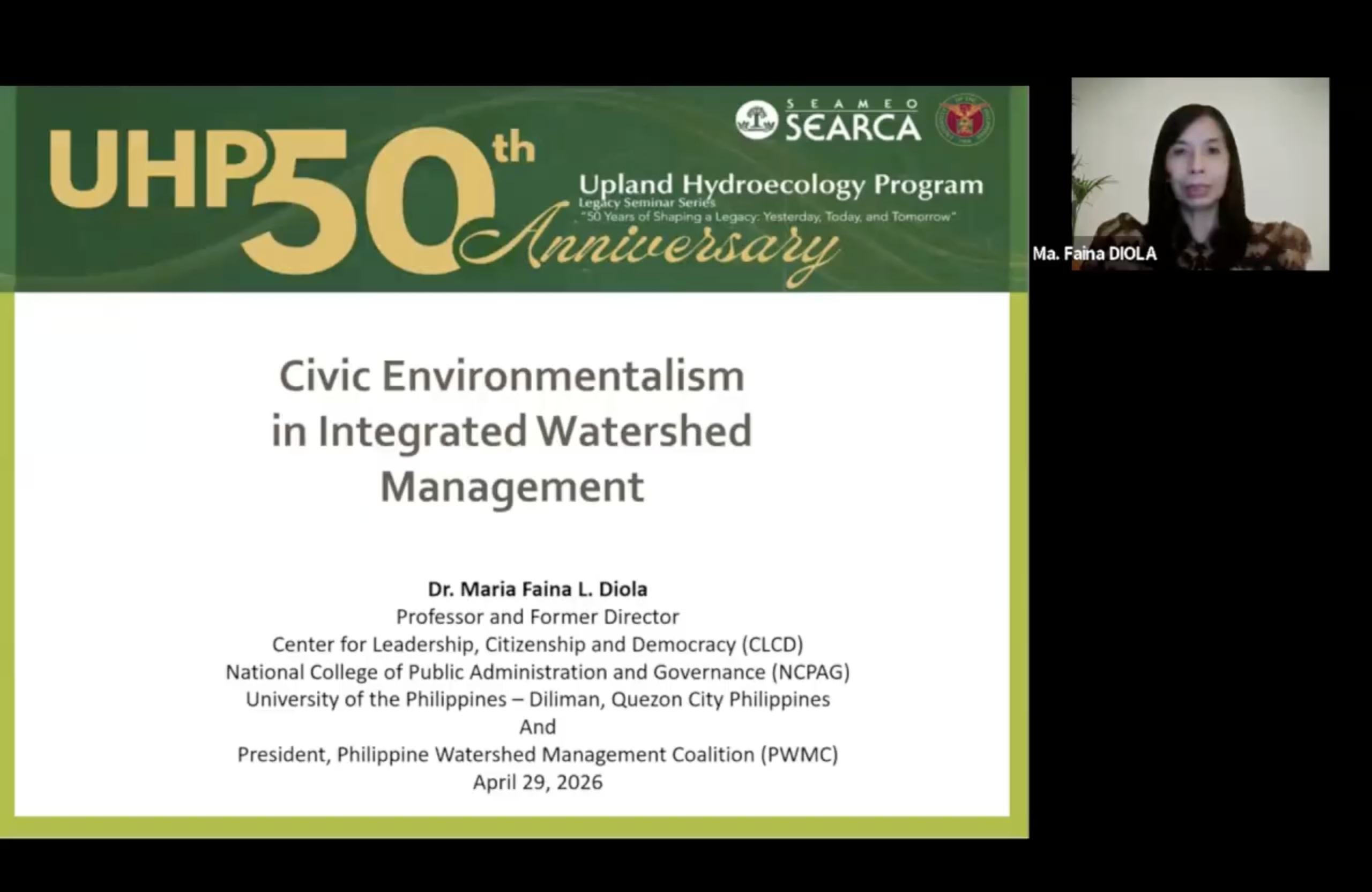
Dr. Maria Faina-Diola presents Civic Environmentalism in Integrated Watershed Management.
The emphasis on community participation and collaborative governance was further extended to disaster risk reduction, highlighting the role of local social capacity in building resilience.
Dr. Maria Faina L. Diola, President of PWMC, discussed how civic environmentalism can strengthen disaster management in the Philippines by mobilizing local social capacity and ensuring meaningful participation of all stakeholders, including Civil Society Organizations (CSOs), in environmental governance. She emphasized that while local government units and DENR already share responsibility under decentralization policies, CSO participation is often limited and should be expanded to improve collaborative decision-making, especially in disaster risk reduction.
Moreover, her framework highlights Integrated Watershed Management as a key strategy for flood mitigation and long-term disaster prevention, grounded in participatory and collaborative governance approaches. Drawing from multiple watershed case studies, she argued that effective disaster management depends on strong local institutions, civic engagement, and coordinated action among government, communities, and other stakeholders working together to build resilience against climate-related risks.
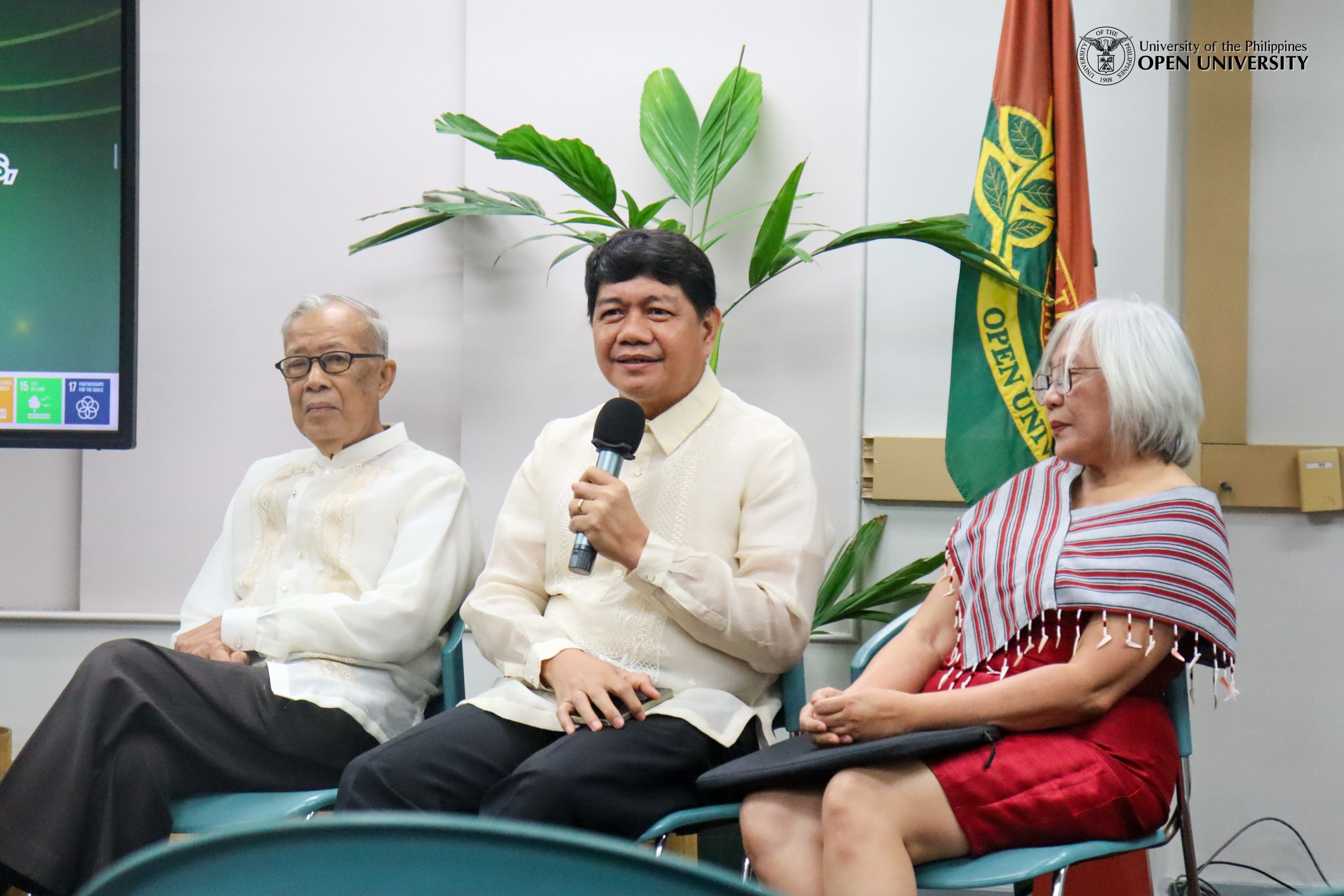
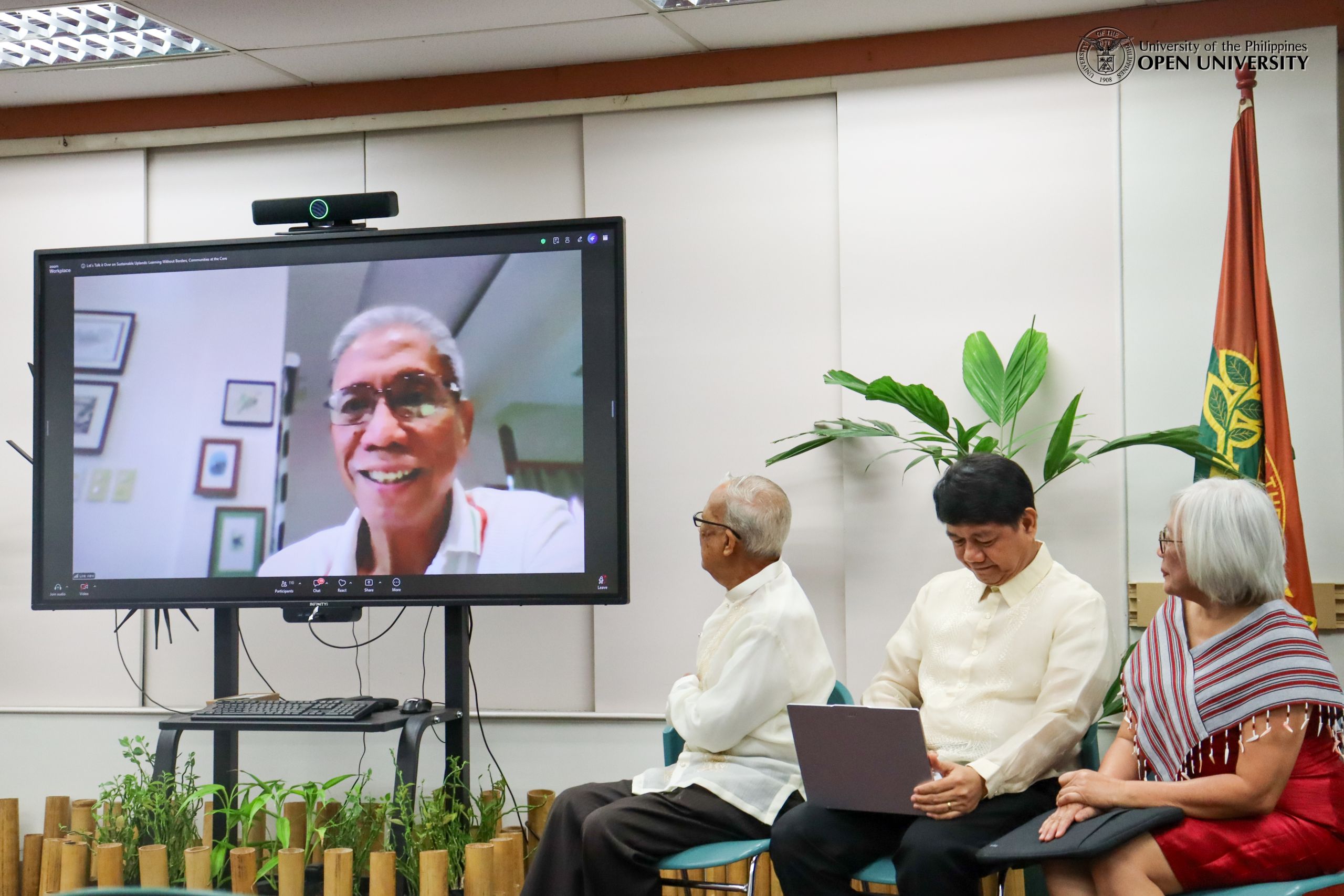
(From left to right) Dr. Percy E. Sajise, Prof. Ricardo T. Bagarinao, and Dr. Soledad Sucaldito
With these perspectives bringing together science, education, governance, community participation, and policy, the seminar then opened the floor for participants to engage with the speakers and explore practical ways of advancing sustainable upland development.
The exchange brought together insights on watershed governance, agricultural reforms, open access to research, community participation, and the use of emerging technologies, highlighting the need for collaborative and community-centered approaches to address complex upland issues.
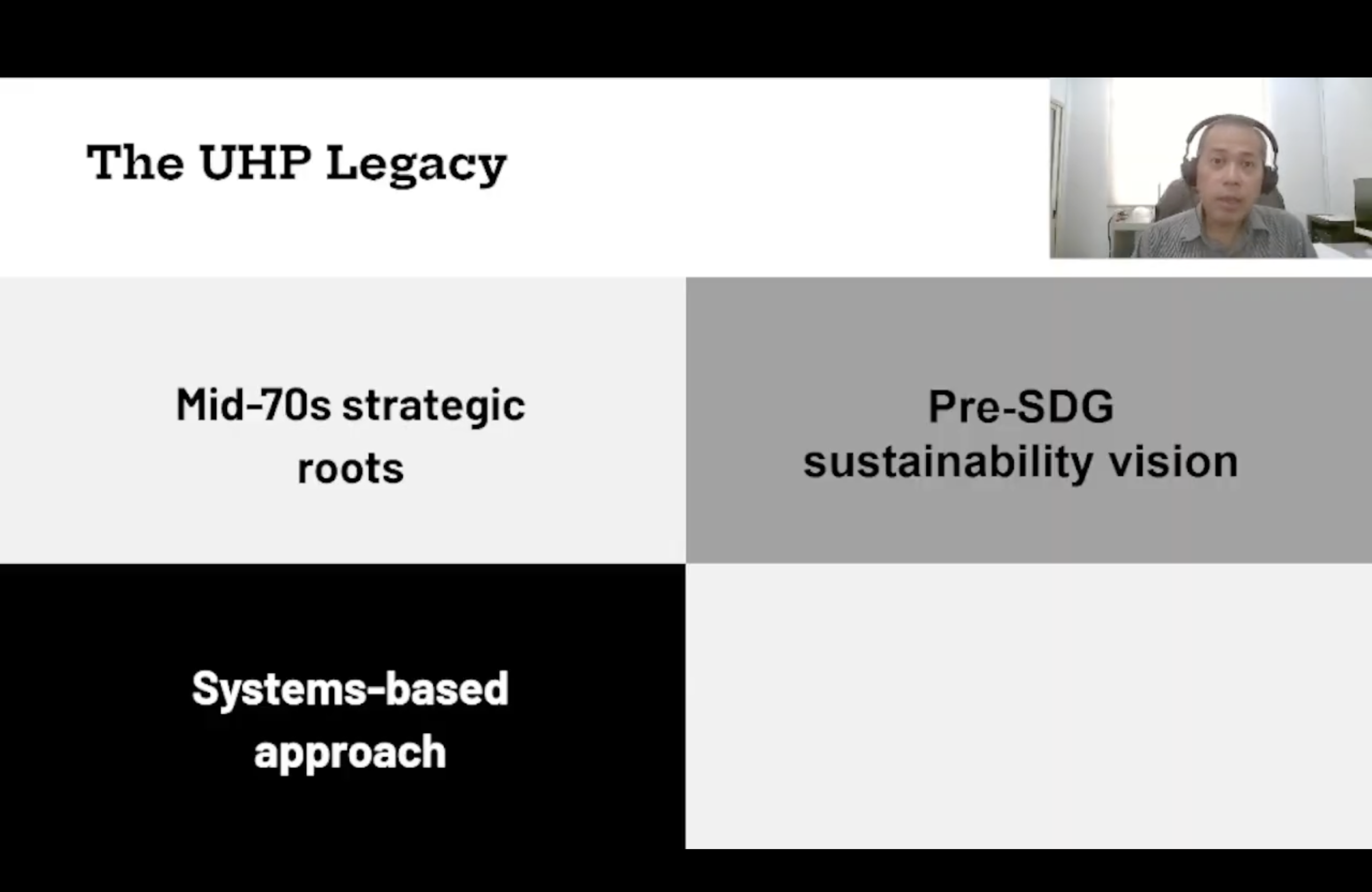
Engr. Randy Vinluan provides a synthesis of the discussions.
The exchange further reinforced the interconnected themes raised throughout the presentations, providing a foundation for the seminar’s synthesis and key takeaways.
In synthesizing the seminar, Engr. Randy Vinluan emphasized the shift from top-down approaches to upland management toward community-centered and collaborative sustainability. He highlighted the UHP’s pioneering role in integrating scientific research, indigenous knowledge, and inclusive environmental governance, while underscoring the need to democratize knowledge through participatory research, open learning, and digital technologies. Engr. Vinluan also identified three key priorities moving forward: treating communities as research partners, advancing biodiversity-friendly agricultural policies, and strengthening community-led watershed networks. He stressed that sustainability in the uplands is a continuous process of learning, adaptation, and collective action.
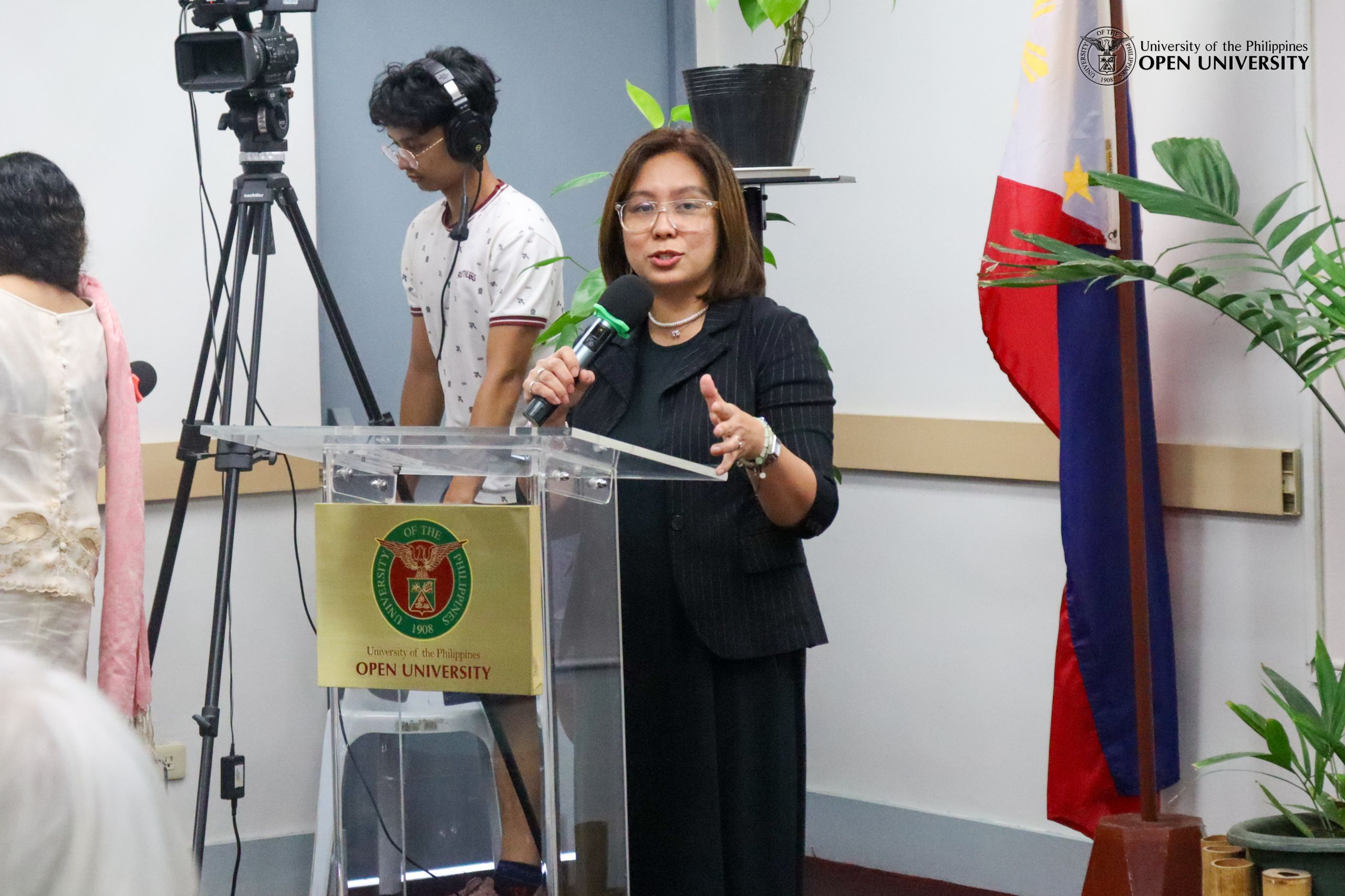
Dean Finaflor F. Taylan delivers the closing remarks.
Following the synthesis, the program formally moved toward its conclusion with FMDS Dean, Associate Professor Finaflor F. Taylan, delivering the closing remarks and reflecting on the continuing relevance of the UHP legacy.
In her closing remarks, Dean Taylan honored the UHP’s 50-year legacy and emphasized the role of the academe in becoming an active partner of communities in addressing environmental challenges. She highlighted UPOU’s commitment to open and inclusive learning, noting that technology must ultimately serve and engage communities, particularly upland farmers, Indigenous Peoples, and other rural stakeholders. Dean Taylan underscored the importance of translating the UHP legacy into actionable, technology-driven solutions through FMDS programs and strategic partnerships, while promoting access to knowledge, education, and tools for self-determination. She concluded by calling for continued collaboration and lifelong learning toward “50 more years of science, service, and social justice for the Philippine uplands.”
These efforts contribute to several Sustainable Development Goals (SDGs), including SDG 4 (Quality Education), SDG 11 (Sustainable Cities and Communities), SDG 15 (Life on Land), and SDG 17 (Partnerships for the Goals).
Written by: Vanessa T. Autor • Edited by: Larry N. Cruz
Sustainable Development Goals



FMDS Socials